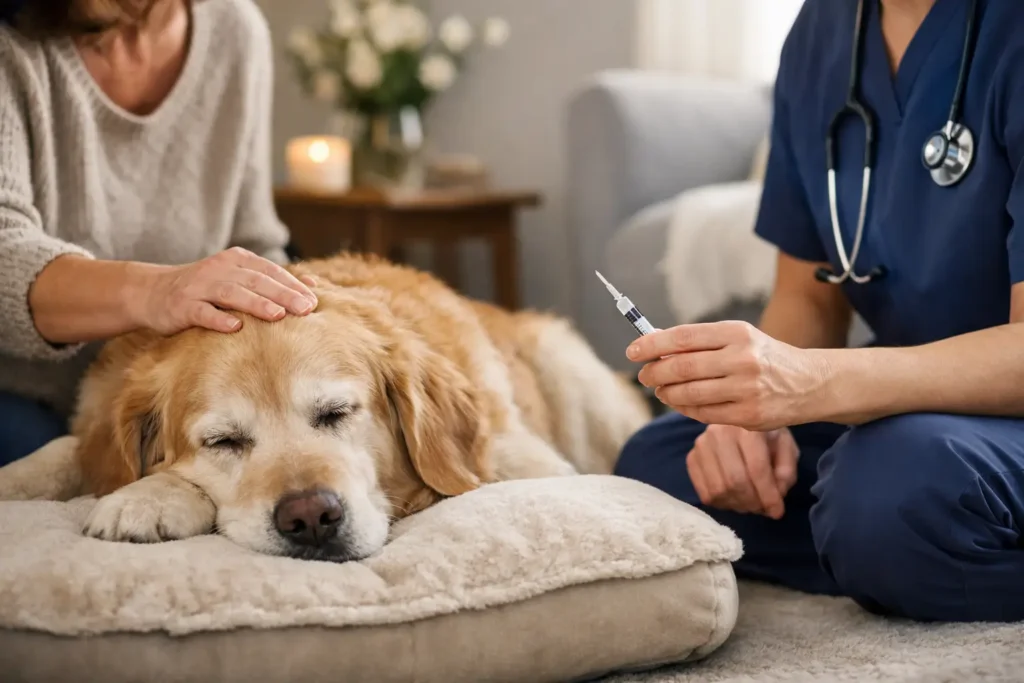
The decision is often made in small moments: your dog no longer settling comfortably, struggling to rise, turning away from food, or having more difficult days than peaceful ones. If you are searching for dog euthanasia at home what to expect, you may be facing an impossible-feeling choice while trying to put your dog’s comfort first. Knowing how the visit usually unfolds can remove some of the uncertainty and help you create a calm, loving farewell.
At-home euthanasia allows your dog to remain in the place they know best, without the journey, waiting room or unfamiliar smells of a veterinary practice. Every pet and family is different, but the focus remains the same: gentle handling, clear clinical guidance and time to say goodbye in privacy.
Before the appointment, a veterinary professional will usually talk through your dog’s condition, recent changes and the concerns that have brought you to this point. This may include a quality-of-life discussion. There is rarely one single sign that tells you the time is right. Instead, the decision is often based on the overall pattern of pain, mobility, appetite, toileting, breathing, enjoyment and ability to rest.
It is normal to feel unsure, even when you know your dog is declining. Choosing euthanasia does not mean you are giving up on them. For many dogs with an illness that cannot be cured, uncontrolled discomfort or severe loss of function, it can be the final act of care. A qualified veterinary professional can explain what they are seeing clinically and help you consider whether your dog’s good moments still outweigh the difficult ones.
When arranging the visit, you can ask practical questions about timing, who will attend, sedation, payment and aftercare. You do not need to have every answer immediately. The team should guide you through the choices without rushing you.
It can help to choose a quiet place where your dog is normally comfortable. This might be their bed in the lounge, a favourite spot in the garden on a mild day, or beside you on the sofa if it is safe and practical. Put down familiar blankets, keep the room comfortably warm and consider whether you would prefer other pets, children, friends or family members to be present.
There is no right way to spend the hours beforehand. Some families offer a favourite treat if their dog can safely enjoy it, take gentle photographs or simply sit together. Others prefer a quiet, ordinary morning. Your dog does not need a perfect final day. Your presence and reassurance are what matter.
On arrival, the veterinary professional will take time to meet your dog, assess how they are feeling and speak with you about the plan. This is your opportunity to ask questions, confirm your wishes and tell them anything that may help your dog feel more settled, such as where they like to be touched or whether they are anxious around strangers.
The pace should be calm. If your dog needs time to sniff, settle or stay close to you first, that is entirely appropriate. Some dogs are relaxed from the outset; others may be restless because they are unwell or aware that something different is happening. The veterinary professional will adjust their approach to your dog’s needs.
In many cases, a sedative or calming injection is given first. This is designed to help a dog become sleepy and deeply relaxed before the final medication is administered. The exact approach depends on your dog’s health, temperament and comfort, so your vet will explain what is suitable for them.
After sedation, your dog may take several minutes to become drowsy. They may rest their head, become less responsive or fall into a deep sleep. You can usually continue to stroke them, speak softly and sit beside them throughout. If they have always found comfort in your voice or a familiar blanket, those small things can still be reassuring.
Some dogs may need a little support to stay in a comfortable position as the sedation takes effect. This is not distressing for them, but it can be emotional to watch. The veterinary professional will guide you and make sure your dog is positioned gently.
Once your dog is fully relaxed or asleep, the vet administers the euthanasia medication. This is an anaesthetic overdose that causes unconsciousness and then stops the heart. Your dog will not be aware of this happening. The process is usually peaceful and quick once the final medication is given.
A small area of fur may be clipped so the injection can be safely administered into a vein, and a cannula may be placed. This is done to make the procedure as smooth and controlled as possible. Your vet will explain each step before it happens, rather than leaving you to guess.
After your dog has passed away, the veterinary professional will listen carefully to confirm that their heart has stopped. You will be told clearly when they have gone.
Even when euthanasia is gentle and peaceful, the body can sometimes show natural reflexes afterwards. Knowing this in advance can prevent an unexpected moment from causing further worry.
Your dog may take a deeper breath or a few reflex breaths after their heart has stopped. Their eyes may remain open, and there can occasionally be a small movement, twitch or release of urine or faeces as the muscles relax. These are physical reflexes, not signs that your dog is awake, suffering or aware.
Your veterinary professional will remain calm and explain what you are seeing. You do not have to watch every part of the appointment if it feels too difficult. Some people stay close throughout; others step out briefly once their dog is asleep, then return to say goodbye. Both choices come from love.
One of the gentlest aspects of euthanasia at home is that there is no need to leave immediately after your dog has passed away. You can spend time with them, stroke their fur, sit quietly or invite family members to come in when they are ready.
Children may benefit from simple, honest language. Explain that the vet is helping their dog to die peacefully because their body is no longer able to get better, and that the dog will not feel pain. Let children choose whether they want to be present, say goodbye beforehand or create a drawing, letter or keepsake. There is no need to force participation.
Other household pets may also react to the loss. Some families choose to let a surviving pet briefly see or smell their companion after death. This can help some animals understand that the other pet has not simply disappeared, though it is not essential and may not suit every household.
Before the visit, you can usually choose what will happen to your dog afterwards. Options commonly include an individual cremation, where ashes are returned to you, or a communal cremation, where ashes are not returned. The available choices, collection arrangements and timing should be explained clearly in advance.
You may also wish to keep a small memento, such as a paw print, a lock of fur or your dog’s collar. If this matters to you, mention it when you book or at the start of the appointment so it can be handled with care. Some people know exactly what they would like; others find it too hard to decide until the time comes. It is okay to ask for gentle guidance.
Vets 2 Your Pets can help families arrange compassionate at-home euthanasia and pet cremation support, so you do not have to manage difficult practicalities alone during an already painful time.
Grief after losing a dog can be immediate, delayed, intense or unexpectedly quiet. You may feel relief that their discomfort has ended alongside profound sadness, guilt or doubt. These emotions can exist together. A peaceful death does not make the loss any smaller.
Try not to judge how you are coping. Tell someone who understands the bond you had with your dog, take time away from commitments if you can, and allow ordinary routines to feel different for a while. If you are struggling to manage daily life or feel overwhelmed by guilt, speaking with your GP or a pet bereavement support service can be a meaningful first step.
Your dog’s final moments are only one part of the life you shared. Choosing a calm farewell at home can give them the comfort of familiar surroundings, your voice and the people who loved them most. When the time comes, you do not have to know exactly how to be brave – you only need to be there in the way that feels right for you both.
Pet owners are continually seeking ways to provide the best possible care for their beloved companions. In response to this demand, mobile veterinary services have emerged as a convenient and personalised solution. In this article, we will explore the wide array of services that mobile vets offer, highlighting how this...
Covering multiple regions with rapid response times and expert clinicians who know your area.
Our friendly team is always ready to support you. Our mobile veterinary service brings professional care straight to your home, making veterinary visits more convenient and pleasant for you and your pet. Whether you need advice, routine care, or treatment, we’re here to answer your questions and provide a calm, personalised service in the comfort of your own surroundings.
If you’re considering pet euthanasia at home and want to understand the process, costs, or aftercare options, or if you’d like to know more about our other services, please reach out to our experienced team today.
If you’re considering pet euthanasia at home and want to understand the process, costs, or aftercare options, or if you’d like to know more about our other services, please reach out to our experienced team today.

Vets 2 Your Pets
Vets 2 Your Pets
Send us a message and we'll get right back to you.
