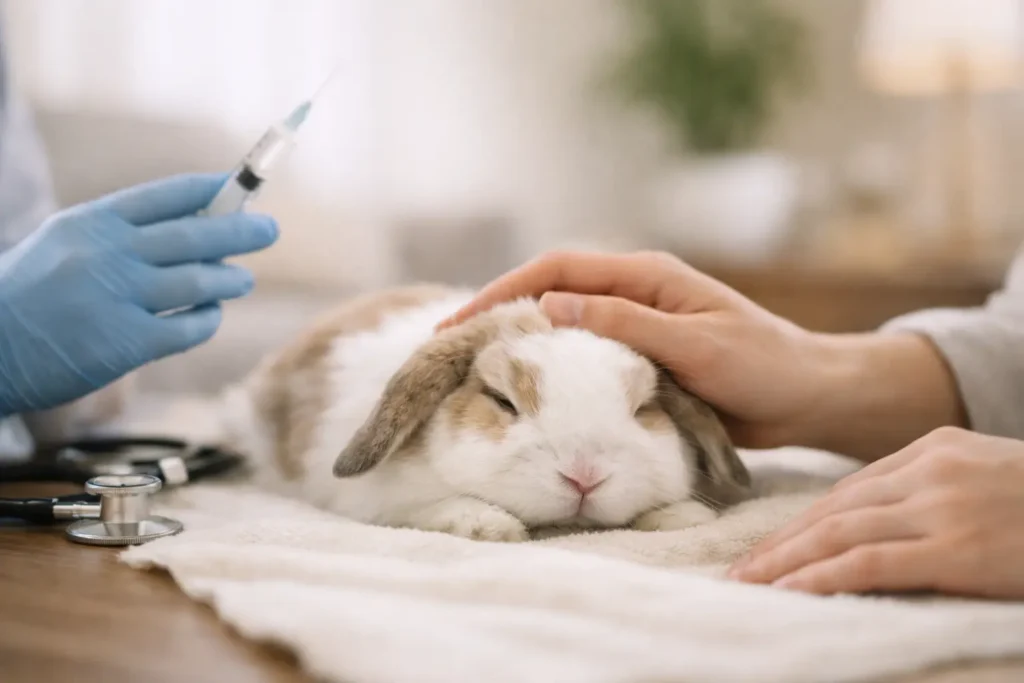
A rabbit’s final days can be especially difficult to read. Rabbits are prey animals and often hide pain or weakness until they are very unwell. When eating, movement, grooming or interest in familiar company begins to fade, rabbit euthanasia at home can offer a calm, private way to say goodbye, without the added stress of a car journey, waiting room or unfamiliar surroundings.
This is never a decision taken lightly. A qualified veterinary professional can help you understand your rabbit’s condition, discuss their comfort and guide you towards the kindest next step. For some families, that means a treatment plan and more time together. For others, it means choosing a peaceful farewell surrounded by the people, scents and familiar spaces their rabbit knows.
A diagnosis alone does not always determine quality of life. Some rabbits adapt remarkably well to chronic illness or disability when their pain is controlled, they are eating well and they remain interested in their environment. Equally, a rabbit may be struggling even where the signs appear subtle.
Consider how your rabbit is coping across the whole day, rather than focusing on one good or bad moment. Are they eating hay and their usual food willingly? Can they rest comfortably and move without obvious difficulty? Are they keeping clean, using the litter area, responding to a favourite treat or enjoying gentle companionship? A sustained change in these everyday behaviours can matter greatly.
Signs that need prompt veterinary advice include refusing food, very small or absent droppings, severe lethargy, laboured breathing, collapse, uncontrolled pain, or a rabbit that cannot stay clean and comfortable. Rabbits can deteriorate quickly, particularly when their gut function slows or stops. If you are worried that your rabbit is in immediate distress, contact a veterinary professional without delay rather than waiting for a planned appointment.
The most compassionate decision is not always about extending time. It is about protecting comfort, dignity and freedom from suffering. It is also normal to feel uncertain. Asking for a quality-of-life discussion is not giving up on your rabbit. It is a loving way to make sure their needs remain at the centre of every decision.
At-home euthanasia is carried out by a qualified veterinary professional, with the same clinical care and medicines used to provide a humane euthanasia in a veterinary setting. The difference is the setting: your rabbit can remain in a familiar room, in their usual bed or on a soft blanket, with their trusted people nearby.
Before the visit, the veterinary team will discuss your rabbit’s health, current symptoms and any practical arrangements. This conversation gives you a chance to ask questions, explain what matters to your family and talk through aftercare. If there are signs that your rabbit may be in urgent pain or distress, the team can provide immediate triage support and advise on the most appropriate next step.
During the appointment, the vet will take time to assess your rabbit and explain what will happen before proceeding. In many cases, a sedative is given first to allow the rabbit to become deeply relaxed and sleepy. This is particularly valuable for rabbits, who can be sensitive to handling and unfamiliar experiences. Once they are peaceful and unconscious, the final medication is administered to gently stop the heart.
Your vet will confirm that your rabbit has passed away and give you as much time as you need afterwards. There is no rush to leave a consultation room or gather your belongings while you are upset. The appointment moves at a respectful pace, with your rabbit’s comfort and your family’s wishes guiding the experience.
You do not need to create a perfect setting. Your rabbit is likely to feel safest where they already spend quiet time, whether that is their indoor enclosure, a familiar pen or a peaceful corner of the sitting room. Choose a space that is warm, quiet and easy for the vet to access.
It can help to place a favourite blanket or towel nearby and keep the room free from sudden noise. If your rabbit has a bonded companion, speak with the vet beforehand about whether they should be present. In some circumstances, allowing the companion rabbit to see and smell their friend afterwards may help them understand the change, but every pair and home situation is different.
You may wish to offer a favourite herb or a small treat if your rabbit is still interested in food, but there is no expectation to do anything special. Sitting close by, speaking softly or simply being present is enough. Rabbits recognise the calm voices and gentle touch of the people who care for them.
If children are part of the family, consider their age, temperament and wishes. Some children find comfort in being present; others prefer to say goodbye beforehand and create a drawing, letter or memory box. Honest, simple language is usually kinder than confusing phrases. Let them know that the vet will help their rabbit die peacefully because their body is no longer able to be comfortable.
Thinking about aftercare before the day arrives can lift one practical burden from an emotional moment. Your veterinary team can explain the available arrangements and ensure your rabbit is treated with care and respect.
Many families choose cremation. An individual cremation allows ashes to be returned, while a communal cremation does not. The right choice depends on what feels meaningful to you, your budget and whether you would like a physical memorial at home. Some people keep ashes in an urn, scatter them in a significant place where permitted, or choose a small keepsake. Others prefer to remember their rabbit through photographs, a planted flower or a donation to an animal charity.
If you have other rabbits, keep routines as steady as possible in the days that follow. Continue their usual feeding and cleaning schedule, and watch closely for reduced appetite, changes in droppings or unusual withdrawal. Bonded rabbits can grieve, and they may need extra quiet companionship and veterinary advice if they stop eating or appear unwell.
The loss of a rabbit can be profound. They may have been a gentle presence in your home for years, part of children’s routines, or a much-loved companion whose small habits shaped the day. Grief does not depend on an animal’s size, species or the length of time you had together.
You may feel sadness, relief that suffering has ended, doubt about the timing, or all of these feelings at once. Owners often replay the decision afterwards, even when it was made with great care and clear veterinary guidance. Try to return to the reasons you chose a peaceful goodbye: the changes you saw, the comfort you wanted to protect and the love behind the decision.
At Vets 2 Your Pets, our experienced veterinary professionals understand that this is not simply an appointment. It is a farewell to a valued family member. We aim to provide calm guidance, clinical excellence and the space for your rabbit to be surrounded by love.
When the time comes, the kindest thing you can offer is not a perfect goodbye. It is your thoughtful presence, a familiar home and the reassurance that your rabbit’s comfort came first.
Covering multiple regions with rapid response times and expert clinicians who know your area.

Our friendly team is always ready to support you. Our mobile veterinary service brings professional care straight to your home, making veterinary visits more convenient and pleasant for you and your pet. Whether you need advice, routine care, or treatment, we’re here to answer your questions and provide a calm, personalised service in the comfort of your own surroundings.
If you’re considering pet euthanasia at home and want to understand the process, costs, or aftercare options, or if you’d like to know more about our other services, please reach out to our experienced team today.
If you’re considering pet euthanasia at home and want to understand the process, costs, or aftercare options, or if you’d like to know more about our other services, please reach out to our experienced team today.

Vets 2 Your Pets
Vets 2 Your Pets
Send us a message and we'll get right back to you.
