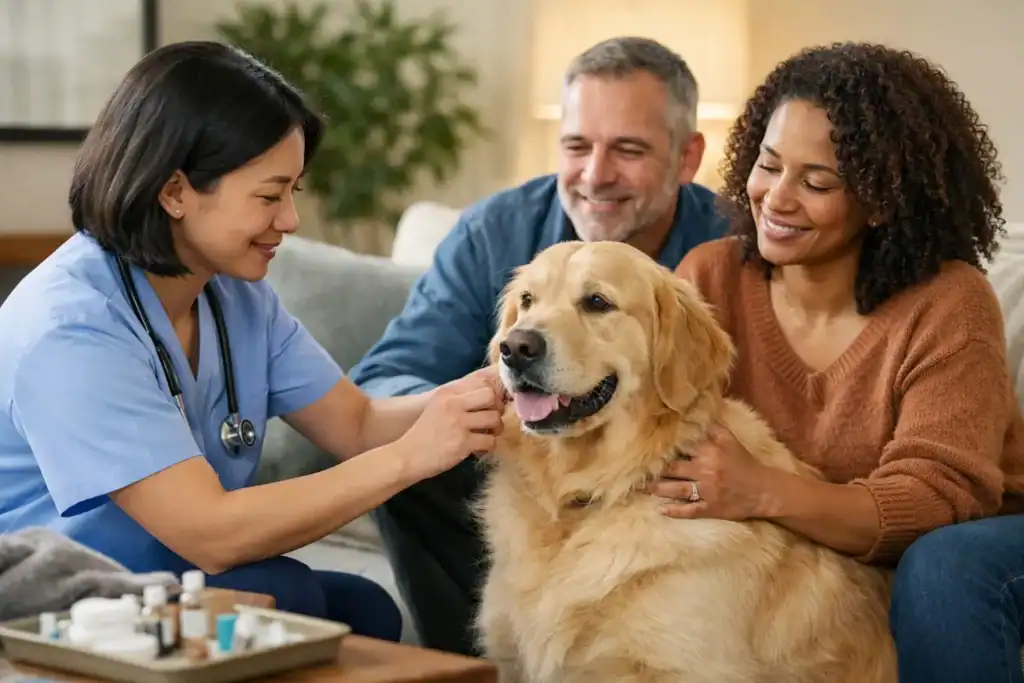
A vaccination appointment should not have to begin with a stressful car journey, a crowded waiting room or an anxious pet hiding beneath a chair. Pet vaccinations are a practical way to protect dogs, cats and rabbits from preventable infectious disease, and they can often be given calmly in the place your pet knows best: home.
For older animals, nervous pets, multi-pet households and families with limited mobility, an at-home visit can make routine preventative care feel far more manageable. A qualified veterinary professional can assess your pet, discuss their lifestyle and vaccination history, and provide clear guidance without adding unnecessary stress to the day.
Vaccines prepare the immune system to recognise certain infections before a pet encounters them in real life. They do not make illness impossible in every circumstance, but they significantly reduce the likelihood of many serious diseases and can lessen their severity if infection does occur.
The illnesses covered vary by species, age, location and lifestyle. For dogs, vaccination plans commonly include protection against diseases such as parvovirus, distemper, infectious canine hepatitis and leptospirosis. Cats are often vaccinated against feline panleukopenia, cat flu viruses and feline leukaemia where their individual risk makes it appropriate. Rabbits need protection against myxomatosis and rabbit viral haemorrhagic disease strains.
These are not distant or purely theoretical risks. Some infections can spread quickly, cause severe suffering and be difficult or impossible to treat successfully. Vaccination is therefore part of responsible everyday care, alongside parasite control, good nutrition, dental care and prompt veterinary attention when your pet is unwell.
There is no single timetable that suits every animal for life. Puppies, kittens and young rabbits need an initial course to establish protection, followed by boosters at intervals recommended by a veterinary professional. Adult pets may need annual health checks alongside vaccinations, although the precise products and timing can differ.
Your pet’s needs may also change. A dog who begins attending day care, boarding kennels or group training may have a different exposure risk from one who lives quietly at home. An indoor cat’s risk profile can change if they start going outside, share a home with other cats or go into cattery boarding. Even house rabbits can be exposed to disease through insects, contaminated material or contact with other rabbits.
This is why a health check is an essential part of the appointment, rather than a formality before an injection. The veterinary professional will ask about appetite, energy levels, toileting, any recent illness, medication and changes in behaviour. They will also review your pet’s records and discuss the most appropriate next step.
Many owners receive reminders from their veterinary provider, but it is helpful to keep your own record too. Check your pet’s vaccination card or previous clinical notes, particularly if you have moved house, changed practice or adopted a pet with an incomplete history.
If a booster is overdue, do not assume the answer is simply to restart everything. The right approach depends on how long it has been, your pet’s age, the vaccine used and their individual circumstances. Your veterinary team can review the information and explain whether a standard booster, a catch-up plan or a new primary course is needed.
It is also sensible to plan ahead for boarding, travel or bringing home a new puppy or kitten. Some facilities require vaccinations to have been given a certain number of days before admission, and protection is not always immediate after a first dose. Leaving the conversation until the week before a holiday can create avoidable pressure.
Young animals are particularly vulnerable because their immune systems are still developing. They usually receive a course of vaccines at specific ages, followed by a later booster. The exact schedule matters, so it is worth discussing it early, ideally as soon as your new pet comes home.
For breeders, arranging litter vaccinations and microchipping at home can reduce the practical challenge of transporting several puppies or kittens to a surgery. It also allows each animal to be checked in familiar surroundings, with records completed carefully before they move to their new families.
New owners should be given clear documentation and know when the next vaccination is due. This helps provide continuity, even if the pet’s new family registers with a different veterinary provider.
For many pets, yes. Familiar smells, familiar people and the absence of other animals can make a genuine difference, especially for cats who find carriers and travel distressing, or dogs who become overwhelmed in busy clinical environments. A calm home appointment also gives owners time to raise concerns without feeling rushed.
At-home care is not about cutting corners. The same clinical judgement is needed to determine whether an animal is well enough to be vaccinated that day. If your pet has a fever, vomiting, diarrhoea, marked lethargy or another significant change in health, the appointment may need to focus on investigating the problem rather than proceeding with routine vaccination.
There are times when a clinic setting is the safer choice, such as when a pet needs urgent diagnostics, imaging, surgery or intensive monitoring. Good veterinary care means recognising those boundaries and directing you towards the right level of support. Home visits work best when they complement appropriate clinical decision-making, not when they delay necessary treatment.
Before the visit, have your pet’s vaccination record available if possible. For cats and rabbits, it can help to keep them in a quiet room with doors and windows closed shortly before the appointment. Dogs generally benefit from a familiar, uncluttered space where they can settle beside their owner.
The veterinary professional will begin by taking a history and carrying out a health examination. They may listen to the heart and lungs, check eyes, ears, teeth and skin, feel the abdomen and assess weight, body condition and mobility. This is a valuable opportunity to talk about concerns that may otherwise be easy to put off, from itching and stiff joints to appetite changes or a new lump.
If vaccination is appropriate, the injection itself is usually very quick. Gentle handling, quiet reassurance and allowing your pet a little time to settle can make the experience easier. Some animals barely notice it; others need more patience. The aim is never to rush a frightened pet simply to finish an appointment.
After vaccination, most pets continue with their day as normal. Mild tiredness, temporary soreness at the injection site or a reduced appetite for a short period can occur. More serious reactions are uncommon, but owners should seek veterinary advice promptly if they notice facial swelling, breathing difficulties, collapse, repeated vomiting or any reaction that concerns them.
A vaccination visit can be a useful yearly pause to look at the wider picture of your pet’s health. Parasite treatment, weight management, dental disease, skin problems and age-related pain are all easier to address when noticed early. For senior pets, a gentle examination in the comfort of home may be especially valuable when travelling has become difficult.
Vets 2 Your Pets provides preventative care with the same calm, home-first approach used across its veterinary services. Telephone enquiries are supported by veterinary nurses, helping owners understand what type of appointment their pet may need and when more urgent assessment is required.
If your pet is due a booster, has an uncertain vaccination history or finds traditional appointments difficult, asking for advice is a kind first step. A well-planned visit can protect their health while respecting the comfort and trust they place in you.
Covering multiple regions with rapid response times and expert clinicians who know your area.
Our friendly team is always ready to support you. Our mobile veterinary service brings professional care straight to your home, making veterinary visits more convenient and pleasant for you and your pet. Whether you need advice, routine care, or treatment, we’re here to answer your questions and provide a calm, personalised service in the comfort of your own surroundings.
If you’re considering pet euthanasia at home and want to understand the process, costs, or aftercare options, or if you’d like to know more about our other services, please reach out to our experienced team today.
If you’re considering pet euthanasia at home and want to understand the process, costs, or aftercare options, or if you’d like to know more about our other services, please reach out to our experienced team today.

Vets 2 Your Pets
Vets 2 Your Pets
Send us a message and we'll get right back to you.
