 Skip to content
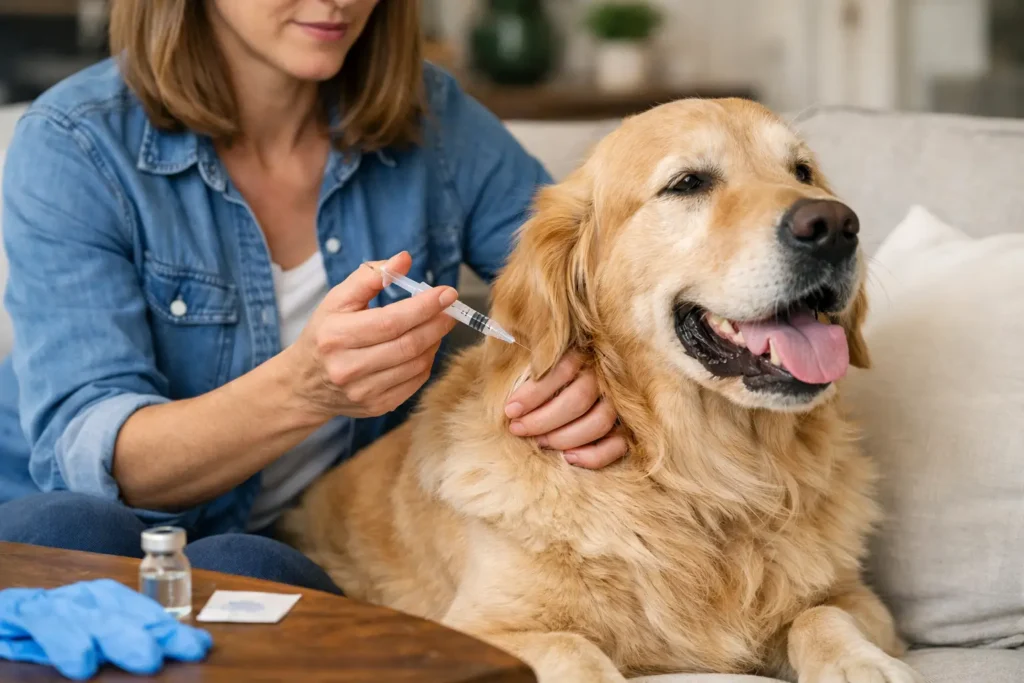
A dog who cannot stop scratching rarely gets much rest – and neither does their family. Sore skin, interrupted sleep, licking paws and repeated ear irritation can make everyday life uncomfortable. A Cytopoint injection at home offers a calmer way for eligible dogs to receive veterinary treatment, without the car journey, waiting room or unfamiliar smells that can add to their stress.
For nervous dogs, older dogs, or those whose skin is already painful and inflamed, being treated in their own familiar surroundings can make a meaningful difference. A qualified veterinary professional can assess your dog, discuss their symptoms and administer Cytopoint where appropriate, with the same careful clinical oversight you would expect from a veterinary appointment.
Cytopoint is a veterinary medicine used to help control the signs of atopic dermatitis in dogs. Atopic dermatitis is a long-term allergic skin condition. Dogs may react to things in their environment such as house dust mites, pollens, grasses or moulds, leading to persistent itchiness and inflamed skin.
Unlike a steroid treatment, Cytopoint is a targeted monoclonal antibody. It works by neutralising a protein involved in sending itch signals to the brain. Put simply, it can interrupt the message that tells your dog to scratch. Reducing the urge to scratch gives sore skin a better chance to settle and helps break the frustrating itch-scratch cycle.
Cytopoint is given as an injection under the skin by a veterinary professional. It is not a treatment to administer yourself at home. The dose is based on your dog’s weight, and a vet must decide whether it is suitable after considering their symptoms, general health and medical history.
Some dogs show improvement within a day or two, while others take a little longer. The benefit commonly lasts around four to eight weeks, but there is no fixed timetable. Each dog responds differently, so future injections are planned around their individual comfort rather than a one-size-fits-all schedule.
Home visits can be particularly helpful when a trip to the surgery is likely to make a difficult situation worse. Dogs with allergies may already be tired, uncomfortable and sensitive to handling. For an anxious dog, the prospect of travelling and sitting in a busy reception area can heighten distress before the appointment has even begun.
At-home treatment also has practical advantages for families managing work, children, mobility needs or several pets. There is no need to coax an uncomfortable dog into the car or arrange a lengthy journey after their consultation. Your dog can remain on their own bed, with familiar people nearby, and settle back into their normal routine afterwards.
That said, a home visit is not always the best clinical option. If your dog has severe skin infection, extensive wounds, breathing difficulties, facial swelling, collapse, marked lethargy or another urgent concern, they may need facilities, diagnostics or emergency treatment that are best provided in a veterinary hospital. When you make an enquiry, clear triage support helps ensure your dog is directed to the right care promptly.
Itchiness is a symptom, not a diagnosis. While Cytopoint can be very effective for allergic skin disease, scratching can also be linked to fleas, mites, ear disease, food reactions, bacterial or yeast infections, pain, or other skin conditions. A dog who repeatedly chews one paw, for example, may have a local problem rather than generalised allergy.
During the consultation, the veterinary professional will ask when the signs began, whether they occur all year or at particular times, what parasite prevention your dog receives, and whether there have been changes to diet, home life or grooming products. They will examine the skin, coat and ears where possible. Photos of flare-ups, notes on previous treatments and details of any medicines or supplements can all be useful.
For dogs with a known history of atopic dermatitis that has responded well to Cytopoint, recurring home injections may be a straightforward part of their ongoing care plan. If the itch is new, worsening or accompanied by damaged skin, the vet may recommend additional treatment or a follow-up examination first. This is not a delay for its own sake – it is how we protect your dog’s comfort and health.
A calm appointment begins before the injection. Your visiting veterinary professional will take time to understand what has been happening and to make sure Cytopoint remains an appropriate option. If your dog has had Cytopoint before, let them know when the last injection was given and how well it worked.
The injection itself is usually quick. Many dogs tolerate it well, especially when they can stay close to their family in a quiet room. You may be asked to have a favourite treat ready, if this is suitable for your dog, and to choose a calm space with good lighting and enough room for a gentle examination.
Afterwards, most dogs can carry on with their day as normal. Your vet will explain what response to look for, when to get in touch, and how a future appointment may be arranged if the itching returns. Vets 2 Your Pets provides recurring therapeutic injections in the comfort of home, delivered by experienced veterinary professionals with your pet’s wellbeing at the centre of each visit.
Be open about any previous reaction to an injection or medicine, and mention all treatments your dog is currently receiving. This includes prescribed medicines, flea and worming products, supplements and shampoos. If your dog is pregnant, intended for breeding, has another illness, or has developed a new symptom since their last consultation, your vet needs to know before treatment is given.
It is also helpful to discuss what success looks like for your dog. For one family, it may mean sleeping through the night without scratching. For another, it may be being able to enjoy a walk without chewing their feet afterwards. Cytopoint may greatly reduce itch, but it does not remove the underlying tendency to allergy. Some dogs still need parasite control, skin care, ear treatment, dietary investigation or treatment for secondary infection alongside it.
Cytopoint is generally well tolerated, but no medicine is entirely without risk. Follow the advice given at your appointment and contact a veterinary professional if you are concerned about any change in your dog. Seek urgent veterinary advice if your dog develops signs of a serious allergic reaction, such as swelling of the face, difficulty breathing, weakness or collapse.
Keep a simple record of itching, paw licking, ear shaking, skin redness and sleep over the weeks after the injection. This helps show how long the benefit lasts and whether symptoms are seasonal or changing. It can also make the next discussion with your vet more precise, rather than relying on memory after several difficult weeks.
Avoid using human creams, antihistamines or leftover pet medication without veterinary direction. Some products can be harmful to dogs, and others may mask signs that the vet needs to assess. If your dog’s skin becomes oozy, smelly, painful or suddenly much worse, do not wait for the next planned injection – ask for advice.
A home Cytopoint appointment is about more than avoiding a car journey. It gives an itchy dog the chance to be examined and treated in the place where they feel safest, while giving you calm, qualified guidance on the next right step. When your dog is more comfortable, the whole household can breathe a little easier.
When you love your pet deeply, the thought of saying goodbye feels almost impossible. Alongside the emotional weight of the decision, many owners also worry about where their pet should spend their final moments. Choosing between home euthanasia and a traditional veterinary clinic appointment is a personal decision, and one...
Covering multiple regions with rapid response times and expert clinicians who know your area.
Our friendly team is always ready to support you. Our mobile veterinary service brings professional care straight to your home, making veterinary visits more convenient and pleasant for you and your pet. Whether you need advice, routine care, or treatment, we’re here to answer your questions and provide a calm, personalised service in the comfort of your own surroundings.
If you’re considering pet euthanasia at home and want to understand the process, costs, or aftercare options, or if you’d like to know more about our other services, please reach out to our experienced team today.
If you’re considering pet euthanasia at home and want to understand the process, costs, or aftercare options, or if you’d like to know more about our other services, please reach out to our experienced team today.
Vets 2 Your Pets
Vets 2 Your Pets
Send us a message and we'll get right back to you.
