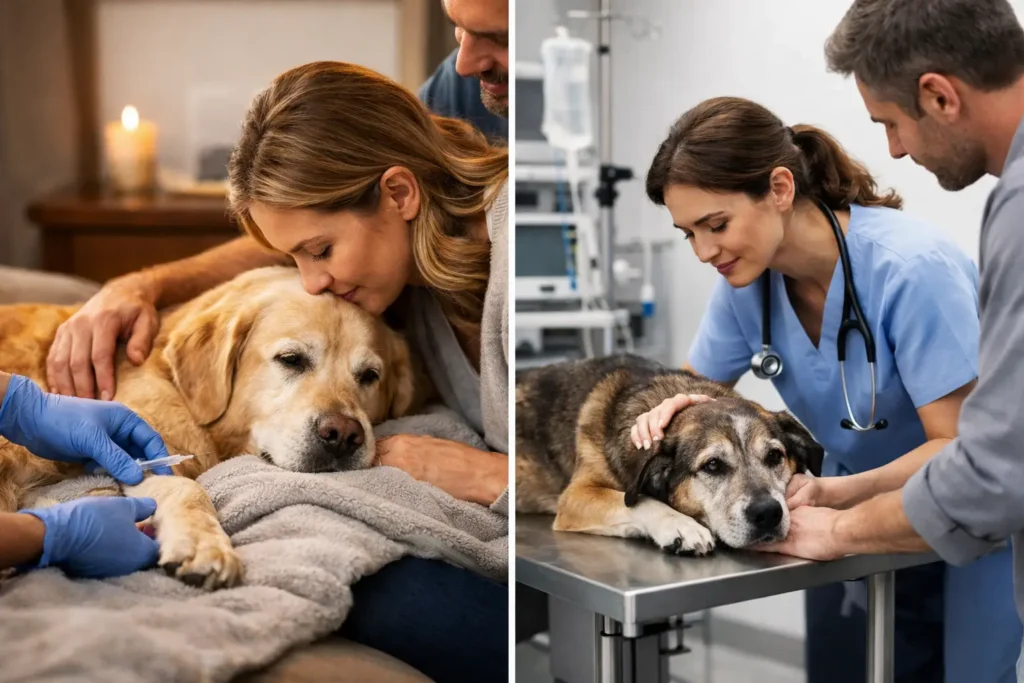
The final journey with a much-loved pet rarely feels straightforward. You may be watching small changes – a dog no longer greeting you at the door, a cat hiding from a favourite sunny spot, or a rabbit finding movement increasingly difficult – while trying to make every remaining day comfortable. When the time comes to consider home euthanasia versus clinic care, the question is not simply where the appointment happens. It is about your pet’s comfort, your family’s needs and the practical support available on the day.
There is no single right choice for every animal or every family. Both a veterinary practice and a home visit can provide compassionate, professional end-of-life care. Understanding the differences can help you make a decision with more confidence and less pressure.
The main difference is the setting. At a clinic, your pet is cared for by a familiar veterinary team in a fully equipped clinical environment. At home, an experienced veterinary professional comes to you, allowing your pet to remain in the place they know best.
For many pets, the journey to a surgery is the most difficult part. Travel, a carrier, the smell of unfamiliar animals and time in a waiting room can be particularly unsettling for anxious cats, elderly dogs, rabbits and pets with painful mobility conditions. A home visit removes those stages. Your pet can stay on their bed, beside a favourite person, or in a quiet part of the garden if the weather and their condition allow.
A clinic appointment may suit families who already have a close relationship with their practice, need an urgent assessment, or feel more comfortable in a familiar medical setting. Some owners also prefer to leave the home afterwards rather than associate a particular room with a goodbye. Neither response is wrong. Grief is personal, and the kindest option is the one that feels manageable while protecting your pet’s welfare.
At-home euthanasia is designed to be unhurried and calm. The veterinary professional will talk through what will happen, answer any last questions and give you time to settle your pet in a place where they feel safe. There is no need for them to be placed on a consulting table unless that is genuinely more comfortable for them.
In many cases, a sedative is given first. This helps your pet become deeply relaxed or fall asleep, and gives everyone time to be close without rushing. Once they are peaceful and unaware, the final medication is administered. The veterinary professional will confirm gently that your pet has passed away.
You can choose who is present. Some families want children, other pets or close friends nearby; others prefer a quiet farewell with one or two people. There is no expected script, and you do not need to make the moment look a certain way. Speaking to your pet, holding them, offering a favourite blanket or simply sitting beside them can all be meaningful.
Occasionally, natural physical changes can happen after death, such as a final breath, a small movement or the release of the bladder. These are normal reflexes, not signs that a pet is suffering. Knowing this in advance can spare families an unexpected worry at an already emotional time.
Home visits are not always possible or appropriate. If a pet is in sudden, severe distress – for example, struggling to breathe, experiencing uncontrolled pain, collapsing repeatedly or having ongoing seizures – immediate veterinary assessment is the priority. In these circumstances, the fastest available clinic or emergency service may be the kindest choice.
A clinic can also be preferable where a pet needs examination or stabilisation before any decision is made. Euthanasia should never be treated as a routine appointment without thoughtful clinical judgement. A qualified veterinary professional will consider your pet’s condition, their quality of life and whether treatment, pain relief or supportive care could still offer a good level of comfort.
Practical circumstances matter too. Limited parking, a household that is too busy or noisy, or a pet who becomes worried by visitors may make a clinic feel calmer. If you are unsure, talk honestly about your pet’s behaviour and current symptoms when you enquire. Good triage support helps determine whether a planned home visit is suitable or whether urgent clinic care is needed.
Many owners wait for a single unmistakable sign, but decline is often gradual. It can be helpful to notice patterns over several days rather than judging one difficult afternoon. Is your pet eating and drinking with interest? Can they rest comfortably? Are they able to get up, use the toilet and enjoy the things that normally matter to them? Do good days still outweigh the bad?
For a pet with arthritis, cancer, heart disease, neurological illness or advanced age, quality of life can change quickly. Pain, breathlessness, confusion, repeated sickness, loss of mobility or withdrawal from family life can all indicate that more support is needed. They do not automatically mean euthanasia is the next step, but they are reasons to seek veterinary guidance promptly.
A quality-of-life assessment creates space for an open conversation. It can help you distinguish between a temporary setback and a decline that is no longer fair on your pet. Many people worry they will choose too early or leave it too late. There may never be a moment that feels emotionally easy, but a decision made to prevent suffering is an act of care.
It can feel difficult to discuss aftercare before your pet has died, yet deciding in advance removes practical decisions from a moment when you may feel overwhelmed. At home, your veterinary provider can usually explain the options clearly and arrange respectful collection after the appointment.
Individual cremation allows ashes to be returned to you, while communal cremation does not. Some families choose to keep ashes in an urn, scatter them in a meaningful place or create a small memorial at home. Others prefer not to receive ashes and find comfort in knowing their pet has been handled with dignity. There is no right answer – only the option that best reflects your relationship and what will support you afterwards.
If you have other animals at home, you may also wish to consider whether they should have a chance to see or smell their companion after death. Some pets appear to settle more readily when they understand the change, while others show little interest. Your veterinary professional can guide you, but you know your household best.
A compassionate provider should be happy to explain the process in plain language. Ask whether a sedative is included, how much time is allowed for the visit, who will attend, what aftercare choices are available and what happens if your pet deteriorates before the booked appointment. It is also reasonable to ask about total costs, including travel and cremation, so there are no surprises.
At Vets 2 Your Pets, telephone enquiries are supported by veterinary nurses who can provide immediate triage guidance and help families understand the available options. That professional conversation can be especially reassuring when you are trying to balance love, worry and a pet’s changing needs.
Choosing between home euthanasia and a clinic is not a test of how much you love your pet. A peaceful farewell can happen in either setting when it is led by clinical judgement, kindness and attention to your pet’s individual comfort. If home is where they feel safest, remaining surrounded by familiar sounds, scents and people can be a profound comfort. If urgent or clinic-based care is what protects them from distress, that is equally compassionate.
When you are ready, focus on the next kind step rather than every decision at once. Ask for guidance, make the environment as calm as possible and allow yourself time to be present with the companion who has shared so much of your life.
Covering multiple regions with rapid response times and expert clinicians who know your area.
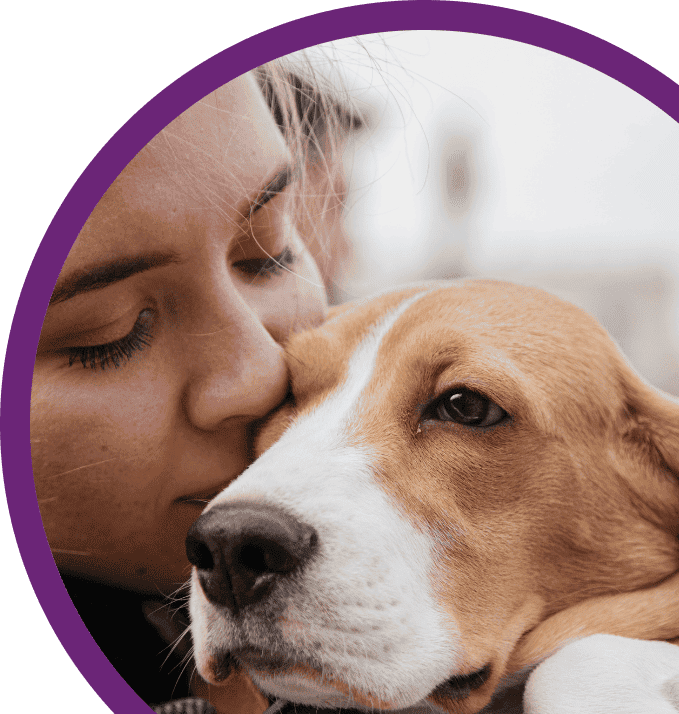
Our friendly team is always ready to support you. Our mobile veterinary service brings professional care straight to your home, making veterinary visits more convenient and pleasant for you and your pet. Whether you need advice, routine care, or treatment, we’re here to answer your questions and provide a calm, personalised service in the comfort of your own surroundings.
If you’re considering pet euthanasia at home and want to understand the process, costs, or aftercare options, or if you’d like to know more about our other services, please reach out to our experienced team today.
If you’re considering pet euthanasia at home and want to understand the process, costs, or aftercare options, or if you’d like to know more about our other services, please reach out to our experienced team today.

Vets 2 Your Pets
Vets 2 Your Pets
Send us a message and we'll get right back to you.
