 Skip to content
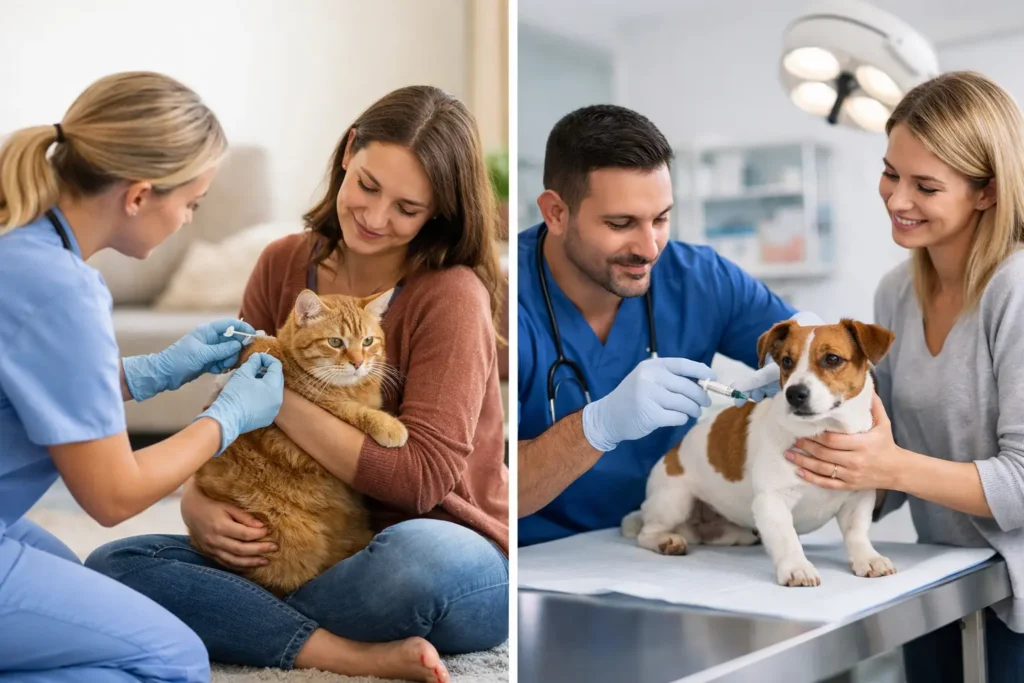
A yearly booster may take only a few minutes, yet for some pets the journey to the surgery begins hours earlier: the carrier appears, the car starts, and anxiety builds. When considering home vaccination versus clinic care, the best choice is not simply the most convenient one. It is the setting where your pet can be assessed properly, vaccinated safely and treated with the least possible distress.
For many healthy dogs, cats and rabbits, either option can be appropriate. The right decision depends on their temperament, medical history, practical needs and whether the appointment is likely to involve more than a routine vaccination.
A vaccination is not just an injection. Before administering it, a qualified veterinary professional should carry out a health check and ask about changes since your pet was last seen. This may include their appetite, drinking, mobility, weight, behaviour, toileting, skin, ears and any recent illness.
That conversation matters because vaccines are usually given only when an animal is well enough to receive them. If your pet has been off their food, has diarrhoea, is coughing, seems unusually quiet or has had a previous vaccine reaction, the clinician may advise postponing vaccination or taking a different approach. A careful examination protects your pet and ensures the vaccination plan remains appropriate.
Your pet’s records should also be reviewed. Puppies, kittens and rabbits require a particular primary course, while adult pets may need boosters at intervals determined by the vaccine used, their lifestyle and current guidance. A professional visit should leave you clear about what has been given, when the next dose is due and what mild after-effects to watch for.
For an anxious animal, home can be a far kinder place for routine care. There is no car journey, crowded waiting room, unfamiliar smells or close contact with other animals. Cats can remain in their own territory rather than being placed in a carrier, and older dogs do not have to manage slippery floors, busy reception areas or a difficult walk from the car park.
This can make a significant difference to the quality of the examination. A pet who is relaxed in their familiar surroundings may be easier to handle and more able to show their usual behaviour. Owners can also speak more freely at home, without feeling rushed while other appointments wait.
Home visits can be especially helpful for pets who are fearful, mobility-limited or recovering from a stressful period of illness. They also suit multi-pet households, where taking several animals to a surgery can be challenging, and breeders arranging litter vaccinations and microchipping. In these situations, reducing travel and disruption is not merely a convenience – it can be an important part of compassionate care.
That said, home is not automatically stress-free for every pet. Some animals become protective of their space or are unsettled when a visitor enters the house. A dog that is very reactive around strangers, for example, may be more comfortable with a planned clinic appointment where handling support and the environment can be carefully managed. Sharing this behaviour honestly when booking helps the veterinary team prepare appropriately.
A veterinary clinic has equipment, staff support and diagnostic facilities immediately available. This can be valuable if a health check reveals something that needs further investigation, such as a painful abdomen, a heart murmur, a wound, significant weight loss or breathing concerns.
Clinics are also often the most suitable choice when a pet needs blood tests, imaging, dental treatment, sedation, surgery or emergency care alongside their vaccination. Although a home-visit professional can identify concerns and guide you on next steps, some problems need the resources of a fully equipped practice without delay.
The same applies if your pet has a complex medical history or has previously experienced a serious reaction to a vaccine. A clinician will assess the individual risks, but a clinic setting may provide additional reassurance where closer monitoring or rapid intervention could be needed.
This is not a failure of home care. It is good clinical judgement. The safest setting is the one that matches the care your pet may require on that day, rather than the setting that feels most appealing in principle.
A professional home vaccination service should never feel like an informal shortcut. Vaccines must be stored and transported correctly, used within the required temperature range and recorded accurately. The veterinary professional should have access to your pet’s relevant history, discuss consent, check that the vaccine is suitable and explain any advice following treatment.
It is sensible to ask who will attend, what qualifications they hold and how the service manages triage if your pet is unwell. You should also understand what happens if an examination indicates that a vaccination should not go ahead. Clear answers are a sign that your pet’s welfare comes before completing the appointment.
At Vets 2 Your Pets, telephone enquiries are supported by veterinary nurses, with visits delivered by experienced veterinary professionals. This gives owners a calm route to ask questions before an appointment while retaining qualified clinical oversight.
After vaccination, most pets are completely well or have only mild, short-lived effects such as tiredness, tenderness at the injection site or a reduced appetite. Your clinician will explain what is expected and when to seek urgent advice. Facial swelling, repeated vomiting, collapse, breathing difficulty or marked distress require immediate veterinary attention.
Home appointments usually save time around the appointment rather than during it. There is no journey, parking or waiting-room delay, which can be invaluable for busy families, owners without easy transport and people caring for elderly pets. The visit itself may also feel more measured, because it takes place in the environment where you can show the clinician everyday concerns.
A clinic appointment may be less expensive in some cases because the surgery does not need to account for travel time and mileage. Home care can carry a visit charge, particularly outside a local route or for urgent bookings. It is worth asking for a clear price that includes the consultation, health check, vaccine, paperwork and any additional pets, so there are no surprises.
Records deserve attention too. Keep your pet’s vaccination card in a safe place, especially if they may need kennels, a cattery, grooming services, insurance documentation or pet travel paperwork. If you are changing providers, tell the clinician where previous records are held and bring any paperwork you have. An incomplete history can affect which vaccination is recommended.
The aim is not to make your pet perfectly still. It is to give them the best chance of feeling safe. Choose a quiet room with enough light and a clear space for the examination. For cats and rabbits, close doors and windows in advance so they cannot disappear into a difficult hiding place. Have their vaccination card, medication details and any questions ready.
Avoid forcing a nervous pet to greet the visitor. Let the veterinary professional guide the pace. A familiar blanket, a favourite treat or a calm family member nearby may help, provided this does not interfere with safe handling. If your pet has bitten, scratched or panicked during veterinary care before, mention it before the visit rather than feeling embarrassed. That information allows a safer, kinder plan to be made.
Home vaccination is often an excellent option for a well pet who finds travelling or clinical environments upsetting, and for households where bringing care home removes a substantial practical burden. A clinic is often preferable when there is a concern requiring diagnostics, additional procedures, intensive handling support or immediate facilities.
You do not need to decide alone. Describe your pet’s age, health, behaviour and any changes you have noticed when you enquire. A qualified team can provide immediate triage support and help you choose the setting that protects both clinical safety and emotional comfort.
The most reassuring appointment is the one where your pet is seen as an individual – not simply a name due for a booster, but a much-loved companion whose comfort deserves careful thought.
Covering multiple regions with rapid response times and expert clinicians who know your area.
Our friendly team is always ready to support you. Our mobile veterinary service brings professional care straight to your home, making veterinary visits more convenient and pleasant for you and your pet. Whether you need advice, routine care, or treatment, we’re here to answer your questions and provide a calm, personalised service in the comfort of your own surroundings.
If you’re considering pet euthanasia at home and want to understand the process, costs, or aftercare options, or if you’d like to know more about our other services, please reach out to our experienced team today.
If you’re considering pet euthanasia at home and want to understand the process, costs, or aftercare options, or if you’d like to know more about our other services, please reach out to our experienced team today.

Vets 2 Your Pets
Vets 2 Your Pets
Send us a message and we'll get right back to you.
