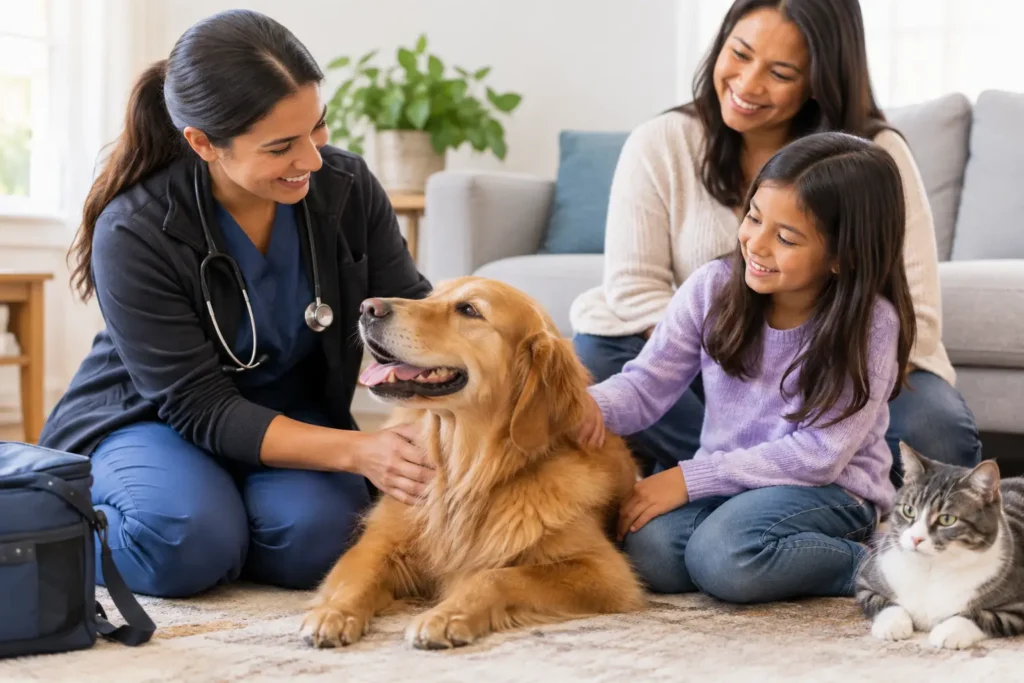
A litter can be perfectly content at home, then become unsettled by a car journey, unfamiliar smells and a busy waiting room. Mobile vet breeder vaccination visits bring qualified veterinary care to the place your puppies or kittens already know, helping breeders keep an important milestone calm, organised and focused on each animal’s wellbeing.
For breeders, this is not simply a matter of convenience. Early preventative care needs accurate records, a suitable vaccination plan and a proper clinical assessment. A home visit can make those essentials easier to arrange while reducing unnecessary handling and travel for a whole litter.
Transporting a litter to a veterinary practice can take planning. Puppies and kittens may need to be carried in separate, secure carriers, kept warm, supervised closely and protected from contact with unfamiliar animals. For a breeder managing a large or lively litter, the practical pressure can be considerable.
At-home appointments avoid much of that disruption. The veterinary professional can assess the litter in a familiar, controlled environment, where young animals are more likely to settle quickly with their mother, siblings and usual bedding nearby. It can also be a kinder option for the dam, particularly if she is still protective, tired or anxious about her young.
There is a practical benefit for breeders too. Rather than organising several journeys or asking buyers to arrange vaccinations independently before collection, you can plan care for the litter together. This supports consistent documentation and gives prospective owners a clearer record of the care each puppy or kitten has received.
Home care does not mean a lower clinical standard. Vaccinations should still be given by qualified healthcare professionals following an appropriate assessment and with proper records. The setting is different, but careful clinical decision-making remains central.
Before an appointment, a veterinary nurse can help with initial enquiries and triage. You may be asked about the species and breed, the number and age of the litter, the mother’s health, previous treatments and whether any youngster has shown signs of illness. This helps the team establish whether a routine home appointment is suitable or whether more urgent investigation is needed.
On the day, the veterinary professional will usually begin with a general health check. They will look at each youngster’s eyes, ears, mouth, skin and coat, listen to the heart and lungs, feel the abdomen and assess body condition, movement and overall demeanour. They may also ask about feeding, toileting, weight gain and any concerns you have noticed since birth.
A vaccination is only one part of the visit. If a puppy or kitten is unwell, underweight, dehydrated, feverish or has diarrhoea, vaccination may need to be delayed while the underlying concern is assessed. This can feel disappointing when a collection date is approaching, but postponing a vaccine can be the safest choice for the individual animal.
Where appropriate, the team can administer the planned vaccination, record the details and discuss the next dose. Depending on the service arranged, a breeder visit may also include microchipping. Combining these routine steps can reduce handling and help keep the litter’s health records in order.
There is no single timetable that suits every litter. Vaccination schedules vary according to species, age, vaccine manufacturer, local disease risk and the veterinary professional’s assessment. Puppies commonly begin their course at around six to eight weeks of age, with a further vaccination later in the course. Kittens also need a staged primary vaccination programme.
The timing matters because young animals receive some protection from their mother’s antibodies through colostrum. Those antibodies are valuable early in life, but they can also affect how well a vaccine stimulates the youngster’s own immune response. This is one reason a primary course involves more than one dose and why breeders should follow the specific advice recorded for each animal.
A first vaccination is not an instant passport to full protection. Until the recommended course is complete, and for the period advised afterwards, puppies and kittens should not be exposed to unnecessary infection risks. New owners need clear, written guidance about when it is safe to begin walks, classes, socialisation opportunities or contact with unfamiliar animals.
Socialisation is still important during this stage, especially for puppies. The aim is not to keep them isolated, but to introduce safe, positive experiences without placing them in high-risk environments. Gentle handling, household sounds, visitors who follow sensible hygiene precautions and calm car familiarisation can all be valuable.
A little preparation helps the visit run smoothly. Choose a warm, clean and well-lit room with enough space to examine each youngster safely. Have a stable table or clear floor area available if requested, but do not place very young or wriggly animals somewhere they could fall. Keep the mother nearby if this helps the litter settle, while allowing the veterinary professional room to work.
It is helpful to have any existing paperwork ready, including previous veterinary records, the mother’s vaccination history and details of any parasite treatments. Keep a simple note of each youngster’s sex, distinguishing markings and any individual concerns. With similar-looking littermates, accurate identification is especially important when vaccines, microchips and records are being completed.
Try not to introduce new foods, baths or an unusually busy routine immediately before the visit. Normal feeding and a quiet household usually make for calmer youngsters. If a puppy or kitten has been off food, has vomited, developed diarrhoea, is coughing, has sore eyes or seems unusually quiet, mention it before the appointment rather than assuming it can wait until the vet arrives.
For many breeders, microchipping is arranged alongside vaccination. It gives each youngster a permanent form of identification and can make record-keeping more reliable. Legal requirements differ across the UK and can change, so breeders should check the rules that apply where they live and ensure registration details are correct before a puppy or kitten goes to a new home.
Good records also support responsible handover. Each new owner should receive the relevant vaccination card, microchip information where applicable, details of parasite treatments, feeding guidance and the date the next vaccine or health check is due. It is worth explaining that they should register with their own veterinary practice promptly, even if their new companion appears completely well.
Buyers often feel reassured when they know their puppy or kitten was assessed in the calm environment where it was raised. It demonstrates thoughtful preparation, but it should never be presented as a guarantee that no health issue will develop. Young animals can change quickly, and new owners should know when to seek veterinary advice.
Home vaccination visits work well for many healthy litters, but they are not appropriate for every situation. A youngster with breathing difficulty, collapse, severe lethargy, persistent vomiting, marked diarrhoea, a suspected injury or signs of serious infection needs urgent veterinary attention. In those circumstances, a practice with hospital facilities, diagnostic equipment and ongoing monitoring may be the safer setting.
Availability can also depend on your location, the number of animals and the nature of the care required. A mobile veterinary team will be clear about what can be provided at home and when referral is advisable. That honest guidance protects the welfare of the litter and gives breeders a clear next step rather than false reassurance.
Vets 2 Your Pets offers a calm, professional approach to breeder litter vaccinations and microchipping, with experienced veterinary professionals bringing care directly to your home where suitable.
A well-planned home visit gives you time to ask questions, understand the next stages of protection and prepare each youngster for a confident start with their new family. For a litter raised with care, that calm beginning can make a meaningful difference.
Covering multiple regions with rapid response times and expert clinicians who know your area.
Our friendly team is always ready to support you. Our mobile veterinary service brings professional care straight to your home, making veterinary visits more convenient and pleasant for you and your pet. Whether you need advice, routine care, or treatment, we’re here to answer your questions and provide a calm, personalised service in the comfort of your own surroundings.
If you’re considering pet euthanasia at home and want to understand the process, costs, or aftercare options, or if you’d like to know more about our other services, please reach out to our experienced team today.
If you’re considering pet euthanasia at home and want to understand the process, costs, or aftercare options, or if you’d like to know more about our other services, please reach out to our experienced team today.

Vets 2 Your Pets
Vets 2 Your Pets
Send us a message and we'll get right back to you.
