 Skip to content
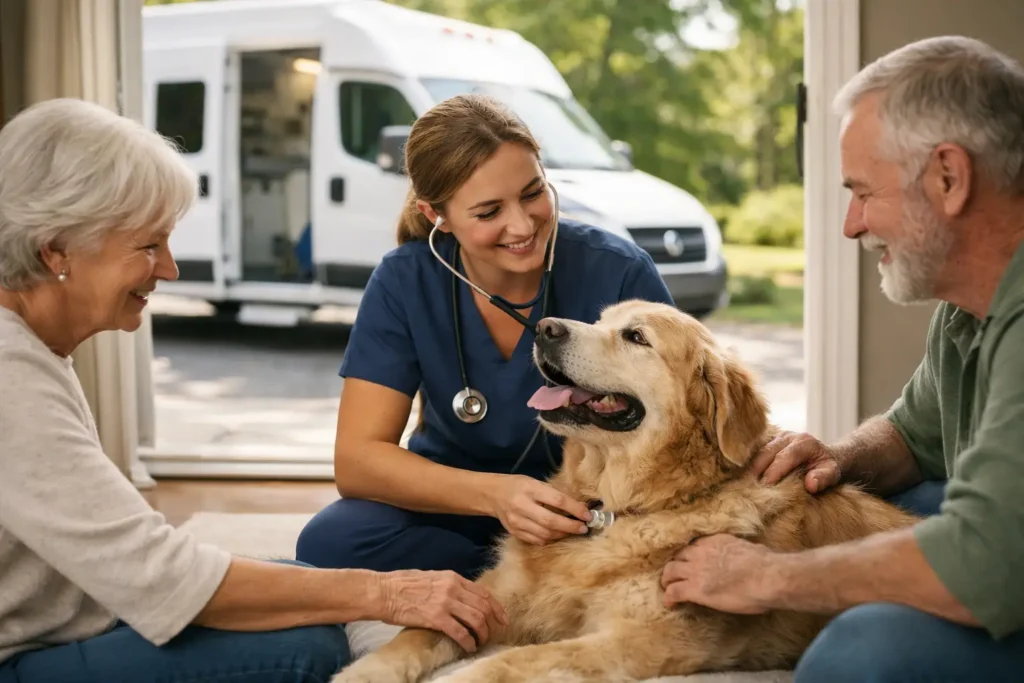
A difficult car journey can change the whole experience of veterinary care. For an elderly dog whose legs ache, a fearful cat who panics in a carrier, or a rabbit unsettled by unfamiliar sounds, a mobile vet can provide professional care without asking them to leave the place where they feel safest: home.
At-home veterinary care is not only for the final days of a pet’s life. It can be a thoughtful option for routine appointments, ongoing treatment and health concerns too. The right choice depends on your pet’s needs, the type of care required and whether the situation needs the equipment and facilities of a veterinary surgery. But for many families, a home visit brings calm, privacy and practical support at a time when all three matter.
A mobile vet is a qualified veterinary professional who visits your home to provide appropriate veterinary care. The appointment takes place in familiar surroundings, with time to understand your concerns and assess your pet as an individual rather than as the next patient in a busy waiting room.
Depending on the service and your pet’s clinical needs, a home visit may be suitable for annual vaccinations, health checks, prescriptions, parasite treatment, microchipping, pet travel documentation and ongoing therapeutic injections. Treatments such as Librela for dogs, Solensia for cats, Cytopoint and Suprelorin can often be given at home where clinically appropriate.
Home visits can also work particularly well for breeders. Litter vaccinations and microchipping can be arranged without moving a group of young puppies or kittens away from their mother and their familiar environment.
There are limits, and a responsible mobile veterinary service will be clear about them. Pets needing urgent surgery, intensive monitoring, advanced imaging or hospitalisation may need referral to a veterinary practice or emergency provider. Good care starts with proper triage, so it is always worth explaining your pet’s symptoms fully when you enquire.
Most pets do not understand that a car journey and a waiting room are leading to help. They may only experience unfamiliar smells, other animals, noise and restraint. For some, the stress begins long before they reach the surgery.
Cats can become distressed simply by seeing the carrier. Dogs with arthritis or reduced mobility may find getting into a car painful. Rabbits and other small companions can be especially sensitive to noise and changes in temperature. In a multi-pet household, transporting one unwell animal may also leave the rest of the group unsettled.
At home, your pet can remain on their own bed, beside a favourite person, or in a quiet room chosen for the appointment. This does not mean every animal will be completely relaxed – pets can still be anxious when they feel unwell or need an examination – but it removes several common pressures at once.
For owners, the benefits are often just as meaningful. You do not need to arrange transport, lift a large dog into the car, manage a frightened cat in a carrier or sit in a waiting room while worrying about what comes next. There is space to ask questions, take in information and make decisions without feeling rushed.
A home visit is often a natural fit for pets who struggle with conventional appointments. This includes older animals, pets with limited mobility, fearful or reactive dogs, cats who find travel deeply stressful, and medically vulnerable animals for whom avoiding unnecessary exposure to a busy waiting area is preferable.
It can also help when the practical demands of a surgery visit are too great. An owner may be recovering from illness, caring for young children, have difficulty travelling, or be supporting a pet whose condition makes moving them uncomfortable. Choosing care at home is not about taking shortcuts. It is about arranging care around your pet’s welfare and your family’s circumstances.
The value of a home visit becomes particularly clear when a pet has a long-term condition. Regular injections, monitoring and supportive checks can become less daunting when they happen in a calm, predictable setting. Familiarity may make repeat appointments easier for both pet and owner.
Few decisions are harder than recognising that treatment is no longer giving a beloved pet a comfortable quality of life. Families may notice changes gradually: less interest in food, difficulty getting up, persistent pain, confusion, withdrawal, or more bad days than good. Sometimes the decline is rapid. Either way, it is normal to feel unsure and overwhelmed.
A quality-of-life conversation with a veterinary professional can bring compassionate, clinical perspective. It is not about being told what to do. It is about understanding your pet’s comfort, function, enjoyment and dignity, so that you can make a decision with care and without feeling alone.
When euthanasia is the kindest option, an at-home visit allows a pet to remain surrounded by familiar voices, smells and people. The veterinary professional will explain what will happen, answer questions at your pace and focus on keeping your pet calm and comfortable. Families can choose a peaceful spot, whether that is a favourite blanket, a quiet corner of the garden, or a room where everyone feels able to be present.
There is no single right way to say goodbye. Some owners want to stay close throughout; others find they need a little distance. Some wish to involve children, while others prefer a private farewell. Gentle guidance can help you consider what is right for your family, without judgement.
Arrangements for individual cremation or other aftercare can also be discussed, so you are not left trying to manage practical decisions in the middle of grief. This support matters. A peaceful farewell should not be followed by uncertainty about what happens next.
Before a visit, the booking team should ask enough questions to understand why you need support and whether a home appointment is suitable. At Vets 2 Your Pets, telephone enquiries are handled by veterinary nurses who can provide immediate triage support and help you understand the next appropriate step.
On the day, it can help to choose a quiet area with good light and enough room for your pet to settle. Keep any recent medical information, medication and vaccination details nearby if you have them. For cats and small pets, closing doors and windows before the professional arrives can prevent an anxious animal from disappearing into an inaccessible hiding place.
You do not need to make your home look clinical or prepare for every possibility. The aim is simply to create a calm, safe space. If your pet has a favourite treat, blanket or person, these small comforts can be useful. The visiting professional will guide the examination and explain recommendations in straightforward language.
For end-of-life appointments, many owners worry about timing or fear they will not know what to say. You do not have to get the words perfect. Be honest about what you are seeing: how your pet moves, eats, rests, interacts and copes from day to day. Those details are valuable and help shape kind, clinically sound advice.
The convenience of a home visit should never come at the expense of professional standards. Ask who will be attending, how clinical decisions are made, what support is available if your pet’s needs change, and whether the service can help with onward referral when necessary.
It is also reasonable to ask about fees, appointment availability, medication, records and aftercare before you book. Clear answers reduce uncertainty and allow you to focus on your pet rather than the process. For euthanasia, ask how the visit is conducted, what choices you will have, and how cremation arrangements are managed.
The best mobile veterinary care feels personal, but it is also clinically grounded. It should offer warmth without making promises that cannot be kept, and professional guidance without losing sight of the bond you share with your pet.
If travelling to a surgery is causing distress, or if you are facing a sensitive decision about your pet’s comfort, asking for help at home can be a compassionate next step. A calm conversation with a qualified veterinary team can give you the clarity and reassurance to do what is kindest for them.
Covering multiple regions with rapid response times and expert clinicians who know your area.
Our friendly team is always ready to support you. Our mobile veterinary service brings professional care straight to your home, making veterinary visits more convenient and pleasant for you and your pet. Whether you need advice, routine care, or treatment, we’re here to answer your questions and provide a calm, personalised service in the comfort of your own surroundings.
If you’re considering pet euthanasia at home and want to understand the process, costs, or aftercare options, or if you’d like to know more about our other services, please reach out to our experienced team today.
If you’re considering pet euthanasia at home and want to understand the process, costs, or aftercare options, or if you’d like to know more about our other services, please reach out to our experienced team today.

Vets 2 Your Pets
Vets 2 Your Pets
Send us a message and we'll get right back to you.
