 Skip to content
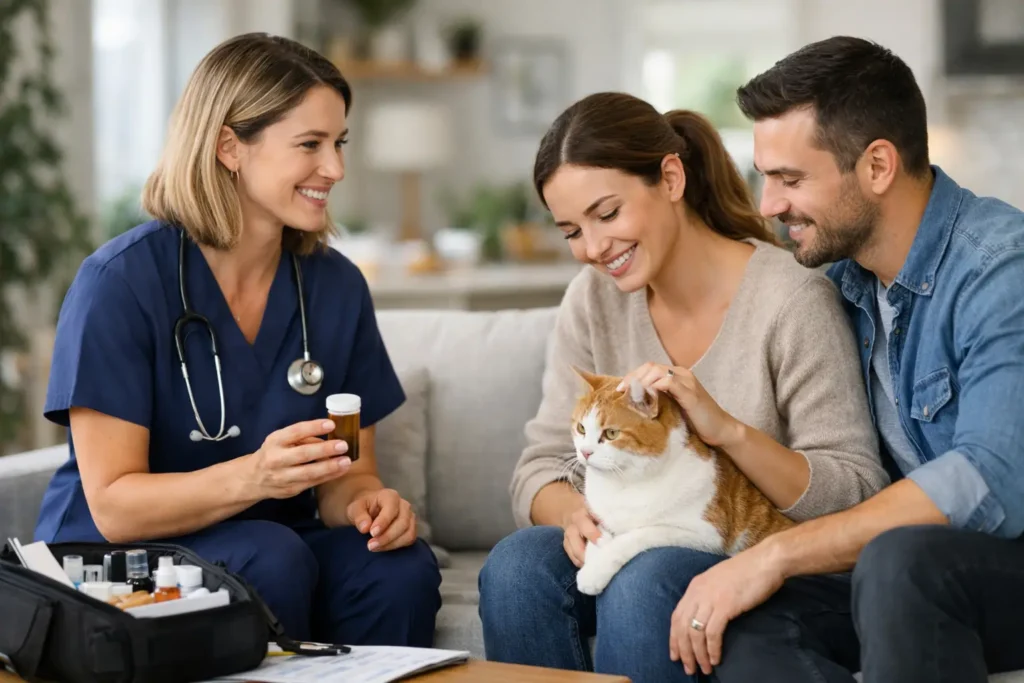
A vet prescription home visit can remove one of the most difficult parts of caring for an unwell pet: getting them into the car, through a waiting room and into an unfamiliar clinical setting. For an elderly dog with painful joints, a frightened cat, a rabbit that finds travelling distressing, or a pet nearing the end of life, being assessed at home can be a kinder and more practical option.
Prescription medication is never simply a product to collect. It is part of a veterinary treatment plan, based on your pet’s condition, current health, weight, history and response to treatment. A home visit gives a qualified veterinary professional the opportunity to assess your pet calmly in the place where they feel safest, answer your questions and discuss what treatment may be appropriate.
Home prescribing can be particularly helpful when a pet has an ongoing condition that needs monitoring or regular treatment. This may include arthritis pain, skin disease, allergies, heart conditions, anxiety, mobility problems or age-related changes. Some pets benefit from recurring therapeutic injections such as Librela for dogs with osteoarthritis pain, Solensia for cats, Cytopoint for allergic skin disease or Suprelorin where appropriate.
The value is not just convenience. A pet that is comfortable at home often behaves more naturally, which can help the veterinary professional understand how they are coping. Owners can also show practical details that are harder to explain in a consulting room: the stairs a dog can no longer manage, where a cat has started sleeping, how much food is left in the bowl, or how a rabbit moves around their enclosure.
A visit may also be suitable for repeat medication, parasite treatment or a general health check, provided the veterinary professional has enough information to prescribe safely. The exact approach depends on the medicine, your pet’s clinical needs and when they were last assessed. Some medications require a fresh examination, tests or monitoring before they can be prescribed again.
In the UK, prescription-only veterinary medicines must be prescribed responsibly by a veterinary surgeon. That means a clinician needs to make an informed professional judgement that the medicine is appropriate for your pet. A telephone conversation can be a useful first step for triage and booking, but it does not replace an examination when an in-person assessment is needed.
During a home appointment, the veterinary professional will usually ask about your pet’s symptoms, appetite, drinking, toileting, mobility, behaviour and any changes you have noticed. They will review previous diagnoses and current medicines, and carry out an examination that is appropriate to the situation. For some pets, this may include listening to the heart and lungs, checking weight and temperature, assessing painful joints or examining the skin, ears or eyes.
This assessment protects your pet. A symptom that appears straightforward can have several possible causes. For example, slowing down may be linked to arthritis, but it can also be associated with heart disease, neurological problems, dental pain or a broader decline in health. A prescription should address the likely cause, not merely mask a sign that needs further investigation.
If you are arranging a visit, have your pet’s existing medication to hand, including packaging or photographs of labels. It is also useful to note when signs began, whether they are getting worse, what your pet is eating and drinking, and any treatment that has already been tried. Small details can make a meaningful difference to clinical decision-making.
Many owners understandably ask whether a repeat prescription can be arranged without the stress of a surgery visit. Sometimes it can, but it depends on the individual pet and medicine. A condition that has been stable for some time may be reviewed differently from a new or worsening problem.
Regular reassessment is often needed to make sure a medicine is still working, the dose remains suitable and side effects are not being missed. Weight changes, reduced kidney or liver function, new medication and changes in appetite can all affect prescribing decisions. A home visit makes this monitoring more accessible for pets that struggle with travel, while maintaining the clinical oversight they need.
For treatments given as injections, an at-home appointment may offer particular reassurance. Your pet can receive care without the anxiety of a car journey and unfamiliar smells, while you have time to discuss whether their comfort, movement or quality of life has changed since the last visit.
There are occasions when a home visit will lead to a recommendation for further tests, hospital treatment or a referral. That is not a failure of home care. It is the right next step when your pet needs equipment, imaging, surgery, intensive monitoring or treatment that cannot safely be delivered at home.
There is no need to create a perfect clinical environment. Your home already gives the visiting professional helpful information about your pet’s usual routine and mobility. A quiet room with good light is often enough, and most examinations can be adapted to suit the pet in front of us.
For cats, it can help to allow them to settle in their preferred room rather than chasing them around the house just before the appointment. For dogs, a short toilet break beforehand may make them more comfortable. Rabbits and other small companions should remain warm, secure and away from household noise or other pets.
If your pet is fearful, reactive or painful to handle, say so when booking. This allows the team to plan appropriately and give you practical guidance beforehand. Calm preparation is safer for everyone, and it helps avoid pushing a pet beyond what they can manage.
It can also be helpful to have another adult present, especially if you would like someone to listen, take notes or help keep other animals settled. There is no expectation that you must restrain your pet or manage a difficult situation alone. The aim is a measured, compassionate assessment, at your pet’s pace where possible.
A prescription home visit is not a substitute for emergency treatment. If your pet is struggling to breathe, has collapsed, is having repeated seizures, has suffered a serious injury, is unable to pass urine, or has eaten something toxic, seek urgent veterinary advice immediately. In these circumstances, the fastest route to appropriate emergency care may be a veterinary hospital.
The same applies if a pet’s pain or distress is severe and cannot be safely managed at home. A veterinary nurse can provide immediate triage support by telephone and help you understand the most suitable next step. Acting promptly is especially important with cats and rabbits, who can become very unwell while showing only subtle early signs.
For families facing a pet’s declining health, medication discussions can feel emotionally heavy. Pain relief, anti-sickness medication, appetite support and other palliative treatments may help a pet remain comfortable for a time, but the right plan depends on their individual condition and quality of life.
A home assessment allows these conversations to happen privately, without rushing and without asking a fragile pet to travel. The veterinary professional can assess comfort, mobility, interest in food, breathing, toileting, interaction and the good moments that still matter to your pet and family. They can explain what may be manageable at home, what changes would be concerning and when a gentle, peaceful farewell may need to be considered.
At Vets 2 Your Pets, this home-first approach is designed to bring professional care and compassionate guidance together. Whether the next step is ongoing treatment, a medication review or an end-of-life discussion, you should not have to navigate it without clear clinical support.
The kindest plan is rarely about doing the most or the least. It is about understanding what your pet needs now, responding to changes with care, and giving them the comfort of being surrounded by the people and places they know.
Covering multiple regions with rapid response times and expert clinicians who know your area.
Our friendly team is always ready to support you. Our mobile veterinary service brings professional care straight to your home, making veterinary visits more convenient and pleasant for you and your pet. Whether you need advice, routine care, or treatment, we’re here to answer your questions and provide a calm, personalised service in the comfort of your own surroundings.
If you’re considering pet euthanasia at home and want to understand the process, costs, or aftercare options, or if you’d like to know more about our other services, please reach out to our experienced team today.
If you’re considering pet euthanasia at home and want to understand the process, costs, or aftercare options, or if you’d like to know more about our other services, please reach out to our experienced team today.

Vets 2 Your Pets
Vets 2 Your Pets
Send us a message and we'll get right back to you.
