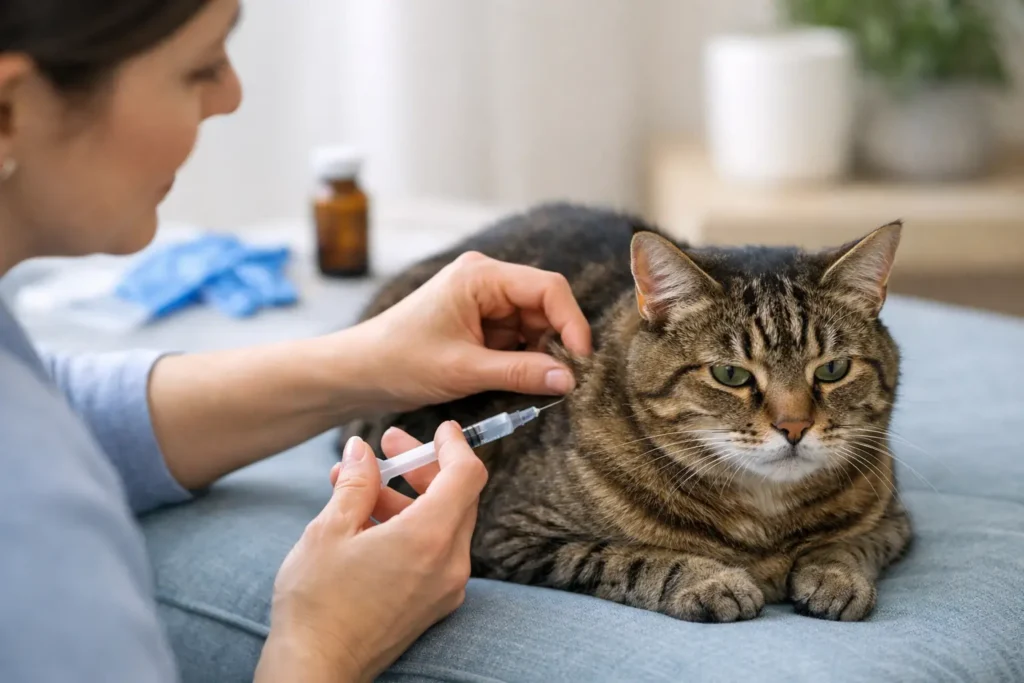
For a cat living with osteoarthritis, even a short car journey and a busy waiting room can make a necessary appointment feel overwhelming. A Solensia injection at home offers a calmer alternative: professional veterinary treatment in the place where your cat feels safest, without the added strain of travelling to a practice.
Solensia is a prescription veterinary medicine used to help control pain associated with osteoarthritis in cats. It is not a treatment to give yourself at home. Instead, a qualified veterinary professional visits your home, assesses your cat where needed and administers the injection safely as part of an agreed treatment plan.
Cats are remarkably skilled at concealing discomfort. Owners often notice small changes long before they see an obvious limp: a cat no longer jumps on to a favourite chair, pauses at the bottom of the stairs, becomes less interested in play, or seems irritable when stroked around the back or hips. These changes are sometimes mistaken for normal ageing, but they can be signs of chronic pain.
Solensia contains frunevetmab, a monoclonal antibody designed for cats. It works by targeting nerve growth factor, a substance involved in pain signalling. By reducing this pain pathway, it can help improve comfort and mobility for cats affected by osteoarthritis.
The medicine is usually given as a monthly injection under the skin. Every cat responds differently. Some families notice a meaningful change in movement, grooming, confidence or willingness to interact after treatment begins; for others, improvement may be more gradual. Your veterinary professional will help you judge whether Solensia is supporting your cat’s quality of life and whether the plan remains appropriate.
For many cats, the clinical setting is the hardest part of treatment. The carrier appears, routines change, the car moves, unfamiliar animals are nearby and there are new sounds and smells. A cat may arrive at the surgery tense and already exhausted by the experience.
At-home care removes many of these pressures. Your cat can remain in familiar surroundings, with their own bedding, familiar scents and the people they trust nearby. This is particularly valuable for elderly cats, cats with limited mobility, very anxious cats and multi-cat households where a trip away can unsettle everyone.
A home visit also gives the veterinary professional a more natural picture of your cat’s day-to-day life. You may be able to show where they struggle to climb, the routes they take around the house, the position of their litter tray or the bed they have stopped using. Those details can be useful when discussing pain, mobility and practical changes that may make life easier.
Home treatment is not simply about convenience. It is about making ongoing clinical care more manageable, so that a monthly injection is less likely to become a source of distress for your cat or your family.
A Solensia appointment at home is designed to be straightforward and unhurried. Before treatment is given, the veterinary professional will confirm your cat’s history, current health and any changes you have noticed since the previous visit. They may ask about appetite, drinking, toileting, activity levels, behaviour and mobility.
Your cat does not need to be perfectly still or enjoy being handled. Experienced veterinary professionals understand feline behaviour and will work calmly around your cat’s needs. Sometimes the injection can be given while a cat is settled on a bed or beside their owner. On other occasions, a little gentle restraint or a quiet, prepared room is helpful. The right approach depends on the individual cat.
The injection itself is usually quick. Afterwards, your veterinary professional can discuss what to watch for over the next month and when to get in touch. If your cat is new to Solensia, has developed new symptoms or is taking other medicines, this conversation is especially valuable.
You do not need to create a clinical environment. A calm, ordinary room is often best. It can help to keep doors and windows closed so your cat cannot slip outside shortly before the visit, and to let the team know in advance if your cat is very fearful, tends to hide or dislikes handling.
Try not to chase your cat around the house to catch them. That can turn an otherwise calm visit into a stressful event. If they have a usual resting place, leave them there if possible. A favourite blanket, a small treat if appropriate for their diet, or a family member sitting quietly nearby can all help your cat feel secure.
Have any medicines, supplements or recent veterinary information available for the appointment. It is also useful to write down the changes you have observed. Pain in cats can fluctuate, and a brief note about jumping, stairs, grooming, sleep, litter tray use and temperament can make patterns easier to spot.
Solensia is one part of osteoarthritis care, not a reason to overlook other changes in your cat’s health. A comfortable home environment can make a real difference alongside veterinary treatment. Keep food, water and a low-sided litter tray easy to reach. Provide warm, supportive sleeping areas and consider steps or ramps for a cherished windowsill, sofa or bed if jumping has become difficult.
Look for practical signs rather than waiting for dramatic ones. Is your cat choosing higher places again? Are they grooming more easily? Do they settle without repeatedly changing position? Are they more willing to play, greet you or move through the house? These observations help show whether their comfort is improving.
Equally, contact your veterinary team if you are concerned. Changes in appetite, vomiting, diarrhoea, unusual tiredness, skin changes, altered balance, or a sudden decline in mobility should be discussed promptly. Not every change will be caused by Solensia, but your cat deserves proper clinical advice rather than guesswork.
Whether Solensia is suitable depends on your cat’s individual circumstances. Your veterinary professional will consider their age, medical history, current medicines and the nature of their pain before recommending treatment. Osteoarthritis is common in older cats, but pain and reduced mobility can have several causes, so an appropriate assessment matters.
Solensia should only be supplied and administered under veterinary direction. Do not use medication prescribed for another pet, change the timing of an injection, or assume a missed appointment can be managed without advice. A monthly plan works best when it is reviewed with your cat’s wider health in mind.
For some cats, travelling to a practice remains necessary for examinations, tests or treatment that cannot safely be completed at home. At-home injections complement veterinary care; they do not replace the need for further investigation when a cat’s symptoms call for it.
Living with osteoarthritis can change the rhythm of a cat’s life, but it does not mean every month has to involve fear, a carrier battle and a stressful journey. With a planned Solensia home visit, ongoing pain relief can be delivered with qualified clinical oversight while protecting the familiarity that matters so much to cats.
Vets 2 Your Pets can help families arrange recurring therapeutic injections in the comfort of home, with calm guidance from experienced veterinary professionals. The most helpful next step is often simply to notice the small things your cat is no longer doing, share them honestly, and give them the chance to be more comfortable in the place they know best.
When you love your pet deeply, the thought of saying goodbye feels almost impossible. Alongside the emotional weight of the decision, many owners also worry about where their pet should spend their final moments. Choosing between home euthanasia and a traditional veterinary clinic appointment is a personal decision, and one...
Covering multiple regions with rapid response times and expert clinicians who know your area.

Our friendly team is always ready to support you. Our mobile veterinary service brings professional care straight to your home, making veterinary visits more convenient and pleasant for you and your pet. Whether you need advice, routine care, or treatment, we’re here to answer your questions and provide a calm, personalised service in the comfort of your own surroundings.
If you’re considering pet euthanasia at home and want to understand the process, costs, or aftercare options, or if you’d like to know more about our other services, please reach out to our experienced team today.
If you’re considering pet euthanasia at home and want to understand the process, costs, or aftercare options, or if you’d like to know more about our other services, please reach out to our experienced team today.

Vets 2 Your Pets
Vets 2 Your Pets
Send us a message and we'll get right back to you.
