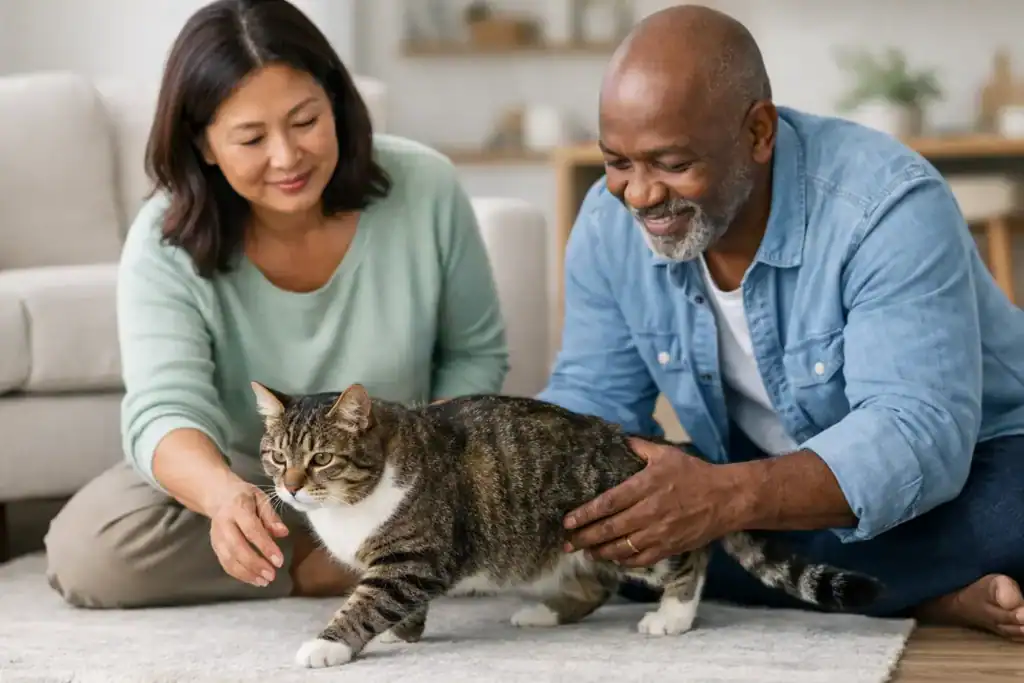
Cats are remarkably skilled at carrying on when something hurts. A cat with stiff joints may still reach a favourite windowsill, but take a longer route, hesitate first, or stop jumping up when nobody is watching. Knowing how to assess cat mobility at home can help you notice these quiet changes early and give your cat the calm, professional support they need.
This is not about testing your cat or making them perform. The most useful observations happen during ordinary life: when they get up after a nap, use the litter tray, climb the stairs, groom, play, and settle down beside you.
Start by watching your cat from a short distance, preferably at a time when they are relaxed and moving naturally. Avoid repeatedly calling them across the room or lifting them onto furniture to see whether they can get down. Painful cats can become anxious or defensive when they feel pressured, and a frightened cat may move differently from usual.
Think about what is normal for your individual cat. A young, athletic cat may sprint up a staircase two steps at a time. An older cat may always have preferred a steady pace. Mobility assessment is about a change from their normal, rather than comparing them with another cat.
Watch them over several days if you can. Arthritis and other mobility problems can be more obvious after rest, in cooler weather, or at certain times of day. A short video of your cat walking, jumping, using the stairs, or entering the litter tray can be very helpful for a veterinary professional, particularly if your cat tends to freeze or hide during an appointment.
A cat may walk across a room fairly normally while struggling with the movements before and after. Look at how they rise from lying down, turn around, negotiate a doorway, reach their food bowl, or settle into their bed. Small pauses can be meaningful.
Notice whether your cat is moving evenly. They may favour one leg, take shorter steps, hold their tail or back in an unusual position, or appear stiff through the hips. Some cats have a subtle limp; others simply become less willing to travel around the home.
Also consider whether their environment is revealing a problem. A cat who begins sleeping downstairs may be avoiding steps. One who stops using a high-sided litter tray may find it uncomfortable to climb in. A previously sociable cat who stays under the bed may be avoiding being touched or accidentally bumped.
Mobility changes do not always look dramatic. In cats, pain can show up as changes in routine, mood and grooming as much as a visible limp. You may notice several small signs together rather than one clear symptom.
Common changes include:
These signs can occur with osteoarthritis, injury, spinal discomfort, paw problems, nail issues, neurological conditions and other illnesses. They do not tell you the cause on their own, which is why a veterinary assessment matters.
If your cat is comfortable with handling, take a quiet moment to look rather than probe. Check their paws for a torn claw, swelling, a wound, a foreign object or fur caught between the toes. Look for visible swelling around a leg or joint, and compare the two sides of the body for obvious differences.
You can gently run a flat hand along their back and down each leg, stopping if they flinch, tense, turn to look, growl, hiss or try to move away. Do not stretch their limbs, bend joints, or press firmly on a painful area. A cat that objects is communicating useful information, not being difficult.
Record what you see: when the change started, whether it is getting worse, what activities are affected, and whether appetite, drinking, toileting or behaviour have also changed. Note any recent fall, fight, change in household routine or new medication. This simple record can give your vet a clearer picture than trying to remember details during an emotional conversation.
A cat’s quality of life is closely tied to whether they can comfortably do the things that make them feel safe and content. Consider whether they can reach food and water, access a clean tray, groom themselves, find a warm resting place, and move away from other pets or busy areas when they choose.
If these everyday activities are becoming difficult, make small adjustments while arranging advice. Place essentials on one floor, use a low-entry litter tray, offer soft beds in easy-to-reach spots, and provide steps or a stable ramp to a favourite resting place. Keep food and water away from the litter tray, and ensure floors have good grip where possible. These changes do not replace treatment, but they can reduce unnecessary strain.
Arrange a veterinary assessment if you are seeing a persistent limp, reduced jumping, stiffness, altered grooming, litter tray difficulties or a clear change in your cat’s usual activity. Cats can live with chronic discomfort for a long time without making it obvious, and early support may help protect both comfort and confidence.
Your vet may assess your cat’s gait, posture, joints, muscles, spine, paws and general health. Depending on the findings, they may discuss pain relief, weight management, home adaptations, further investigation, or treatments such as Solensia where clinically appropriate. The right plan depends on your cat’s age, medical history, examination findings and lifestyle. Never give human painkillers to a cat, as many are highly toxic even in small amounts.
An at-home visit can be particularly helpful for cats who find travel and waiting rooms distressing. Seeing your cat in their own familiar environment may also help a qualified veterinary professional understand how they move, rest and manage their surroundings. Vets 2 Your Pets can provide calm, professional veterinary care at home, helping families discuss mobility concerns without adding the strain of a clinic journey.
Some mobility problems need urgent veterinary attention. Contact an emergency veterinary service immediately if your cat suddenly cannot stand or use one or both back legs, cries out in severe pain, has cold or pale paws, is struggling to breathe, collapses, has suffered significant trauma, or seems confused and profoundly weak.
Do not wait to see whether sudden paralysis, severe pain or breathing difficulty settles overnight. Keep your cat warm, quiet and safely contained for transport or while you seek urgent guidance, but do not attempt to massage or manipulate affected limbs.
For an older cat or one living with a long-term condition, mobility is only one part of the picture. A useful question is whether discomfort is preventing more good days than bad: days with appetite, affection, interest in their surroundings, comfortable rest and the ability to meet their basic needs with dignity.
It can be hard to see gradual decline when you love a pet deeply. Keeping a brief weekly note of movement, grooming, toileting, appetite and enjoyment can make patterns clearer and support thoughtful conversations with your veterinary team. If treatment is no longer providing enough comfort, compassionate guidance can help you consider the kindest next step.
Your cat does not need to be visibly crying or unable to walk before they deserve help. A quiet hesitation at the stairs or an abandoned favourite perch can be their way of asking for a little more comfort, patience and care.
Covering multiple regions with rapid response times and expert clinicians who know your area.

Our friendly team is always ready to support you. Our mobile veterinary service brings professional care straight to your home, making veterinary visits more convenient and pleasant for you and your pet. Whether you need advice, routine care, or treatment, we’re here to answer your questions and provide a calm, personalised service in the comfort of your own surroundings.
If you’re considering pet euthanasia at home and want to understand the process, costs, or aftercare options, or if you’d like to know more about our other services, please reach out to our experienced team today.
If you’re considering pet euthanasia at home and want to understand the process, costs, or aftercare options, or if you’d like to know more about our other services, please reach out to our experienced team today.

Vets 2 Your Pets
Vets 2 Your Pets
Send us a message and we'll get right back to you.
