 Skip to content
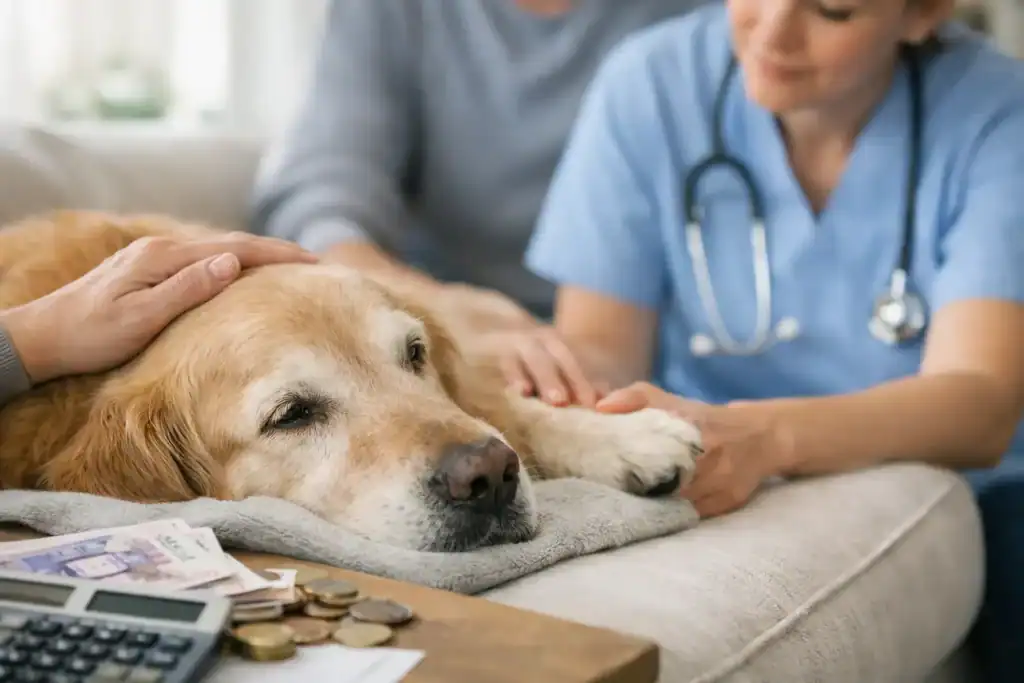
When a pet’s health is declining, the question of cost can feel uncomfortable to ask. Yet understanding pet euthanasia at home cost UK options in advance can remove one practical worry at an already emotional time. A clear quote allows you to focus on what matters most: giving your companion a gentle, peaceful farewell in the place where they feel safest.
Home euthanasia is a professional veterinary service, not simply an alternative location for a standard appointment. The fee reflects the clinical expertise involved, the time set aside for your family, travel to your home, medicines, careful aftercare arrangements and, where chosen, cremation. Prices vary, but knowing what influences them can help you make a decision without pressure.
The cost of an at-home euthanasia visit in the UK commonly starts at around £250 and can be £500 or more, depending on the provider, location, appointment time and your pet’s needs. If you choose cremation and return of ashes, the total cost is often higher, with many families paying between £400 and £800 or more for the complete service.
These figures are a useful guide rather than a fixed national price. A large dog may require more medication than a cat or rabbit, for example, while a rural visit or an urgent evening appointment may involve additional travel or out-of-hours charges. The most reliable way to understand the cost is to request an itemised quote before booking, including any aftercare you may wish to arrange.
A compassionate veterinary provider should explain charges clearly and answer practical questions kindly. You should not have to make decisions while trying to interpret unclear fees.
A home visit usually includes travel within the provider’s stated area, a consultation with a qualified veterinary professional, assessment of your pet’s comfort, the euthanasia medicines and time for your family to say goodbye. The appointment is generally arranged with more space and privacy than a busy surgery consultation.
The process is normally calm and unhurried. Your vet will talk through what will happen, answer any final questions and ensure you understand the options available. In many cases, a sedative is given first, allowing a pet to become deeply relaxed or fall asleep before the final medication is administered. This approach is particularly helpful for anxious, painful or mobility-limited animals.
It is worth checking whether the quoted price includes a pre-visit telephone discussion. Speaking with a veterinary nurse or other trained member of the team beforehand can be invaluable if you are unsure whether the time is right, or if your pet’s condition has changed quickly.
No two families, pets or circumstances are the same, which is why home euthanasia costs are not identical across the UK. The main factors tend to be the distance travelled, your region, the species and size of your pet, the time and urgency of the appointment, and the aftercare you choose.
Appointments during evenings, weekends, bank holidays or at very short notice may cost more because a veterinary professional needs to be available outside standard hours. This can be essential when a pet is suffering or deteriorating, but it is sensible to ask whether a planned daytime visit is possible if your pet remains comfortable and you have time to consider arrangements.
Location matters too. Providers serving large areas may charge a travel supplement beyond a certain distance, particularly in remote locations. Ask whether mileage, parking or travel time is included in the initial figure, so there are no surprises later.
Species and size can affect medication costs and practical handling. Dogs, cats and rabbits can all be put to sleep peacefully at home, but the clinical plan will be tailored to the individual animal. A provider will usually ask about your pet’s weight, diagnosis, mobility and temperament before confirming the fee.
Aftercare is often the largest additional cost after the veterinary visit itself. Some people prefer to make these arrangements in advance; others need time to decide. There is no right choice, only the one that feels appropriate for your pet and family.
Communal cremation is usually the lower-cost option. Your pet is cremated alongside other animals and ashes are not returned. Individual cremation costs more because your pet is cremated separately and their ashes can be returned to you, often in a standard container or a chosen urn.
The cost can also depend on your pet’s weight and the collection arrangements. A provider may collect your pet from your home after the appointment, which many owners find gentler than needing to travel elsewhere. Others may offer keepsakes, such as a paw print or fur clipping, for an additional charge. Ask what is included, what is optional and when you can expect ashes to be returned if that is your preference.
For many pets, a car journey, unfamiliar smells and a waiting room can be distressing, especially when they are elderly, frightened or unwell. At home, they can rest on their favourite blanket, be close to familiar people and remain in a quiet environment. Other pets in the household can also have the opportunity to understand that their companion has died, which some families feel helps them settle afterwards.
For owners, the privacy of home can make an impossible day a little more manageable. There is no need to leave immediately after saying goodbye, or to drive home through grief. You can choose who is present, whether that is the whole family or just one person, and create a calm setting that feels right for you.
This does not mean home euthanasia is always the best or most affordable option. If a pet is in immediate distress and a mobile appointment is not available quickly enough, the nearest veterinary surgery may be the kindest choice. A veterinary professional can help you assess urgency and put your pet’s welfare first.
When you contact a provider, explain your pet’s species, breed or type, approximate weight, condition and postcode. Say whether you are looking for a planned appointment or need urgent support. It is also helpful to mention if your pet is nervous around strangers, cannot be lifted easily, or has a condition that may affect the visit.
Ask for the full expected price, rather than only the home visit charge. A transparent quote should make clear whether it covers the consultation, sedation where clinically appropriate, euthanasia medication, travel, collection of your pet and cremation. If you are considering individual cremation, confirm whether the ashes, container and return delivery are included.
At Vets 2 Your Pets, telephone enquiries are supported by veterinary nurses who can offer immediate triage guidance and help you understand the practical options available. That early conversation can bring reassurance when you are trying to balance your pet’s comfort with the realities of timing, family arrangements and cost.
Once you have made the appointment, there is very little you need to organise. Choose a peaceful room with enough space for your pet to lie comfortably, perhaps beside a favourite bed, blanket or sunny window. If your pet is still interested in food, a favourite treat can be a lovely part of the time you share, provided it is suitable for their condition.
Children can be included in an age-appropriate way if that feels right for your family. Simple, honest language is often kinder than euphemisms: explain that the vet is coming to help their pet die peacefully because their body is no longer able to keep them comfortable. There is no single correct way to grieve, and adults need gentleness too.
If you are worried about your pet’s quality of life, do not wait until you feel completely certain before asking for professional guidance. A calm conversation and a clear quote can give you the breathing space to make a loving decision centred on comfort, dignity and the life you have shared.
Pet owners are increasingly turning to the convenience of home veterinary visits to provide tailored and stress-free healthcare for their beloved companions. In this article, we will delve into the factors influencing the costs associated with home vet visits, exploring the pricing structure and considerations that pet owners should be...
Covering multiple regions with rapid response times and expert clinicians who know your area.

Our friendly team is always ready to support you. Our mobile veterinary service brings professional care straight to your home, making veterinary visits more convenient and pleasant for you and your pet. Whether you need advice, routine care, or treatment, we’re here to answer your questions and provide a calm, personalised service in the comfort of your own surroundings.
If you’re considering pet euthanasia at home and want to understand the process, costs, or aftercare options, or if you’d like to know more about our other services, please reach out to our experienced team today.
If you’re considering pet euthanasia at home and want to understand the process, costs, or aftercare options, or if you’d like to know more about our other services, please reach out to our experienced team today.

Vets 2 Your Pets
Vets 2 Your Pets
Send us a message and we'll get right back to you.
