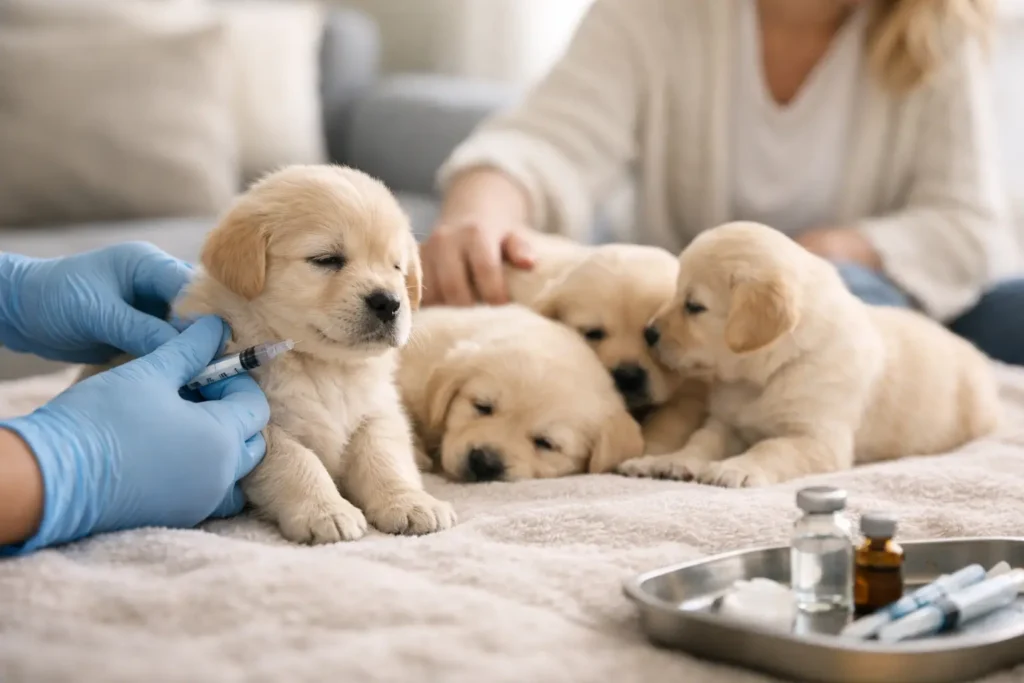
A litter can change quickly in just a few weeks. One day, the puppies or kittens are finding their feet; the next, they are ready for their first health checks, vaccinations and introductions to prospective families. Breeder litter vaccinations delivered at home can make this essential stage calmer, more efficient and easier to manage, particularly when transporting a whole litter and its mother to a veterinary surgery would be disruptive.
For responsible breeders, vaccination is not simply a box to tick before homing. It is part of a wider plan for protecting young animals, recording their care accurately and giving each new owner a clear starting point for lifelong veterinary health.
There is no single vaccination timetable that suits every puppy or kitten. The right plan depends on species, age, the vaccination history of the mother, the type of vaccine used, local disease risk and when the young animals will be going to their new homes.
Puppies commonly begin their primary vaccination course from around six to eight weeks of age, with further doses often needed several weeks later. Kittens are also usually vaccinated from an early age, commonly from around eight to nine weeks, followed by a second appointment. However, these timings are not interchangeable rules. Your veterinary professional will advise on the appropriate product and schedule for your litter.
A key reason for this care is maternal antibody. Puppies and kittens receive some early protection through their mother’s first milk, known as colostrum. This protection is valuable, but it gradually fades and can also reduce the response to a vaccine if given at the wrong point. A properly timed course gives the young animal the best opportunity to develop its own protection.
Vaccination should only be given following a clinical assessment. A bright, well-growing youngster may be ready for vaccination, while one with diarrhoea, nasal discharge, a cough, poor appetite, lethargy or an unresolved parasite burden may need treatment or monitoring first. Vaccinating an unwell animal is not a shortcut to making it better.
Taking a mother and a litter to a busy practice can be a logistical challenge. It may mean multiple carriers or crates, careful temperature management, arranging help and trying to prevent young animals being exposed to an unfamiliar environment before they have completed their vaccination course.
An at-home visit allows the litter to stay in its familiar, warm environment. The mother is usually more settled, and you can keep the young animals together until each is examined. This is particularly helpful for breeders managing larger litters, multi-pet homes, or animals that find travelling and waiting rooms stressful.
A mobile veterinary professional can assess the litter where they are being reared, which can also provide useful context. Clean bedding, suitable warmth, access to water, weight gain and the general behaviour of the mother and babies all matter. Home visits are not a replacement for good breeding practice, but they can support it with practical, qualified clinical oversight.
Vets 2 Your Pets provides home visits designed to reduce unnecessary stress while maintaining professional standards of care. The appointment can be arranged around the litter’s needs, rather than asking very young animals to cope with a long journey and a busy clinical setting.
A litter appointment should feel organised, unhurried and calm. Before vaccination, the veterinary professional will ask about the pregnancy and birth, feeding, worming, any illness within the household, previous losses, and whether any youngster has been slower to develop than the rest.
Each puppy or kitten should then receive an individual examination. This may include checking the eyes, ears, mouth, heart and lungs, abdomen, skin, coat, mobility and general body condition. The professional will also consider whether each animal appears sufficiently well for vaccination that day.
Where appropriate, the first vaccination is administered and an individual vaccination record is completed. Keep these records safe and ensure they travel with each puppy or kitten when they leave for their new home. New owners need to know exactly what has been given, when it was given and when the next dose is due. They should also understand that a first vaccination does not always mean a young animal is fully protected immediately.
If microchipping is being arranged at the same visit, it can often be planned alongside the health checks and vaccinations. In the UK, dogs must be microchipped by eight weeks old, although breeders should always check the current rules for their nation and for the species they breed. Accurate registration details are just as important as the chip itself. A microchip that is not correctly registered cannot do its job effectively if an animal is lost.
A little preparation helps the appointment run comfortably for everyone. Keep the litter in a clean, quiet room with good light and a safe, warm area for the youngsters to return to after they have been examined. Avoid introducing visitors, new animals or unnecessary noise immediately beforehand.
Have your breeding records ready, including dates of birth, the mother’s vaccination history, worming treatments, weight records if you have them, and details of any concerns. If you are booking microchips, prepare the intended keeper information carefully. Small errors in names, addresses, telephone numbers or email addresses can create avoidable difficulties later.
It is helpful to identify each youngster in advance, especially in a similar-looking litter. A temporary coloured collar or a clear record of markings can prevent confusion when vaccination cards and microchip numbers are being assigned. Young animals should be comfortably fed and warm, but it is sensible to mention any change in appetite or toileting, even if it seems minor.
Prospective owners often ask whether they can take a puppy or kitten home immediately after its first vaccination. The honest answer is that it depends on the individual schedule, the animal’s age, the disease risks in their new environment and the advice given by the veterinary professional. A young animal may still need a further dose before it has the level of protection expected for normal outdoor exposure or contact with unfamiliar animals.
This does not mean puppies and kittens must miss out on early socialisation. The goal is sensible, controlled exposure rather than unnecessary risk. Families can support confidence through gentle handling, household sounds, short car journeys where appropriate, safe visitors and carefully considered experiences recommended by their veterinary professional.
Breeders also have a duty to be open with new owners about anything that needs ongoing attention. This might include a second vaccination appointment, parasite control, diet changes, a minor finding from a health check or a recommendation for follow-up. Clear communication protects the animal and helps new families feel supported rather than surprised.
Often, yes, if they are of the appropriate age and are clinically well. But each youngster must be assessed individually. A veterinary professional may advise delaying vaccination for one animal if there are health concerns, even when the rest of the litter can proceed.
No vaccine offers an absolute guarantee, and protection takes time to build. Vaccination greatly reduces the risk of serious preventable disease when it is correctly timed and followed by the recommended course. Good hygiene, appropriate parasite control, responsible socialisation and avoiding contact with potentially infectious animals remain important.
They should receive the individual vaccination card, microchip details where relevant, information about the next vaccination due date, feeding and worming records, and clear advice on when to contact a veterinary professional. Encourage them to register with a local practice promptly, rather than waiting until there is a problem.
A well-planned litter vaccination visit brings clinical care into the place where young animals feel safest. It gives breeders time to ask questions, helps every puppy or kitten begin with accurate records, and allows new families to welcome their pet with clearer reassurance about the care already given.
Covering multiple regions with rapid response times and expert clinicians who know your area.
Our friendly team is always ready to support you. Our mobile veterinary service brings professional care straight to your home, making veterinary visits more convenient and pleasant for you and your pet. Whether you need advice, routine care, or treatment, we’re here to answer your questions and provide a calm, personalised service in the comfort of your own surroundings.
If you’re considering pet euthanasia at home and want to understand the process, costs, or aftercare options, or if you’d like to know more about our other services, please reach out to our experienced team today.
If you’re considering pet euthanasia at home and want to understand the process, costs, or aftercare options, or if you’d like to know more about our other services, please reach out to our experienced team today.

Vets 2 Your Pets
Vets 2 Your Pets
Send us a message and we'll get right back to you.
