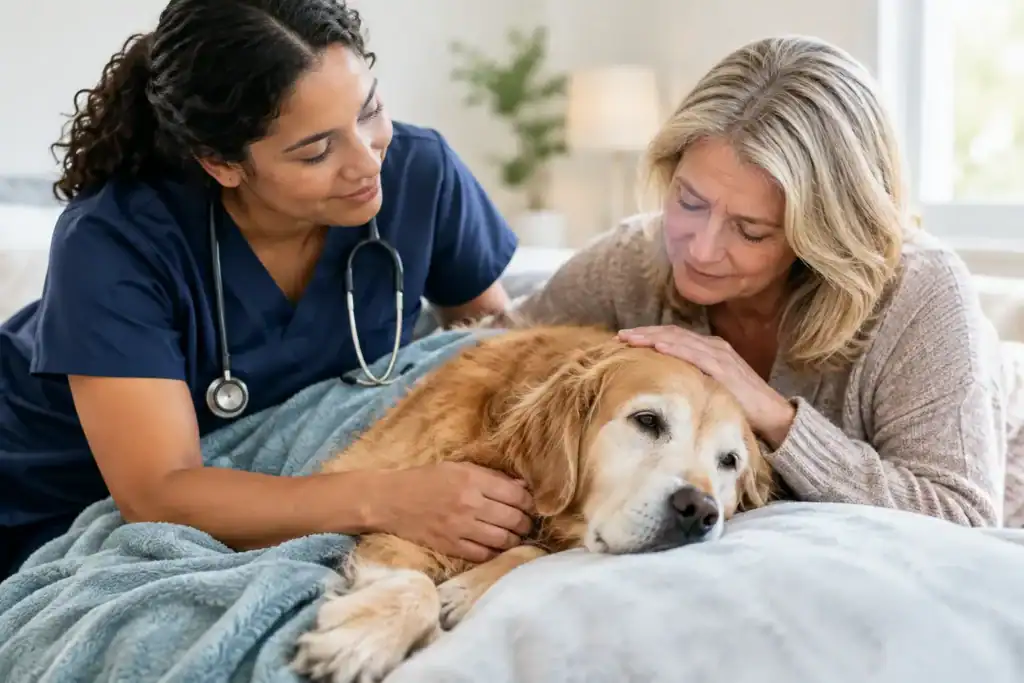
The decision around pet euthanasia is rarely made in one moment. More often, it arrives after weeks or months of adapting to an older pet’s changing needs: helping them up the stairs, tempting them with favourite food, managing pain, or noticing that the things they once loved no longer bring the same pleasure. For many families, having a peaceful farewell at home can remove the strain of travelling to a veterinary surgery at an already emotional time.
At-home euthanasia is not about rushing a decision. It is about giving you clear, compassionate clinical guidance and, when the time is right, allowing your pet to be surrounded by familiar sights, smells and people.
There is no single score, symptom or age that tells every family when it is time. Some pets live well with long-term conditions when pain relief, mobility support and regular veterinary monitoring are in place. Others may decline quickly, or have a condition where comfort can no longer be maintained.
A veterinary professional will look at the whole picture. This includes pain and breathing, appetite and hydration, mobility, toileting, sleep, anxiety, awareness and whether your pet still enjoys their normal routines. A dog may still greet you at the door but struggle with severe pain later in the day. A cat may eat small meals yet spend most of its time hiding. Rabbits and other small companions can be particularly good at concealing illness, so even subtle changes can matter.
Quality of life is also about the balance of good days and difficult ones. Keeping a simple diary can help when emotions make each day hard to judge. Note what your pet enjoyed, how comfortably they moved, whether they settled, and any signs of distress. This gives your vet a clearer understanding of their daily life and can help you feel more confident that the decision is being made with care, not too soon or too late.
If you are worried that your pet is suffering, seek veterinary advice promptly. A qualified healthcare professional can discuss the symptoms, assess whether treatment may still help, and provide immediate triage support where appropriate.
For a pet that is frightened by car journeys, anxious around unfamiliar animals, elderly, or unable to move comfortably, a visit to a surgery can be distressing. At home, your pet can rest in their own bed, on the sofa beside you, or in a quiet sunny spot they know well.
The setting can also make a difference for the family. There is privacy to take your time, involve the people who matter, and say goodbye without a busy waiting room around you. Other pets in the household may be present if this feels right for your family and can be managed calmly. Some animals appear to understand that their companion has died; others may simply need reassurance and a settled routine afterwards.
Home is not automatically the best choice in every circumstance. If a pet is in acute distress and needs urgent stabilisation, a veterinary hospital may be the safest place for immediate treatment. Your veterinary team will guide you honestly on what is possible and what is kindest for your pet’s condition.
Knowing what to expect can ease some of the fear. Before the appointment, a veterinary nurse or member of the team will usually talk through your pet’s circumstances, answer practical questions and explain the available aftercare arrangements. You do not need to have every detail decided before making contact. The purpose of that first conversation is to support you.
When the veterinary professional arrives, they will take time to meet your pet, listen to your concerns and confirm the plan. You may choose where your pet is most comfortable. A favourite blanket, familiar toy or a small treat can be reassuring, provided it is suitable for their condition.
In many cases, your pet is given a sedative first. This is designed to help them become relaxed and sleepy, often while you are gently stroking or holding them. The timing varies between animals, and the vet will explain what they are doing throughout. Once your pet is fully settled, the final medication is given. It works quickly and peacefully, stopping the heart after your pet has become unconscious.
There can occasionally be small natural reflexes afterwards, such as a final breath, muscle movement or the eyes remaining open. These do not mean your pet is aware or in discomfort. Your veterinary professional will explain this gently and confirm when your pet has passed.
There is no right way to behave in that moment. Some people want to stay close throughout, while others find it too difficult. Children may wish to be present, or they may prefer a quiet goodbye beforehand. What matters is choosing the approach that feels most loving and manageable for your family.
Thinking about aftercare before the day can be painful, but it avoids difficult decisions at the height of grief. You may choose individual cremation, where ashes are returned to you, or communal cremation. Some families arrange a home burial where permitted and appropriate, while others prefer the reassurance of professional cremation arrangements.
Ask what will happen after your pet has passed, when ashes may be returned if you select individual cremation, and whether keepsakes are available. A paw print, a clipping of fur or a favourite collar can become deeply meaningful later, though not everyone wants a memorial item. There is no expectation to choose one.
It can help to prepare a little in advance. Decide who will be there, whether you would like quiet time afterwards, and who can support you with practical tasks such as school collection, cooking or looking after other animals. If possible, avoid scheduling the appointment between commitments. Giving yourself space afterwards is a kindness, not an indulgence.
Children often cope better with clear, age-appropriate language than with vague explanations. It is usually kinder to say that their pet has died and will not come back than to say they have gone to sleep, which can create fear around bedtime. Invite questions, allow tears, and let them take part in a goodbye in a way that feels comfortable, perhaps by drawing a picture or choosing a photo.
Other pets may search for their companion, become quieter or show changes in appetite for a short time. Keep routines as steady as possible and offer gentle reassurance. If a surviving pet seems persistently distressed, stops eating, or has any health concern, contact a veterinary professional for advice.
Grief does not follow a timetable. Relief that suffering has ended can sit alongside sadness, guilt and doubt. These feelings are common, even when you know the decision was made with love and sound veterinary guidance.
Try to speak about your pet by name and share the stories that made them part of your family. Some people find comfort in a memorial, while others prefer to keep things private. If your grief feels overwhelming or is affecting daily life for a prolonged period, reaching out to a bereavement support service, your GP or someone you trust can be an important step.
Vets 2 Your Pets provides compassionate, clinically led care in the familiarity of home, helping families make difficult decisions without the added stress of a journey to the practice. A calm conversation with a veterinary team can bring clarity before you need to make any final choice.
When you look back, the most meaningful detail is unlikely to be whether every moment was perfect. It will be that your pet was known, cherished and treated with gentleness right to the end.
The Importance of Annual Health Check & Vaccinations for Dogs, Cats and Rabbits. Welcome to our advice and information on annual vaccination and health check requirements for cat, dogs, and rabbits in the United Kingdom. At Vets 2 Your Pets, we understand the importance of preventive care in keeping your...
Covering multiple regions with rapid response times and expert clinicians who know your area.
Our friendly team is always ready to support you. Our mobile veterinary service brings professional care straight to your home, making veterinary visits more convenient and pleasant for you and your pet. Whether you need advice, routine care, or treatment, we’re here to answer your questions and provide a calm, personalised service in the comfort of your own surroundings.
If you’re considering pet euthanasia at home and want to understand the process, costs, or aftercare options, or if you’d like to know more about our other services, please reach out to our experienced team today.
If you’re considering pet euthanasia at home and want to understand the process, costs, or aftercare options, or if you’d like to know more about our other services, please reach out to our experienced team today.

Vets 2 Your Pets
Vets 2 Your Pets
Send us a message and we'll get right back to you.
