When a pet is approaching the end of their life, decisions that once felt far away can suddenly need an answer. Learning how to choose pet cremation before the day comes can ease some of that pressure, giving you time to make a decision that feels right for your companion and your family.
There is no single “best” choice. Some people draw comfort from bringing their pet’s ashes home; others prefer a shared cremation and the knowledge that their pet has been cared for respectfully. What matters is that you understand the options, feel able to ask questions, and choose an arrangement that reflects the life you shared.
Start by considering what you would like to happen after your pet has passed away. You do not need to have every detail decided, but it can help to think about whether keeping ashes would be meaningful to you, whether you would prefer a memorial, and whether collection from home matters to your circumstances.
If your pet is having euthanasia at home, arrangements can often be made in advance with your veterinary team. This means you can focus on being with them during a gentle, peaceful farewell, rather than making practical calls while you are grieving. A qualified veterinary professional can explain the available options clearly and help you decide without rushing you.
Price will naturally be part of the decision for many families, but it should not be the only consideration. Ask what is included in the quoted cost: transport, cremation, return of ashes, a casket or urn, and any keepsakes can vary between providers. Clear information helps avoid unexpected decisions or charges later.
The terminology used by crematoria can differ, so it is wise to ask exactly what each option means rather than relying on a label alone.
With a private cremation, your pet is cremated alone and their ashes are returned to you. This is usually the option families choose when they would like to keep ashes at home, scatter them in a meaningful place, or arrange a personal memorial.
Some providers use the term “individual cremation” where pets are cremated in separate spaces or with careful separation, but not necessarily completely alone. Ashes are still commonly returned, yet the process may differ from a strictly private cremation. If having only your pet’s ashes returned is especially important to you, ask directly whether they will be cremated alone and how identification is maintained throughout the process.
In a communal cremation, several pets are cremated together and ashes are not returned to individual families. The crematorium will usually arrange for the ashes to be scattered or handled respectfully in accordance with its procedures.
This can be a thoughtful choice for people who do not feel they need ashes returned, or who find comfort in a simpler farewell. It is often less expensive than private cremation, though cost should never be presented as a measure of love or loss. Your care for your pet is shown in the decisions you make for their comfort, not in the type of memorial you choose.
Trust is central to this decision. Ask your veterinary team whether they work with a particular pet crematorium, whether they have experience of its standards, and who will collect your pet from your home. You may also wish to ask how soon collection can take place and whether you can have some private time after your pet has passed.
A professional service should treat your pet with dignity at every stage. Staff should explain what will happen calmly, transport your pet respectfully, and give you a realistic timeframe for the return of ashes if you have chosen that option. There should be no pressure to decide before you are ready, unless immediate arrangements are genuinely required.
At Vets 2 Your Pets, home euthanasia and cremation arrangements are approached as part of the same compassionate journey. The aim is to reduce unnecessary stress for pets and give families clear, practical support in the familiar surroundings of home.
For some families, receiving ashes provides a sense of closeness and a physical focus for remembrance. They may choose a simple scatter tube, a wooden casket, a decorative urn, or a piece of memorial jewellery. Others prefer not to bring ashes home because it feels too difficult, or because a favourite garden or walking spot already feels like the right place to remember their pet.
Neither response is wrong. Grief is personal, and people within the same household may feel differently. If possible, talk gently with everyone affected before the appointment, including children. Simple, honest language can help: explain that the cremation provider will care for their pet’s body and that the family is choosing the farewell that feels most loving.
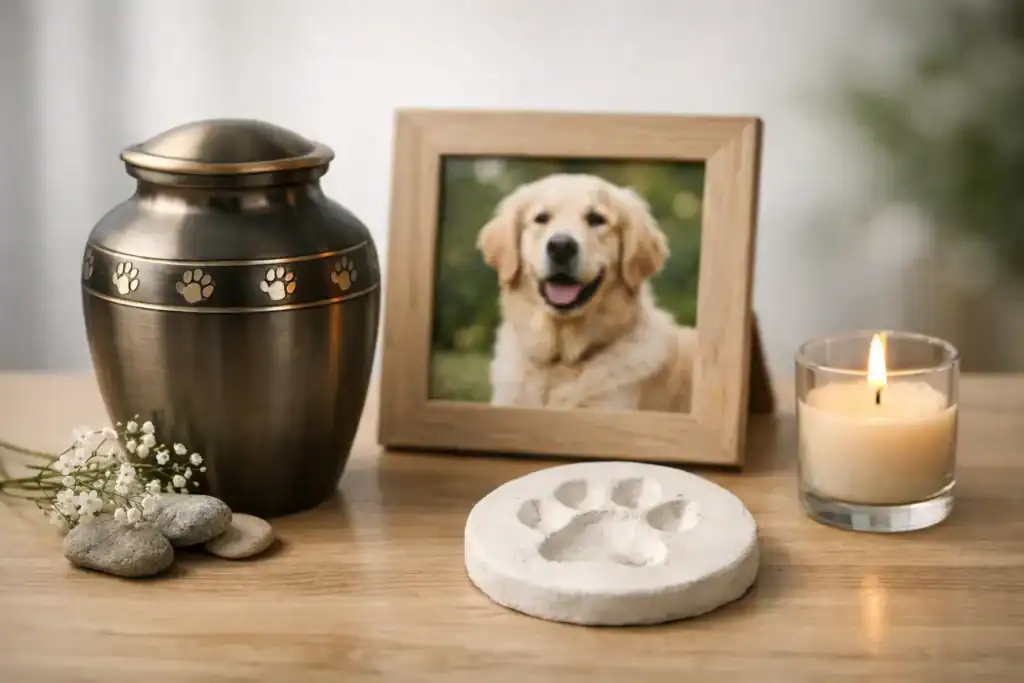
You do not have to make every memorial decision at once. You might arrange for ashes to be returned, then take time before deciding whether to keep, scatter or divide them. Equally, a communal cremation does not prevent you from creating a meaningful tribute. A framed photograph, a candle, a donation in their memory, or planting flowers can carry just as much significance.
A few straightforward questions can make the process feel less uncertain. The answers should be given with kindness and without confusing language.
If something does not make sense, ask again. During anticipatory grief or bereavement, it can be hard to take in information. A caring team will understand that you may need things explained more than once.
It can feel uncomfortable to arrange cremation while your pet is still alive. Yet planning does not make the loss happen sooner, nor does it mean you are giving up on them. It means that, when their time comes, you can give your attention to their comfort and to being present with them.
For pets with a progressive illness, declining mobility, chronic pain, or a poor quality of life, discussing aftercare alongside euthanasia can be especially helpful. Your veterinary professional can offer clinical guidance on what to expect, while recognising that the bond between you and your pet is at the heart of every decision.
If your pet passes unexpectedly, take a slow breath before making arrangements. If you can, ask a trusted friend or family member to listen with you, write down answers, or make a call on your behalf. You are allowed to need support.
The right cremation choice is the one that gives you confidence your pet will be treated with care and allows you to remember them in a way that feels comforting, rather than prescribed. A much-loved rabbit, cat, dog, or smaller companion deserves the same gentleness and respect, whatever option their family chooses.
In the days ahead, you may find that the details of the arrangement matter less than the quiet moments you shared: their familiar place by the sofa, the sound of their paws, the way they knew they were safe with you. Let your decision be guided by that love, and allow yourself time to grieve in your own way.
Table of Contents Introduction As devoted pet owners, it is our inherent duty to safeguard the health and well-being of our pets. Regrettably, cancer, a formidable adversary, can sneak into their lives, threatening to disrupt the joy and happiness they bring us. Thus, understanding the signs of cancer in dogs...
Covering multiple regions with rapid response times and expert clinicians who know your area.
Our friendly team is always ready to support you. Our mobile veterinary service brings professional care straight to your home, making veterinary visits more convenient and pleasant for you and your pet. Whether you need advice, routine care, or treatment, we’re here to answer your questions and provide a calm, personalised service in the comfort of your own surroundings.
If you’re considering pet euthanasia at home and want to understand the process, costs, or aftercare options, or if you’d like to know more about our other services, please reach out to our experienced team today.
If you’re considering pet euthanasia at home and want to understand the process, costs, or aftercare options, or if you’d like to know more about our other services, please reach out to our experienced team today.

Vets 2 Your Pets
Vets 2 Your Pets
Send us a message and we'll get right back to you.
