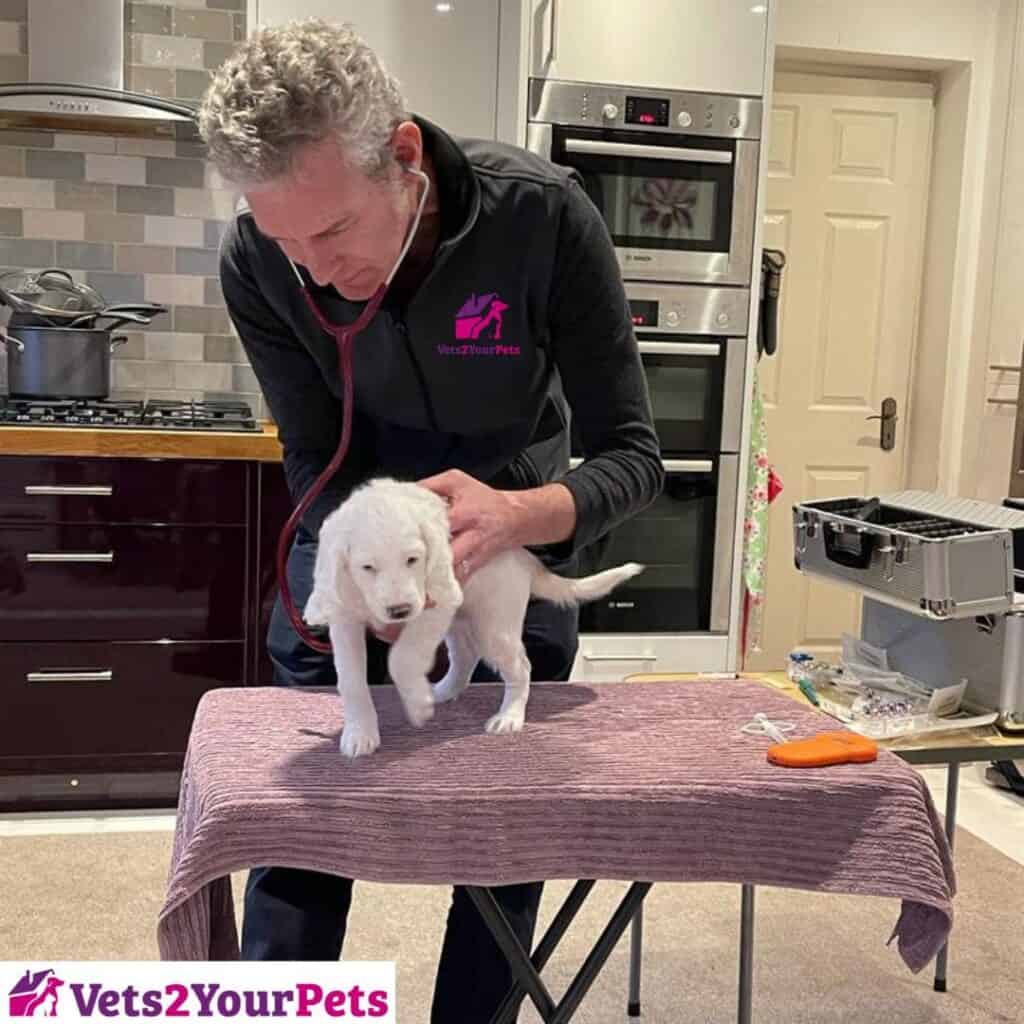
A new puppy’s first weeks are full of small, meaningful milestones: settling into a bed, learning their name, meeting the family and finding confidence in their new surroundings. Puppy microchipping at home can be one less unfamiliar experience in that busy period, allowing a qualified professional to provide this essential identification in the place where your puppy feels safest.
For many puppies, a car journey, waiting room and unfamiliar smells are manageable. For others, particularly very young or sensitive puppies, they can make a short appointment feel overwhelming. A professional home visit offers a quieter alternative, while ensuring the microchip is implanted correctly and the paperwork is handled with appropriate clinical care.
A microchip is a tiny device, around the size of a grain of rice, placed just beneath the skin between a dog’s shoulder blades. It holds a unique number which can be read with a scanner. If a lost puppy is taken to a veterinary practice, rescue organisation or local authority, that number can be checked against an approved microchip database to help reunite them with their keeper.
The chip is not a tracking device. It does not contain GPS, cannot show your puppy’s location and does not replace sensible precautions such as a secure garden, lead training and an ID tag once your puppy is old enough to go out.
At-home microchipping is carried out by a trained, authorised implanter. They bring the appropriate equipment, check your puppy’s details, implant the chip and make sure the registration process is clearly explained. For breeders with a litter, it can also mean several puppies are cared for efficiently without the disruption of transporting them all to a surgery.
In the UK, dogs must be microchipped and registered on an approved database by the time they are eight weeks old. The breeder is normally responsible for ensuring each puppy is microchipped and recorded before it leaves for a new home. A puppy should not be sold or rehomed without a microchip, except in limited circumstances such as where a vet has certified that microchipping could adversely affect the dog’s health.
The person recorded as the first keeper should be the breeder. When the puppy joins their new family, the new keeper must update the database with their own name, address and contact details. This is a vital step. A chip is only as useful as the information linked to it.
Requirements differ across the UK and can change, so responsible owners should always check the current rules for where they live. England also requires cats to be microchipped by 20 weeks of age, while different rules apply elsewhere in the UK. If you have a multi-pet household, a veterinary professional can help you understand what applies to each animal.
The procedure itself is brief, but the setting can make a real difference. Puppies are still learning that new people and gentle handling are safe. At home, they can remain close to familiar voices, bedding and smells rather than coping with travel and a busy clinical environment.
A calm home appointment can be particularly helpful for a whole litter. It avoids loading several puppies into a vehicle, managing them in a waiting area and then bringing them home again when they may be tired or unsettled. The visit can be arranged around feeding, sleeping and weaning routines, with the breeder or family present throughout.
There is also practical value in having time to ask questions. New owners often want reassurance about vaccination timing, worming and flea treatment, feeding, socialisation or when it is safe to begin walks. Microchipping is not a replacement for a full health check, but a home-visit veterinary team can advise on the next appropriate steps for your puppy’s preventative care.
A qualified healthcare professional will begin by confirming the puppy’s identity and relevant details. For a litter, this may include checking each puppy’s sex, coat markings and the details needed to distinguish one from another. Accurate records matter, especially where similar-looking puppies are concerned.
Your puppy will be held gently and securely, usually by someone they know, while the microchip is implanted under the loose skin at the back of the neck. The sensation is similar to an injection. Most puppies react only briefly, if at all, and quickly return to exploring, playing or curling up for a sleep.
The chip is then scanned to confirm that it can be read and that the number matches the paperwork. The implanter will explain how the registration will be completed and what you need to do next. Keep any confirmation safely, and make a note of the database details so you can update your contact information promptly if you move or change telephone number.
There is no need to create a big event around microchipping. Puppies tend to take their cue from the people around them, so a calm, matter-of-fact approach is kindest. Let your puppy have a toilet break beforehand and choose a quiet, comfortably warm room with enough space for gentle handling.
Avoid arranging the visit when the household is especially busy or when several new people are visiting. If your puppy has just arrived with you, giving them a little time to settle can help, provided their legal microchipping arrangements are already in place. Breeders arranging an appointment for a litter should keep the puppies together in a familiar, safe area until each one is ready.
A favourite small treat can be useful after the chip is placed, although very young puppies may be more interested in returning to their mother or settling down for a nap. The aim is not to distract them at all costs, but to make the experience ordinary, gentle and brief.
Microchips should never be treated as a DIY task. Devices may be sold online, but implanting a chip requires training, correct technique, sterile equipment and an understanding of the registration process. Incorrect placement, poor record keeping or an unregistered chip can undermine the very protection microchipping is meant to provide.
A professional will also consider whether the puppy is well enough for the procedure. If a puppy is unwell, unusually small, injured or has a known health concern, it may be appropriate to seek veterinary advice first. The legal requirement remains important, but your puppy’s welfare comes first and a vet can advise on any necessary exception or timing consideration.
It is sensible to ask which database will hold the registration and whether there are any ongoing fees for keeping details current. The most important thing is that the microchip number is linked accurately to the correct keeper and remains updated throughout your dog’s life.
Most puppies need no special aftercare after microchipping. You can carry on with a normal, quiet day at home. Occasionally, there may be mild tenderness at the insertion site, but this should be short-lived. Contact a veterinary professional if you notice persistent swelling, discomfort, discharge or if your puppy seems unwell for any reason.
Once the registration has been processed, check every detail carefully: your name, address, mobile number, email address and the puppy’s description. Make changes immediately when your circumstances change. If your puppy is found years from now, an out-of-date record can turn a happy reunion into a much more difficult search.
It is also worth asking for the chip to be scanned at routine veterinary appointments. Although microchips are designed to stay in place, occasional migration can occur. A quick scan confirms it remains readable and provides reassurance that the identification is working as it should.
Microchipping takes only moments, yet it creates a permanent link between a puppy and the people responsible for their care. When it is provided at home by experienced professionals, that practical protection can begin in a setting that feels calm, familiar and kind.
Whether you are welcoming one much-loved puppy or preparing a whole litter for their new families, choosing thoughtful, properly managed care early on helps set the tone for the years ahead.
Table of Contents Introduction As devoted pet owners, it is our inherent duty to safeguard the health and well-being of our pets. Regrettably, cancer, a formidable adversary, can sneak into their lives, threatening to disrupt the joy and happiness they bring us. Thus, understanding the signs of cancer in dogs...
Covering multiple regions with rapid response times and expert clinicians who know your area.
Our friendly team is always ready to support you. Our mobile veterinary service brings professional care straight to your home, making veterinary visits more convenient and pleasant for you and your pet. Whether you need advice, routine care, or treatment, we’re here to answer your questions and provide a calm, personalised service in the comfort of your own surroundings.
If you’re considering pet euthanasia at home and want to understand the process, costs, or aftercare options, or if you’d like to know more about our other services, please reach out to our experienced team today.
If you’re considering pet euthanasia at home and want to understand the process, costs, or aftercare options, or if you’d like to know more about our other services, please reach out to our experienced team today.

Vets 2 Your Pets
Vets 2 Your Pets
Send us a message and we'll get right back to you.
