 Skip to content
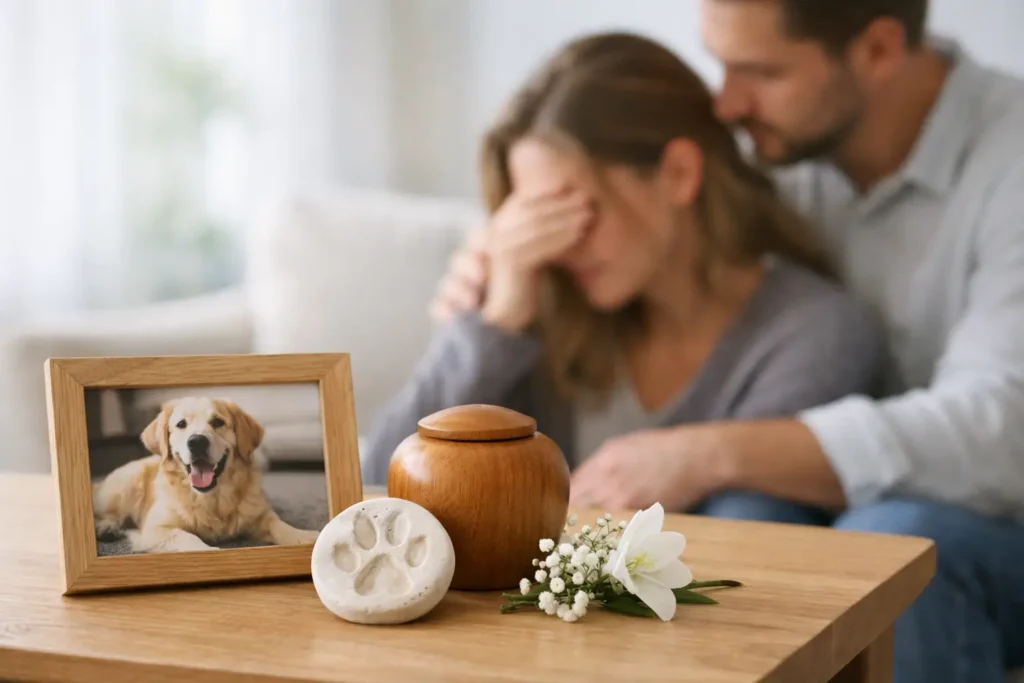
When you are facing the loss of a much-loved pet, it can feel difficult to ask practical questions. Yet knowing what happens after euthanasia can remove some uncertainty and help you make choices that feel right for your family. There is no correct way to say goodbye or to grieve. The priority is that your pet is treated with kindness, dignity and calm throughout.
After the euthanasia medication has been given, your veterinary professional will listen carefully to your pet’s heart and confirm when they have died. This is usually a quiet, unhurried moment. You may wish to sit with your pet, stroke them, speak to them, or simply be still beside them.
Some physical changes after death can be upsetting if you are not expecting them. Your pet may take a final breath or have small muscle movements or twitches. Their eyes may remain open, and they may pass urine or faeces as their muscles relax. These are normal reflexes of the body and do not mean your pet is aware, uncomfortable or still alive.
Your vet will explain what they are doing, answer any questions and give you time where possible. At-home euthanasia can make this stage feel less rushed because your pet is in familiar surroundings, perhaps on their favourite bed or close to the people they know best.
Before the appointment, or sometimes during it, you will be asked what you would like to happen to your pet’s body. This decision can feel overwhelming, particularly when you are already coping with anticipatory grief. It is perfectly reasonable to discuss the options in advance, change your mind if arrangements allow, or ask a family member to help make the practical decisions.
With an individual cremation, your pet is cremated separately and their ashes are returned to you. Many families choose to keep the ashes at home, scatter them in a meaningful place, or arrange a memorial item. Return times and keepsake options vary between crematoria, so your veterinary team can explain the arrangements available in your area.
For some people, having ashes returned offers a tangible comfort. For others, it feels more difficult. Neither response is wrong. Choose the option that brings the most peace to you and honours the relationship you shared.
A communal cremation means your pet is cremated alongside other animals and their ashes are not returned. This can be a gentle, straightforward choice for owners who do not feel they need ashes back, or who would prefer not to make further arrangements after the appointment.
Some owners ask to take their pet home for a short time before cremation or burial arrangements are made. If you are considering this, speak with your veterinary professional first. They can advise you on safe, practical next steps, including timing and how to keep your pet somewhere cool and undisturbed.
Burial at home may be possible in certain circumstances, but there are important considerations around location, land ownership, access to watercourses and any medication used during euthanasia. Your vet can help you understand whether this is appropriate for your circumstances. Never bury a pet without seeking veterinary advice first, particularly where other animals or wildlife could gain access.
If you have arranged cremation through your veterinary provider, your pet will usually be collected respectfully after you have had time to say goodbye. This may happen at the end of the visit or be arranged for a later time, depending on local arrangements and your wishes.
It can help to prepare a quiet space beforehand and decide whether you would like your pet wrapped in a familiar blanket. Some families prefer to be present for the collection; others find it easier to step into another room or ask a trusted relative to stay. Both are loving choices. You are not abandoning your pet by finding the final practical moment too painful to witness.
At Vets 2 Your Pets, experienced veterinary professionals can guide families through aftercare choices as part of a calm, compassionate at-home farewell. The aim is to ensure you are not left trying to organise everything alone at an already distressing time.
Other animals in the household can respond to the loss in different ways. A dog or cat may look for their companion, become quieter, eat less for a short period, cling to you, or seem unaffected at first. Rabbits and bonded small animals can also show noticeable behavioural changes when they lose a companion.
Where appropriate and safe, some families choose to allow other pets to see or briefly sniff the pet who has died. This may help them understand that their companion has not simply disappeared, although there is no guarantee of how they will respond. Ask your veterinary professional for guidance, especially if you have a nervous pet, a multi-pet household, or animals with a close bond.
Try to keep feeding, walks and resting routines as consistent as possible in the following days. Offer reassurance without expecting another pet to grieve in the same way that you do. If a surviving pet stops eating, becomes withdrawn, or you are concerned about a change in behaviour, contact a veterinary team for advice.
Grief after pet loss is not a small loss. Pets are part of daily life: the morning routine, the familiar sound in the house, the comfort of a paw beside you, the person who was always pleased to see you. The absence can be immediate and startling.
You may feel sad, relieved that their suffering has ended, guilty, numb, angry, or unsure whether you made the decision at the right time. These feelings can sit alongside one another. Choosing euthanasia to prevent suffering is an act of care, even when it leaves a deep ache behind.
Children may need clear, age-appropriate language and repeated reassurance. Avoid saying that a pet has simply “gone to sleep”, as this can create fears around bedtime or sleep. Explain gently that their body stopped working and that they died, while making space for questions, drawings, memories or a small goodbye ritual.
A collar, favourite toy, photograph, paw print or a place in the garden can become a meaningful memorial. Some people find comfort in doing something practical, such as creating a photo album. Others need time before they can look at reminders. Let your own pace lead.
For many people, grief gradually becomes easier to carry, but there is no timetable. Reach out to someone you trust if you are struggling. Your vet may also be able to suggest pet bereavement support resources or services.
Speak to your GP or a mental health professional if your grief is affecting your ability to manage day-to-day life, if you feel unable to stay safe, or if painful feelings are becoming more intense rather than easing over time. Asking for support is not a sign that you loved your pet too much. It is a sign that the bond mattered.
The final appointment may be only a short part of your pet’s life, but the care behind the decision reaches much further. Give yourself permission to remember the ordinary, happy moments as well as the farewell. For a pet who was loved, a peaceful ending at home can be the last kindness you give them.
Covering multiple regions with rapid response times and expert clinicians who know your area.
Our friendly team is always ready to support you. Our mobile veterinary service brings professional care straight to your home, making veterinary visits more convenient and pleasant for you and your pet. Whether you need advice, routine care, or treatment, we’re here to answer your questions and provide a calm, personalised service in the comfort of your own surroundings.
If you’re considering pet euthanasia at home and want to understand the process, costs, or aftercare options, or if you’d like to know more about our other services, please reach out to our experienced team today.
If you’re considering pet euthanasia at home and want to understand the process, costs, or aftercare options, or if you’d like to know more about our other services, please reach out to our experienced team today.

Vets 2 Your Pets
Vets 2 Your Pets
Send us a message and we'll get right back to you.
