 Skip to content
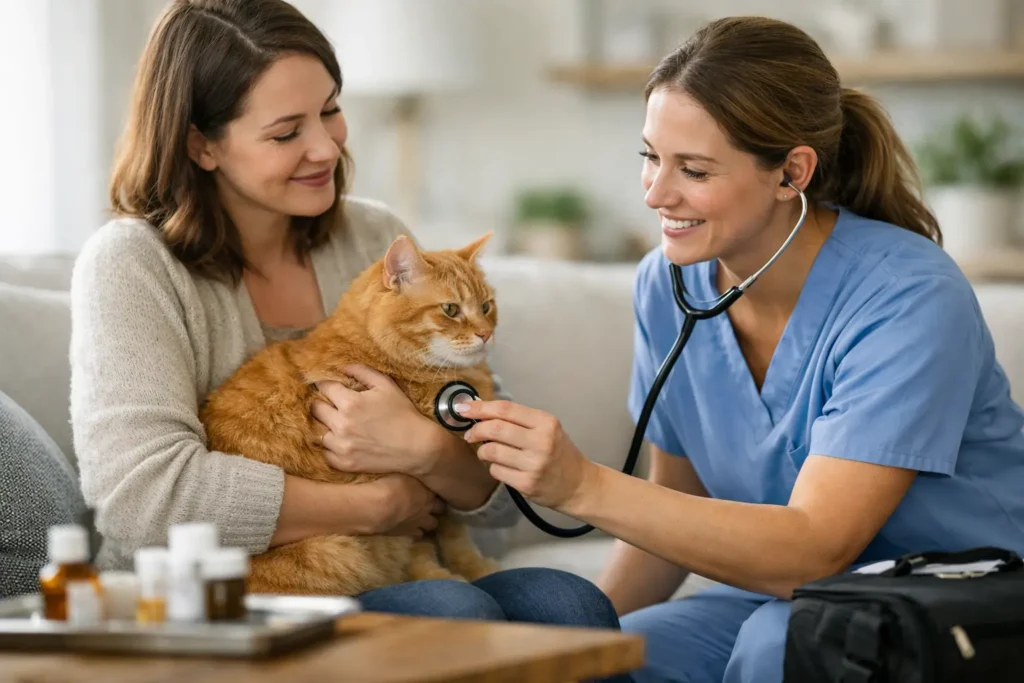
A car journey, a crowded waiting room and unfamiliar smells can turn even a straightforward appointment into an upsetting experience for a pet. Veterinary home visits offer a calmer alternative: qualified veterinary care delivered where your animal feels safest, surrounded by the people and comforts they know.
For an elderly dog who finds getting into the car painful, a fearful cat who hides at the sight of the carrier, or a rabbit for whom travel is particularly stressful, being seen at home can make a meaningful difference. It also gives owners time and space to ask questions without feeling rushed, particularly when a pet’s health is changing.
Home visits are not only for end-of-life care. They can be a practical, compassionate option for a wide range of routine and ongoing needs, while keeping your pet’s welfare and comfort at the centre of every decision.
Many appointments can be carried out in the home, including health checks, annual vaccinations, parasite treatments, prescriptions and pet travel documentation. For pets receiving regular treatment, a mobile veterinary professional may also be able to administer therapeutic injections such as Librela, Solensia, Cytopoint or Suprelorin. This can be especially helpful for animals with arthritis, mobility difficulties or anxiety around a veterinary surgery.
Home care can also suit multi-pet households. Rather than coordinating several carriers, car journeys and appointments, owners can arrange care in one familiar setting. Breeders may find at-home litter vaccinations and microchipping particularly convenient, reducing the need to transport young puppies or kittens before they are ready.
That said, a home visit is not a replacement for every type of veterinary treatment. Pets needing emergency surgery, intensive monitoring, advanced imaging or hospital equipment may need prompt referral to a veterinary hospital. A responsible mobile service will provide clear clinical guidance and triage support, so you know whether care at home is appropriate or whether your pet needs to be seen elsewhere urgently.
The value of a home appointment is often most apparent when travel itself has become difficult. A dog with severe arthritis may struggle to climb into the car. A cat may become distressed long before reaching the practice. For some pets, particularly those with chronic illness, the journey and waiting room can take more out of them than the consultation itself.
At home, the veterinary professional can observe your pet in their usual environment. How they move across the room, settle in their bed, approach food or interact with family can all add useful context to a clinical assessment. Owners are often able to describe changes more clearly when they are sitting in their own home, rather than trying to remember every concern in a busy consulting room.
This setting does not make a consultation less clinical. The same careful assessment, professional judgement and treatment planning still matter. It simply allows that care to take place in a setting designed around your pet’s comfort.
For families caring for an older pet, small changes can feel difficult to interpret. Is the dog slowing down because of age, or because they are in pain? Is the cat eating less due to a temporary upset, or is their quality of life declining? These are not questions owners should have to answer alone.
A home assessment can provide gentle, honest guidance. Your veterinary professional can discuss mobility, appetite, hydration, toileting, sleep, interaction and comfort, as well as the treatments that may help. Sometimes the next step is a medication review, pain relief or regular injections. Sometimes it is a conversation about adapting the home and monitoring changes over time.
There is rarely one single measure that determines quality of life. Good days and difficult days can sit alongside each other. What matters is looking at the whole pet, listening to the family and making a plan that is realistic, compassionate and clinically appropriate.
For many owners, the greatest comfort of a home visit comes at the end of a beloved pet’s life. Choosing euthanasia is deeply personal, and it can be one of the hardest decisions a family will ever make. It is also, in some circumstances, the final act of kindness we can offer an animal whose comfort can no longer be maintained.
At-home euthanasia allows a pet to remain in a familiar place, perhaps on their favourite blanket, in the garden, or close to the people they love. There is no need for a final journey to a surgery or a hurried goodbye in a consulting room. The appointment can be calm, unhurried and guided by experienced veterinary professionals who understand both the clinical process and the emotional weight of the moment.
Families may wish to be present throughout, or may prefer to step away at a certain point. There is no right choice. Children should be supported according to their age and understanding, and other household pets may also respond to the loss in their own way. A compassionate veterinary team will explain what to expect, answer questions clearly and allow space for each family to say goodbye in the way that feels right for them.
Practical arrangements after euthanasia can feel overwhelming when grief is immediate. Discussing individual or communal cremation options beforehand can remove some of the pressure. If you are uncertain about timing, a quality-of-life assessment can help you understand your pet’s condition and make a decision with professional support rather than carrying the burden alone.
You do not need to create a clinical environment. The aim is simply to choose a quiet, safe place where your pet is likely to feel settled. For a dog, this may be their bed or a familiar room. For a cat, it may be best to allow them to stay in the area they normally choose, rather than trying to move them into an unfamiliar space.
If possible, have your pet’s medication, recent veterinary information and a brief note of your concerns available. It can be helpful to write down changes in appetite, drinking, movement, behaviour or toileting, as these details are easy to forget when you are worried. For routine appointments, a small amount of your pet’s favourite treat can help create a positive association, provided it is suitable for their health needs.
Let the veterinary team know in advance if your pet is nervous, reactive, difficult to handle or has a history of biting. This is not something to feel embarrassed about. Honest information allows the visit to be planned safely and thoughtfully for everyone involved.
The reassurance of care at home should always be matched by proper clinical standards. Look for a service delivered by qualified healthcare professionals, with clear arrangements for enquiries, triage and follow-up care. You should feel able to ask what the appointment includes, whether your pet’s needs can be safely managed at home and what happens if referral is needed.
It is also worth considering the type of support you need. A routine vaccination appointment and an end-of-life visit require different preparation, but both benefit from clear communication and a team that treats your pet as an individual. Vets 2 Your Pets provides UK pet owners with home-first veterinary care, combining professional clinical oversight with the calm and privacy of a visit in familiar surroundings.
A veterinary appointment does not have to begin with a stressful journey. Whether your pet needs routine treatment, support with an ongoing condition or a gentle, peaceful farewell, care at home can offer the time, dignity and reassurance your family needs.
Covering multiple regions with rapid response times and expert clinicians who know your area.
Our friendly team is always ready to support you. Our mobile veterinary service brings professional care straight to your home, making veterinary visits more convenient and pleasant for you and your pet. Whether you need advice, routine care, or treatment, we’re here to answer your questions and provide a calm, personalised service in the comfort of your own surroundings.
If you’re considering pet euthanasia at home and want to understand the process, costs, or aftercare options, or if you’d like to know more about our other services, please reach out to our experienced team today.
If you’re considering pet euthanasia at home and want to understand the process, costs, or aftercare options, or if you’d like to know more about our other services, please reach out to our experienced team today.

Vets 2 Your Pets
Vets 2 Your Pets
Send us a message and we'll get right back to you.
