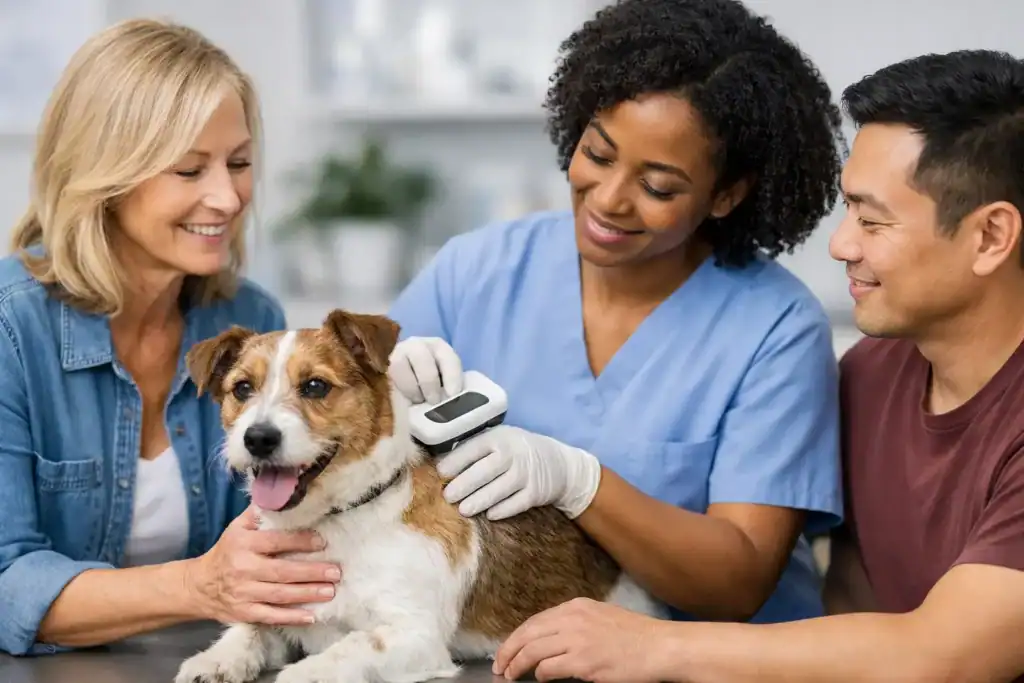
A garden gate left unlatched, a frightened pet slipping a lead, or a curious cat travelling further than usual can turn an ordinary day into a worrying one. Pet microchipping gives a lost animal the best chance of being identified and reunited with the people who love them. It is a small procedure, but it can make an enormous difference at a stressful time.
For pets who find car journeys, busy receptions or unfamiliar handling difficult, microchipping can also be carried out calmly at home. Familiar smells, their own bedding and a gentle approach from a qualified veterinary professional can make the experience much less daunting.
A microchip is a tiny electronic device, around the size of a grain of rice. It carries a unique number that can be read with a scanner used by veterinary practices, rescue organisations and local authorities. The number is linked to your contact details on an approved pet microchip database.
The chip itself does not contain a GPS tracker. It cannot show where your pet is or send alerts to your mobile phone. Instead, it provides permanent identification if your pet is found, taken to a vet or brought to a rescue centre and scanned.
For most dogs and cats, the microchip is placed beneath the skin at the back of the neck, between the shoulder blades. The procedure is similar to an injection and takes only a few moments. Rabbits may be chipped too, although the most appropriate placement and handling should be considered carefully for their size, temperament and health.
Some pets barely react. Others may flinch briefly, particularly if they are anxious about being held. A calm, experienced veterinary professional will work at your pet’s pace, use gentle restraint only where needed, and check that the chip can be read before leaving. There is usually no need for sedation or a recovery period.
Collar tags are still useful and should show the owner’s name and address, but collars can break or be removed. A microchip sits beneath the skin, providing a more reliable form of identification that is not dependent on a collar staying in place.
It is particularly valuable for pets who are nervous outdoors, newly adopted, prone to escaping, or travelling to new places. It can also help where two pets look very similar, where ownership is disputed, or when a pet is found far from home after an unexpected journey.
For many families, the value is not only practical. The thought of a much-loved pet being lost is upsetting. Knowing there is a clear, permanent route back to your details offers worthwhile reassurance, even though everyone hopes it will never be needed.
Microchipping requirements differ across the UK and by species. Dogs must be microchipped and registered by the time they are eight weeks old in England, Scotland and Wales. In England, cats must also be microchipped by the time they are 20 weeks old. Rules may change, and requirements in Northern Ireland or for particular circumstances can differ, so it is sensible to seek up-to-date professional guidance if you are unsure.
Even where microchipping is not a legal requirement, it is widely recommended for cats, rabbits and other companion animals. For breeders, arranging litter microchipping alongside vaccinations can be a practical way to ensure puppies and kittens are properly identified before they go to their new homes.
The law is not the only reason to chip a pet. Registration creates the vital connection between the number in the chip and the people who care for them. Without accurate database details, a readable microchip may not lead a finder back to the right home.
This is the part of pet microchipping that is easiest to overlook. The chip is permanent, but the contact details linked to it are not updated automatically. If you move house, change your mobile number, use a new email address, rehome a pet, or take responsibility for a pet after a bereavement, the database record needs changing as soon as possible.
After the chip has been implanted, keep the registration information in a safe place. You should receive the microchip number and details of the database used. Complete registration promptly if this has not already been done for you, and make sure you can access the account later.
It is sensible to ask for the chip to be scanned during routine veterinary appointments. Although chips are designed to remain in place, they can very occasionally migrate slightly beneath the skin. A quick scan confirms it can still be read and gives you an opportunity to check the contact details attached to it.
If you adopt an animal, do not assume the previous owner’s details have been removed or transferred. Follow the database’s process carefully and retain any relevant paperwork. If your pet has more than one chip, perhaps because their history is unclear, a veterinary professional can scan for and record each number.
A short procedure can still feel significant when your pet becomes distressed outside the home. Cats may hide as soon as the carrier appears. Older dogs may struggle to get into the car. Rabbits are particularly sensitive to stress and can find transport and unfamiliar environments difficult.
At-home microchipping gives your pet the benefit of familiar surroundings. There is no waiting room, no close contact with other animals and no need to rush through traffic for a brief appointment. This can be especially helpful for multi-pet households and breeders with a litter to be seen.
It does not mean compromising on clinical care. The procedure should be performed by an appropriately trained professional using sterile equipment, with the chip scanned and recorded correctly. If your pet is unwell, highly fearful, very small, or has a medical condition that affects handling, the professional visiting can advise on the kindest and safest approach.
For some pets, a home visit also allows owners to be present in a more relaxed way. You can offer reassurance, use favourite treats where suitable and allow your animal a moment to settle afterwards. The aim is not to make a pet enjoy an injection, but to keep the experience brief, gentle and proportionate.
There is rarely much preparation needed. Keep your pet indoors before the appointment if possible, particularly cats who may otherwise decide to explore at exactly the wrong moment. Choose a quiet room with good light and have any previous vaccination records or ownership paperwork available.
For dogs, a lead may help with calm positioning. For cats and rabbits, having a familiar towel or blanket nearby can be reassuring. Avoid chasing or repeatedly trying to catch a worried pet before the visit, as this may make them more unsettled. If your pet has a history of fear, pain, aggression or difficulty being handled, share this when booking so the visit can be planned thoughtfully.
A microchip is not a substitute for sensible safety measures. Secure fencing, an identification tag, a well-fitted harness or collar, and careful supervision all still matter. However, if the unexpected happens, a correctly registered chip can be the quiet safeguard that helps bring your companion home.
If you are arranging microchipping alongside vaccinations, a health check or litter care, Vets 2 Your Pets can provide professional veterinary support in the comfort of your home. A small moment of care now may spare your family a great deal of worry later.
Covering multiple regions with rapid response times and expert clinicians who know your area.
Our friendly team is always ready to support you. Our mobile veterinary service brings professional care straight to your home, making veterinary visits more convenient and pleasant for you and your pet. Whether you need advice, routine care, or treatment, we’re here to answer your questions and provide a calm, personalised service in the comfort of your own surroundings.
If you’re considering pet euthanasia at home and want to understand the process, costs, or aftercare options, or if you’d like to know more about our other services, please reach out to our experienced team today.
If you’re considering pet euthanasia at home and want to understand the process, costs, or aftercare options, or if you’d like to know more about our other services, please reach out to our experienced team today.

Vets 2 Your Pets
Vets 2 Your Pets
Send us a message and we'll get right back to you.
