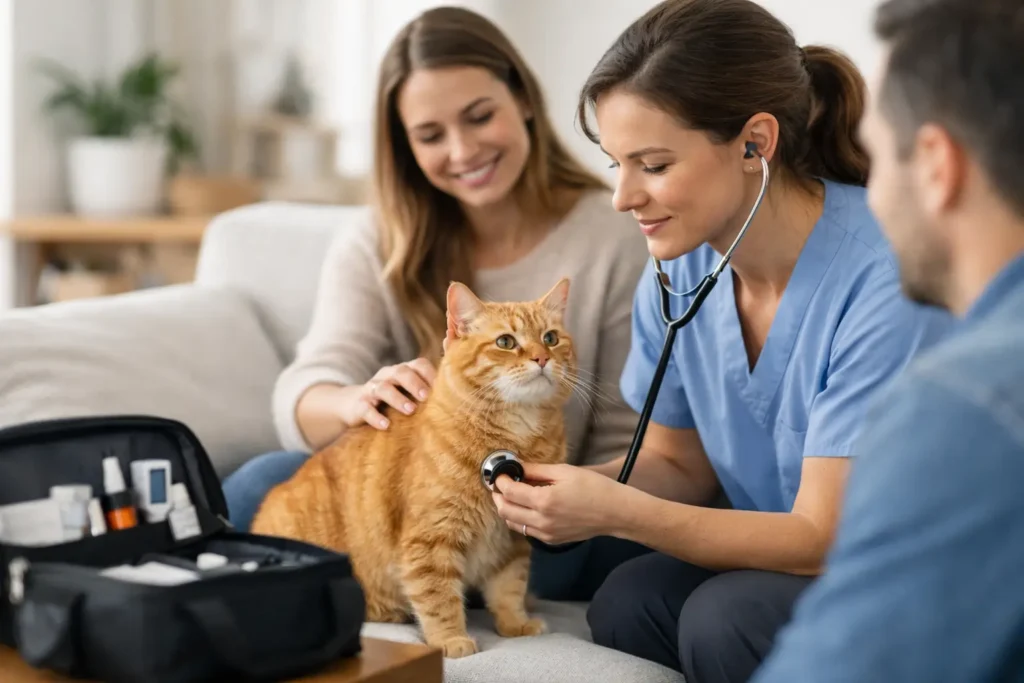
A frightened cat wedged beneath the sofa, an older dog struggling to get into the car, or a rabbit made anxious by unfamiliar smells can make even a routine appointment feel overwhelming. It is understandable to ask, are home vet visits safe? For many pets, care at home is not only safe but can be a calmer and more suitable way to receive veterinary attention – provided the visit is delivered by qualified veterinary professionals and the pet’s needs are appropriate for treatment outside a surgery.
Home visits are not a replacement for every kind of veterinary care. They are, however, a valuable option for preventative treatment, ongoing support, thoughtful health assessments and peaceful end-of-life care. The key is knowing what can be managed safely at home, what requires a clinic, and how a professional team makes that decision.
Yes. A home veterinary visit can be a safe, clinically appropriate choice when it is carried out by a suitably qualified veterinary professional, with proper assessment, equipment and clear arrangements for further care where needed.
Veterinary professionals do not simply arrive and begin treatment. A safe visit starts with gathering the right information. This may include your pet’s age, symptoms, current medication, relevant medical history and how quickly their condition has changed. Good triage matters because it helps identify whether a home appointment is suitable or whether your pet needs urgent examination, imaging, surgery, oxygen support or hospital monitoring.
At Vets 2 Your Pets, telephone enquiries are answered by veterinary nurses who provide immediate triage support. This helps families receive clear guidance before an appointment is booked, particularly when they are worried, unsure how urgent a problem may be, or facing a difficult end-of-life decision.
During the visit, the veterinary professional can assess your pet in their own environment, carry out an examination, discuss treatment options and provide appropriate care within the scope of a mobile service. For many pets, being at home also allows a more accurate picture of how they move, eat, rest and interact with the people and animals around them.
Safety is not only about medical equipment. It is also about minimising avoidable distress. Stress can affect a pet’s behaviour, breathing, heart rate and ability to tolerate handling. For an anxious animal, the journey, waiting room and unfamiliar sounds of a veterinary practice may be the hardest part of the experience.
At home, your pet remains in familiar surroundings, with familiar scents and the people they trust. There is no car journey for a dog with painful arthritis, no carrier struggle for a nervous cat, and no exposure to other animals for pets who are fearful or medically vulnerable. This can make an examination or treatment more comfortable and may reduce the risk of stress-related behaviour such as hiding, scratching, biting or panicking.
Home visits can be especially helpful for elderly pets, pets with mobility difficulties, multi-pet households and animals who become distressed in a clinical setting. They are also practical for breeders arranging litter vaccinations and microchipping, where transporting a whole litter to a surgery can be difficult and unnecessarily disruptive.
That said, a familiar setting does not mean a pet will always be relaxed. Some animals still dislike being examined or injected, even at home. An experienced veterinary professional will work calmly, explain what is happening and adapt handling to your pet’s comfort and safety.
The range of care available depends on the individual service and your pet’s condition. Many routine and ongoing needs can be managed very effectively at home. This may include annual vaccinations, health checks, prescriptions, parasite treatments, pet travel documentation and recurring therapeutic injections such as Librela, Solensia, Cytopoint or Suprelorin.
A home visit can also be a helpful opportunity to discuss gradual changes that are easy to miss in a short surgery consultation. Perhaps your dog is slower on the stairs, your cat has started avoiding the litter tray, or your rabbit is eating less enthusiastically than usual. These changes may have straightforward causes, but they deserve professional attention before they become more serious.
For pets with chronic conditions, the continuity of seeing a veterinary professional in a low-stress setting can be particularly reassuring. Your vet can assess whether treatment is helping, whether symptoms have changed and whether a referral or further diagnostics would be sensible.
There are situations where home care is not the right option, and a responsible mobile veterinary service will say so clearly. A veterinary surgery or hospital has facilities that cannot be brought into a home, including X-rays, ultrasound, laboratory equipment, operating theatres, intravenous fluid therapy, intensive monitoring and a wider team available at short notice.
If your pet has collapsed, is struggling to breathe, has suffered a serious injury, is having repeated seizures, is bleeding heavily, cannot pass urine, or appears to be in severe and sudden pain, they may require emergency hospital treatment. The same applies if they need surgery, complex diagnostics or continuous nursing care.
This is not a failure of home veterinary care. It is good clinical judgement. The safest option is always the one that gives your pet the treatment and monitoring they need, without delay. If you are ever uncertain about the seriousness of symptoms, seek veterinary advice promptly rather than waiting to see if they improve.
For families considering euthanasia, safety includes physical comfort, emotional support and careful clinical planning. At-home euthanasia can offer a gentle, peaceful farewell for pets whose quality of life has declined, allowing them to remain surrounded by love in the place where they feel most secure.
A qualified veterinary professional will first discuss your pet’s condition and help you consider quality of life. There is no single checklist that can make this decision painless, but changes in comfort, appetite, mobility, toileting, breathing, enjoyment and the balance of good days to difficult ones can help guide an honest conversation.
The procedure is planned to be as calm as possible. Your pet is assessed, the process is explained in clear language and time is allowed for questions. Where appropriate, sedation may be used to help a pet settle peacefully before the final medication is given. Families can choose who is present, where their pet is most comfortable and, if needed, discuss cremation arrangements in advance.
Occasionally, a pet’s condition or temperament may make a different setting safer, and the veterinary professional will explain this with sensitivity. Compassionate care includes being honest about what will best protect your pet’s welfare.
You do not need to turn your house into a veterinary practice. A little preparation can make the appointment calmer for everyone. Choose a quiet room with enough light and space for your pet to settle. Keep dogs on a lead if they are likely to run outside, and have cats or small pets safely contained before the veterinary professional arrives.
It helps to have your pet’s medication, previous records if available, and a short note of any changes you have noticed. Be open about behaviour too. If your pet is fearful, protective of a painful area or may bite when handled, telling the team beforehand allows them to plan safely. There is no judgement in this – it is useful information that protects your pet, your family and the veterinary professional.
If the appointment is for a nervous animal, avoid forcing interaction before the visit. Let your pet rest in their preferred place where possible. A familiar blanket, favourite bed or a small treat can be comforting, although fasting instructions should always be followed if they have been given.
Before arranging a visit, ask who will be attending, what qualifications they hold, what the service can provide and what happens if your pet needs more advanced care. You should feel able to ask questions about costs, medication, aftercare and what to expect on the day.
Look for clear communication, clinically sound triage and a team that treats your concerns seriously. A reassuring manner matters, but it should sit alongside professional standards and the confidence to recommend a clinic or hospital when that is the safer route.
Your pet does not have to face every veterinary need in a waiting room. With the right professional guidance, home care can offer safe treatment, quiet reassurance and the dignity of being cared for where they are most at ease.
What to know when traveling with your pet to Europe. The bond between humans and their furry companions knows no boundaries, and it’s not uncommon for pet owners to relocate or travel with their beloved dogs and cats. If you’re considering exporting or going on holiday with your four-legged friend...
Covering multiple regions with rapid response times and expert clinicians who know your area.
Our friendly team is always ready to support you. Our mobile veterinary service brings professional care straight to your home, making veterinary visits more convenient and pleasant for you and your pet. Whether you need advice, routine care, or treatment, we’re here to answer your questions and provide a calm, personalised service in the comfort of your own surroundings.
If you’re considering pet euthanasia at home and want to understand the process, costs, or aftercare options, or if you’d like to know more about our other services, please reach out to our experienced team today.
If you’re considering pet euthanasia at home and want to understand the process, costs, or aftercare options, or if you’d like to know more about our other services, please reach out to our experienced team today.

Vets 2 Your Pets
Vets 2 Your Pets
Send us a message and we'll get right back to you.
