 Skip to content
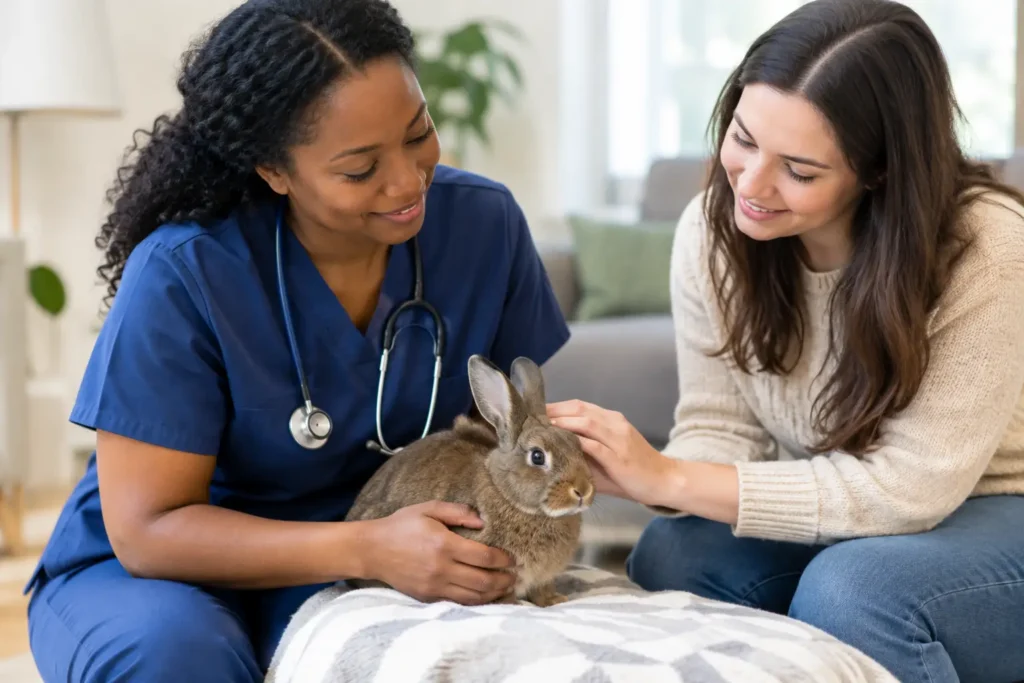
A rabbit who freezes in a carrier, thumps at unfamiliar sounds or stops eating after a car journey is not being difficult. They are showing how sensitive they are to stress. Many owners ask, can rabbits have home visits when travelling to a surgery feels likely to make their pet more anxious? In many situations, the answer is yes.
A veterinary visit at home can allow your rabbit to be assessed in the place where they feel safest, with their usual smells, bonded companion and familiar routine close by. For routine care, ongoing support and the most difficult end-of-life decisions, this can make a meaningful difference to both rabbit and owner.
Mobile veterinary professionals can visit rabbits at home for a range of appropriate appointments. These may include health checks, vaccinations where suitable, microchipping, prescription reviews, parasite treatment advice and monitoring of ongoing conditions. An at-home appointment may also be especially helpful for an older rabbit, a rabbit with reduced mobility, or a bonded pair who find separation distressing.
Rabbits are prey animals and can hide illness very effectively. A calm assessment is valuable, but it still needs to be thorough. A qualified veterinary professional can examine body condition, teeth and mouth where safe to do so, eyes, ears, skin, abdomen, breathing, movement and the rear end. They will also ask about appetite, droppings, drinking, urine, behaviour and changes in the home environment.
Not every concern can be fully investigated in a living room. Some rabbits need blood tests, imaging, dental procedures, hospitalisation or surgery, which require clinic facilities. A responsible mobile service will explain when onward referral is the safest option rather than trying to manage beyond what can be done well at home.
For a well rabbit needing preventative care, home visits can remove the carrier, car journey and busy waiting room from the experience. This can be particularly reassuring in multi-pet households or for owners who find transport difficult.
Home visits can also support rabbits living with chronic health concerns. Arthritis, for example, can make travelling and being handled more uncomfortable. Regular checks can help monitor weight, mobility, coat condition and hygiene, while giving owners practical advice about flooring, litter trays, access to food and pain management plans prescribed by a veterinary professional.
A visit at home is not simply about convenience. It gives the veterinary team useful context. They can see whether the rabbit’s enclosure is easy to move around, whether hay and water are positioned accessibly, and whether a bonded companion is affecting behaviour. Small adjustments can make daily life more comfortable.
For breeders, a mobile visit may make practical sense for litter vaccinations and microchipping, depending on the animals’ ages, health and the requirements of the appointment. It avoids transporting an entire litter to a surgery and allows care to be organised in a familiar, controlled setting.
The gentle pace of a home visit should never delay emergency treatment. Rabbits can deteriorate quickly, especially when they have stopped eating or passing droppings. If your rabbit is collapsed, struggling to breathe, has a severe wound, appears to be in significant pain, has a bloated abdomen, has not eaten, or is producing very few or no droppings, seek urgent veterinary advice straight away.
A rabbit with flystrike also needs immediate attention. This is a serious and potentially life-threatening condition, particularly in rabbits with a soiled rear end, reduced mobility or dental and digestive problems. Do not wait to see if they improve overnight.
Telephone triage is useful here. A veterinary nurse or qualified professional can listen to what you are seeing and guide you towards the most appropriate next step. Sometimes that will be a home appointment; at other times, the kindest and safest decision is prompt treatment in a fully equipped veterinary practice.
You do not need to make your home look clinical. The aim is to help your rabbit remain settled while allowing the veterinary professional to assess them safely.
Keep your rabbit in their normal, secure area if possible, with hay and water available. If they live with a bonded companion, mention this when arranging the visit. It may be helpful for the companion to remain nearby, although the veterinary professional will advise if a separate examination is needed.
Before the appointment, note any changes you have noticed. A short record of eating, droppings, weight, mobility, medication and behaviour can be very useful. If your rabbit has an unusual discharge, a skin change or intermittent head tilt, a clear photograph or video from when it occurs may help too.
Avoid withholding food unless you have been specifically told to do so. Unlike dogs and cats, rabbits should not routinely be fasted before anaesthesia because their digestive systems need a constant supply of food. Hay is particularly important. Your veterinary team will give clear instructions if any preparation is required for a particular procedure.
There may come a time when treatment is no longer restoring a rabbit’s comfort or enjoyment of life. This is an intensely personal decision, and it can feel harder because rabbits often mask pain and adapt quietly to decline.
Changes worth discussing include persistent loss of appetite, repeated digestive episodes, difficulty getting to food or water, unmanageable pain, severe mobility problems, ongoing soiling, weight loss, withdrawal from a bonded companion, or more bad days than comfortable ones. A quality-of-life assessment can help you consider these changes carefully, without pressure or judgement.
For some families, euthanasia at home offers a gentler, more private farewell. Your rabbit can remain in a familiar space, with their own bedding and the people who love them close by. The appointment can be handled calmly, with time to ask questions, say goodbye and decide what you would like to happen afterwards.
The veterinary professional will explain each stage beforehand. In many cases, sedation is used first so that the rabbit becomes deeply relaxed and unaware before the final medication is given. Individual plans depend on the rabbit’s condition, temperament and clinical needs, so clear guidance from an experienced professional matters.
It is also natural to worry about a surviving bonded rabbit. They may search, become quieter or eat less after a loss. Where appropriate, allowing the companion rabbit a brief opportunity to understand that their friend has died can help reduce confusion. Your veterinary professional can talk this through sensitively and advise on monitoring the surviving rabbit’s appetite and behaviour over the following days.
Vets 2 Your Pets provides compassionate at-home care for rabbits, including support for families facing a peaceful farewell and cremation arrangements where requested.
Rabbits have very specific needs, so ask whether the service is able to assess rabbits confidently and whether it has clear processes for emergencies and referrals. You should feel able to ask what the visit can include, what equipment the professional will bring, how prescriptions are managed and what happens if further tests or hospital treatment are needed.
It is worth choosing a provider that combines a calm bedside manner with proper clinical oversight. Kindness is essential, particularly at the end of life, but it should sit alongside qualified healthcare professionals, clear communication and straightforward advice about the limits of mobile care.
Often, yes, but every rabbit is different. Home removes travel and waiting-room noise, yet some rabbits may still dislike handling or unfamiliar people. A slow, quiet approach and minimal handling can help. The aim is not to make every examination completely stress-free, but to reduce avoidable stress wherever possible.
Yes, this can usually be arranged. Let the team know about both rabbits when booking. Even if only one is unwell, the relationship between the pair can provide valuable information, and keeping them close may be reassuring.
A rabbit’s comfort is often found in small things: familiar hay, a trusted companion, a quiet room and an owner who knows what normal looks like. When veterinary care can happen around those comforts, it gives families space to focus on what matters most – helping their rabbit feel safe, understood and cared for.
Covering multiple regions with rapid response times and expert clinicians who know your area.
Our friendly team is always ready to support you. Our mobile veterinary service brings professional care straight to your home, making veterinary visits more convenient and pleasant for you and your pet. Whether you need advice, routine care, or treatment, we’re here to answer your questions and provide a calm, personalised service in the comfort of your own surroundings.
If you’re considering pet euthanasia at home and want to understand the process, costs, or aftercare options, or if you’d like to know more about our other services, please reach out to our experienced team today.
If you’re considering pet euthanasia at home and want to understand the process, costs, or aftercare options, or if you’d like to know more about our other services, please reach out to our experienced team today.

Vets 2 Your Pets
Vets 2 Your Pets
Send us a message and we'll get right back to you.
