 Skip to content
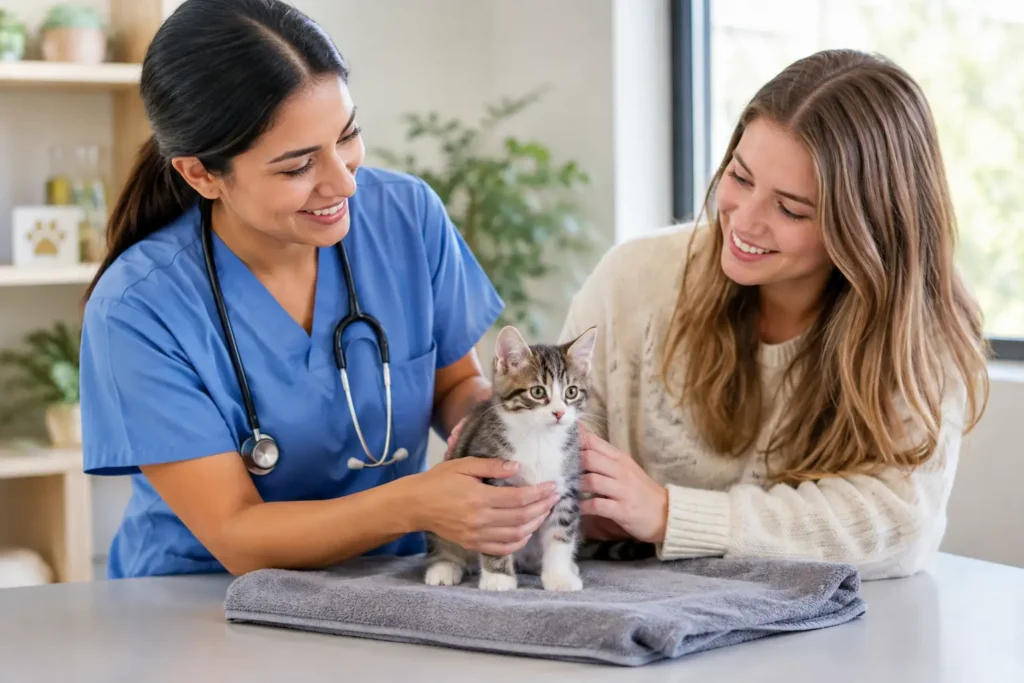
A litter may look confident and playful at home, yet a car journey, busy reception area and unfamiliar smells can quickly change that. For kitten breeders, at-home microchips and vaccines for kitten breeders offer a calmer way to complete essential early healthcare while each kitten remains in the environment it knows best.
A home visit is not simply about convenience. It gives a qualified veterinary professional the opportunity to see the litter where it lives, assess each kitten without the pressure of a crowded surgery, and give breeders clear, practical guidance before kittens leave for their new families. It can also make a busy rehoming period feel more manageable.
Kittens are particularly sensitive to change in their early weeks. Transporting a whole litter requires secure carriers, careful temperature control and considerable organisation. Once at a practice, kittens may be exposed to unfamiliar noises and the scent of other animals, while their mother may become unsettled if she is separated from them.
At home, the appointment can be planned around the litter’s normal routine. Kittens can be handled calmly, returned to their familiar bed promptly and observed by their mother in between checks. This does not mean the clinical standard is reduced. The same careful health assessment, vaccine discussion and accurate microchip records are needed, but they are delivered in a setting that is usually quieter for everyone involved.
For small-scale breeders, or households with several pets, this can be especially helpful. It removes the challenge of moving multiple kittens safely at once and means you have more time to focus on each kitten’s paperwork, development and future home.
Kitten vaccines are often given as a course rather than a single injection. The first vaccination is commonly offered from around eight or nine weeks of age, depending on the vaccine used and the veterinary professional’s assessment. A second dose is usually needed several weeks later for the best protection.
The right timing is not just a date in a diary. A kitten should be bright, well, eating normally and developing as expected before vaccination. A veterinary professional will check for concerns such as poor weight gain, diarrhoea, sneezing, eye discharge, fleas or signs of infection. If one kitten is unwell, its vaccination may need to be delayed while the rest of the litter are assessed individually.
This is one reason professional oversight matters. It may be tempting to view litter vaccination as a simple group task, but no two kittens are exactly alike. Their weights, temperaments and health histories can differ, even when they have been raised together.
Vaccinations reduce the risk of serious infectious disease, but they are not an instant pass to unrestricted contact with other cats. Until the full course has had time to work, sensible hygiene and controlled socialisation remain important. Your veterinary professional can advise on what is appropriate for the kittens’ age, health and planned rehoming dates.
The visit should begin with a conversation about the pregnancy, birth and kittens’ progress so far. Be ready to share their dates of birth, weights if you have been tracking them, worming and flea treatment history, feeding, any illness in the household, and whether the queen is well.
Each kitten is then examined. This may include listening to the heart and lungs, checking eyes, ears, mouth, abdomen, skin and coat, assessing body condition, and looking for any issue that needs follow-up before a kitten is reserved or rehomed. The veterinary professional can then confirm whether vaccination is suitable that day and record the details clearly.
Keep the kittens warm, dry and easy to reach, ideally in one familiar room. There is no need to make the environment overly clinical. A clean, calm space with good light and a surface for paperwork is usually enough.
Microchipping is a permanent form of identification. A tiny chip, about the size of a grain of rice, is placed beneath the skin, usually between the shoulder blades. The procedure is brief, and most kittens cope very well with gentle, confident handling and a little reassurance afterwards.
In England, cats must be microchipped before they reach 20 weeks old, with their details registered on a compliant database. Requirements and enforcement can vary across the UK, so breeders should check the rules that apply where they live. In practice, microchipping well before a kitten moves home gives time for records to be completed correctly and avoids a last-minute rush.
A microchip only works if the database information is accurate. The breeder should ensure that every kitten’s chip number is recorded against the correct kitten, alongside its vaccination record and any distinguishing features. When ownership changes, the new keeper must be able to update the registration details promptly. Clear paperwork protects the kitten and reassures the new family that its early care has been handled responsibly.
There is no one answer for every litter. The appropriate age can depend on the kitten’s size, health, confidence and anticipated rehoming date. Some breeders prefer microchipping during the same visit as a health check or first vaccination, while others need a different schedule.
The key consideration is that kittens are individually assessed rather than treated as interchangeable. A smaller or more sensitive kitten may benefit from a slightly different plan. A qualified professional can discuss this with you and make sure the timing supports both welfare and your legal responsibilities.
A little preparation helps the appointment run smoothly. Have your breeding records nearby, including each kitten’s date of birth, sex and any proposed name or collar identification you use. If kittens look very similar, a temporary, safe way to tell them apart can prevent recording errors.
Avoid allowing visitors or unfamiliar pets into the room during the visit. Keep the area comfortably warm, particularly for younger kittens, and make sure the queen has a quiet place close by if she wants to observe. She may be protective, so let the veterinary professional know in advance if she is nervous around strangers or has shown signs of anxiety since giving birth.
It is also worth planning your rehoming timetable around the vaccination course rather than treating healthcare as a box to tick just before collection day. New owners should leave with honest, complete information about what has been done, what remains due, and when they need to arrange their own veterinary registration and follow-up care.
Vaccination cards and microchip certificates are useful, but a thoughtful breeder record goes further. It gives new owners confidence that they understand their kitten’s routine and can continue it consistently. Record the dates of veterinary examinations, vaccines, microchip number, parasite treatment, food, litter habits and any observations about temperament or health.
If a kitten has a minor issue that has been assessed, be open about it. Transparency is kinder to the new family and supports the kitten’s long-term welfare. It also allows their future veterinary team to make informed decisions from the start.
For breeders who value calm, professional care without the disruption of transporting a litter, Vets 2 Your Pets can arrange qualified at-home support for litter vaccinations, microchipping and health checks. The focus remains on each kitten’s comfort, sound clinical judgement and clear guidance for the next stage of its life.
The first weeks of a kitten’s life shape more than a vaccination record. Calm handling, careful observation and honest communication give each kitten the best possible start, and give the families waiting for them reassurance that they are bringing home a well-cared-for companion.
Covering multiple regions with rapid response times and expert clinicians who know your area.
Our friendly team is always ready to support you. Our mobile veterinary service brings professional care straight to your home, making veterinary visits more convenient and pleasant for you and your pet. Whether you need advice, routine care, or treatment, we’re here to answer your questions and provide a calm, personalised service in the comfort of your own surroundings.
If you’re considering pet euthanasia at home and want to understand the process, costs, or aftercare options, or if you’d like to know more about our other services, please reach out to our experienced team today.
If you’re considering pet euthanasia at home and want to understand the process, costs, or aftercare options, or if you’d like to know more about our other services, please reach out to our experienced team today.

Vets 2 Your Pets
Vets 2 Your Pets
Send us a message and we'll get right back to you.
