 Skip to content
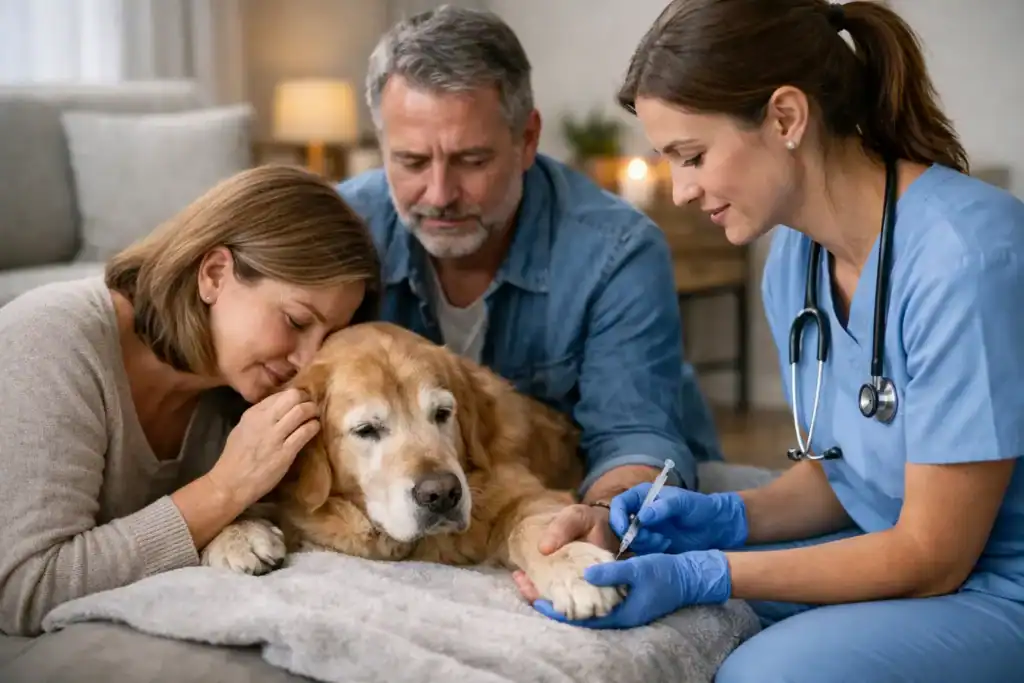
When a pet is struggling, even a short journey to the surgery can feel like too much – for them and for you. Understanding how to arrange home euthanasia can remove some of the practical uncertainty, leaving space for the love, comfort and quiet goodbyes that matter most.
Choosing euthanasia is never a simple decision. It is a decision made from care, usually after watching a much-loved companion lose the things that once made life enjoyable: eating with interest, greeting the family, moving comfortably, or settling peacefully. A qualified veterinary professional can help you assess your pet’s quality of life and explain what a gentle, peaceful farewell at home could look like.
At-home euthanasia allows your pet to remain in familiar surroundings, with familiar scents, people and resting places. For an elderly dog who finds getting in and out of the car painful, a fearful cat who becomes distressed in a carrier, or a rabbit who is unsettled by travel, this can make a meaningful difference to their final hours.
It can also be the right choice for families who want privacy. You may wish to sit together in the garden, on a favourite blanket or beside the sofa where your pet normally sleeps. Other pets in the household can usually be nearby if this feels right, although some families prefer to keep them in another room until afterwards. There is no single correct way to say goodbye.
Home euthanasia is not suitable for every situation. If your pet is in severe distress, having difficulty breathing, experiencing uncontrolled pain, fitting repeatedly, or has suffered a serious injury, they may need urgent veterinary attention straight away. Call a veterinary team for immediate triage support so they can advise on the safest next step.
The first call can feel daunting, particularly when you are emotional or unsure whether it is truly time. You do not need to have every detail prepared. A caring team will guide the conversation and help you make arrangements at a pace that feels manageable.
When you telephone, a veterinary nurse or qualified member of the team will ask about your pet’s condition, their recent changes in behaviour and mobility, any diagnosis or medication, and whether there is an urgent concern. This initial conversation helps ensure that a home visit is appropriate and that the attending veterinary professional has the information needed to support your pet well.
If you are uncertain about euthanasia, say so. A quality-of-life discussion can be very helpful. Rather than focusing on one difficult day, it considers the wider picture: comfort, appetite, hydration, toileting, mobility, interaction, enjoyment and whether good days still outnumber bad ones. Some pets have a clear decline; for others, the decision emerges gradually. Clinical guidance can bring clarity without taking the decision away from you.
Ask about the earliest available appointment and explain if your pet’s condition is changing quickly. Some owners prefer a same-day or next-day visit; others arrange a planned appointment after speaking with their family. If your pet is still comfortable, choosing a quiet time can allow loved ones to be present without rushing.
Consider who you would like there. This may be one person, the whole family, or nobody beyond the veterinary professional. Children can be included in an age-appropriate way if you feel it is right for your family. Giving them a simple explanation – that the vet will help their pet die peacefully because their body is no longer coping – is often kinder than vague language that may cause confusion.
Thinking about aftercare before your pet has died can feel painful, but it means fewer decisions during an emotional moment. The veterinary team can explain the available cremation arrangements and whether you would prefer individual cremation with ashes returned, or a communal option. You may also wish to keep a lock of fur, make a paw print, or choose a favourite photograph for a memorial.
If you plan to bury your pet at home, check that this is appropriate for your circumstances and that there are no local restrictions, rented-property conditions or concerns related to medication. Your veterinary team can talk through the practical considerations with sensitivity.
There is no need to make your home look a certain way. Choose somewhere your pet can rest comfortably and where you will feel able to be. A favourite bed, blanket or sunny spot may be ideal. Keep the room warm and quiet, and give yourself privacy by silencing your phone or letting others know not to call.
If your pet enjoys gentle fuss, a favourite treat or being close to a particular person, those familiar comforts can remain part of the moment. Do not worry if they are sleepy, withdrawn or not interested in food. Simply being beside them is enough.
The attending veterinary professional will arrive, introduce themselves and take time to understand how your pet has been that day. They will explain each stage before it happens, answer your questions and ask for your consent. You remain in control of how much you wish to see and where you would like to sit.
In many cases, the first step is a sedative injection. This helps your pet become deeply relaxed and sleepy, reducing awareness of what is happening around them. It may take several minutes to take full effect, and this quieter time often gives families a chance for final strokes and words.
Once your pet is fully settled, the veterinary professional gives the medication that allows them to pass away peacefully. Your pet will not be aware of this final stage. The vet will listen carefully to confirm that they have died, then give you time alone if you would like it.
Occasionally, natural physical reflexes can occur after death, such as a final breath, small movements or the release of urine. These can be upsetting if unexpected, but they do not mean your pet is in pain or aware. A calm, experienced professional will explain this beforehand and support you throughout.
Many owners worry that arranging euthanasia means they are giving up too soon. In reality, choosing a peaceful death before suffering becomes unmanageable can be one of the kindest acts we make for an animal who has relied on us throughout their life. Love and grief often exist alongside relief that they are no longer struggling.
You may also wonder whether to stay with your pet. Most people do stay, but there is no judgement if you cannot. Some owners sit close and hold a paw; others need to step out for the final injection. What matters is the care you have given over a lifetime, not one unbearable moment.
If another pet is present afterwards, they may sniff or sit quietly near their companion. Some behaviour changes are common in the days that follow, including searching, reduced appetite or increased clinginess. Keep routines gentle and offer reassurance, while seeking veterinary advice if you are concerned.
The days after a pet dies can be unexpectedly difficult. Their absence is felt in ordinary routines: the quiet morning kitchen, the empty corner of the sofa, the walk that no longer happens. There is no timetable for grief, and it does not matter whether others understood the depth of your bond.
Practical support can help. Ask a friend to be available after the appointment, postpone non-essential plans, and give yourself permission to rest. Some families find comfort in a memorial, a framed photograph or planting something in their pet’s memory. Others need time before they can look at photographs or put toys away.
If you need compassionate guidance on arranging an at-home farewell, Vets 2 Your Pets can talk you through the options with calm, qualified support. For now, focus on the small kindnesses your pet knows best: your voice, your touch and the safety of being surrounded by love in their own home.
Covering multiple regions with rapid response times and expert clinicians who know your area.
Our friendly team is always ready to support you. Our mobile veterinary service brings professional care straight to your home, making veterinary visits more convenient and pleasant for you and your pet. Whether you need advice, routine care, or treatment, we’re here to answer your questions and provide a calm, personalised service in the comfort of your own surroundings.
If you’re considering pet euthanasia at home and want to understand the process, costs, or aftercare options, or if you’d like to know more about our other services, please reach out to our experienced team today.
If you’re considering pet euthanasia at home and want to understand the process, costs, or aftercare options, or if you’d like to know more about our other services, please reach out to our experienced team today.

Vets 2 Your Pets
Vets 2 Your Pets
Send us a message and we'll get right back to you.
