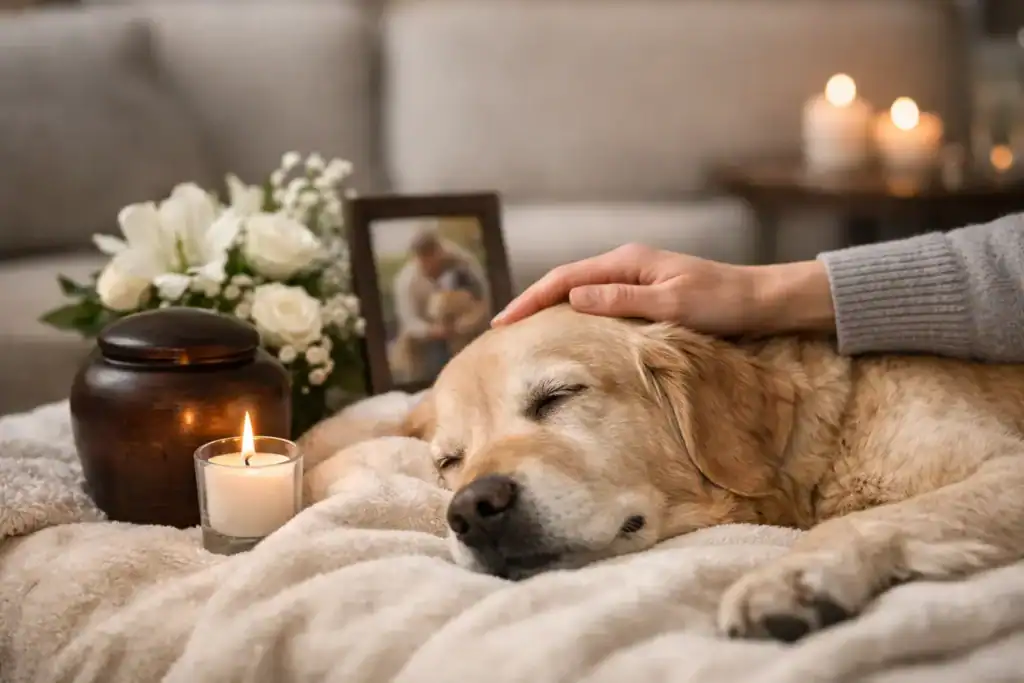
When a much-loved pet is nearing the end of their life, decisions can feel overwhelming even when you know you are acting with kindness. Pet cremation is one of the practical arrangements many families need to consider, but it is also deeply personal. Understanding the options before the day arrives can remove some uncertainty and leave more space for what matters most: being with your pet, in the comfort of home, surrounded by love.
For some owners, planning ahead feels impossible or disloyal. In reality, asking questions in advance can be an act of care. It means that, when the time comes, you are not trying to make unfamiliar choices while coping with grief.
Pet cremation is the respectful cremation of an animal after they have died or after euthanasia. Your veterinary team may arrange collection and cremation on your behalf, often through an established pet crematorium. This can be particularly reassuring following an at-home euthanasia appointment, when families may wish to remain at home rather than make further journeys at a difficult time.
The process itself is handled away from your home. If your pet is euthanised at home, your veterinary professional will explain what happens next and give you time to say goodbye. They will then take your pet into their care with dignity and sensitivity, or discuss the agreed collection arrangements.
There is no right way to feel at this stage. Some people want a few quiet minutes alone with their pet. Others prefer the process to be calm and brief, especially if children or other pets are present. A compassionate veterinary professional will follow your wishes wherever possible and guide you gently through the practical steps.
The wording used by crematoria can vary, so it is worth asking exactly what each option involves. The key distinction is whether you would like your pet’s ashes returned to you.
With an individual cremation, your pet is cremated separately and their ashes are returned to you. Depending on the crematorium and the arrangement chosen, the ashes may be returned in a simple container, casket, urn or scatter tube. Some families keep ashes at home; others choose to scatter them in a meaningful place, subject to the landowner’s permission.
You may also hear terms such as private cremation or segregated cremation. These terms are not always used in the same way by every provider. Ask whether your pet will be cremated alone, how identification is maintained throughout the process, and whether the ashes returned will be solely those of your pet. Clear answers matter, and a reputable provider should be comfortable giving them.
A communal cremation means that pets are cremated with other animals and ashes are not returned to individual families. The crematorium manages the ashes respectfully, usually through scattering or another agreed method.
This can be the right choice for owners who do not feel they need ashes returned, or who would prefer a simpler arrangement. It is not a lesser expression of love. The meaningful part is the care given to your pet and the farewell you choose, not the type of memorial that follows.
If you choose to have ashes returned, there is no need to decide immediately what to do with them. You may keep them somewhere safe while you take time to think. A favourite walking route, a garden, or a place that reflects your pet’s personality may eventually feel right.
Some crematoria offer keepsakes, such as paw prints, fur clippings or memorial jewellery. These can bring comfort, but they are optional. For many families, a photograph, collar, blanket or handwritten note is equally meaningful. Choose what feels true to your relationship with your pet, rather than what you think you ought to do.
One benefit of arranging end-of-life care at home is that your pet can remain in a familiar place, without the stress of travelling, a waiting room or unfamiliar smells. This can be especially valuable for elderly pets, anxious animals, those with limited mobility, and pets whose health has declined quickly.
Following a peaceful farewell, your veterinary professional will confirm the cremation plan you have chosen. They will treat your pet with the same gentleness and respect shown throughout the appointment. You can usually place a small blanket with your pet for the journey if you wish, although items left with them may not be returned. Ask in advance if there is an object you would like included, as crematorium policies differ.
If ashes are being returned, the timescale can vary. It depends on the crematorium, the chosen vessel and local collection arrangements. Your veterinary team or cremation provider should explain how and when the ashes will come back to you, so you are not left wondering what happens next.
At Vets 2 Your Pets, our qualified healthcare professionals can discuss aftercare arrangements as part of compassionate at-home euthanasia care, helping families avoid unnecessary clinic visits at an already emotional time.
You do not need to know every detail, but a few straightforward questions can help you feel confident about the arrangements. Before making a decision, ask whether ashes will be returned, what the cremation option is called and what it means in practice, how your pet is identified and cared for, and the expected timescale.
It can also help to ask about costs before the appointment, particularly if you are deciding between individual and communal cremation. Costs vary according to your pet’s size, location, whether ashes are returned and the type of memorial vessel selected. Receiving clear information is not being difficult or overly practical. It allows you to make a decision without added pressure later.
If your pet has already died, or their decline feels urgent, tell the veterinary team when you contact them. Immediate triage support can help you understand the next available appointment and the options appropriate for your circumstances.
A little preparation can make the day gentler, but it does not need to become a checklist. You may wish to choose a quiet room where your pet normally rests, put down their favourite blanket, and decide who you would like beside you. Some families include children, while others feel it is kinder for children to say goodbye beforehand. There is no universal answer. Age, temperament and your family’s wishes all matter.
Consider other pets too. Animals often notice an absence, and some owners find it helpful to allow them a quiet opportunity to see or sniff their companion afterwards. Others prefer not to. If you are unsure, ask your veterinary professional for guidance based on the animals involved.
It is also sensible to have the practical details written down: your preferred cremation option, a contact number for the return of ashes, and whether you would like a keepsake if one is available. This is particularly helpful if more than one family member may be speaking with the veterinary team.
The loss of a dog, cat, rabbit or any companion animal can affect the shape of everyday life. Their empty bed, feeding routine and familiar sounds can make grief feel unexpectedly sharp. This is a normal response to losing a family member and a relationship built through years of care.
Try not to rush the decisions that do not need to be made immediately. There may be forms to complete, belongings to sort and well-meaning people offering advice, but you can take these things at your own pace. If grief is affecting your sleep, work or ability to cope, speak with someone you trust or seek bereavement support. You do not have to carry it alone.
A gentle farewell is not measured by having the perfect words, choosing the perfect urn or knowing exactly when the time is right. It is found in the kindness you show your pet, the calm you create around them, and the love that remains after they have gone.
The Importance of Annual Health Check & Vaccinations for Dogs, Cats and Rabbits. Welcome to our advice and information on annual vaccination and health check requirements for cat, dogs, and rabbits in the United Kingdom. At Vets 2 Your Pets, we understand the importance of preventive care in keeping your...
Covering multiple regions with rapid response times and expert clinicians who know your area.
Our friendly team is always ready to support you. Our mobile veterinary service brings professional care straight to your home, making veterinary visits more convenient and pleasant for you and your pet. Whether you need advice, routine care, or treatment, we’re here to answer your questions and provide a calm, personalised service in the comfort of your own surroundings.
If you’re considering pet euthanasia at home and want to understand the process, costs, or aftercare options, or if you’d like to know more about our other services, please reach out to our experienced team today.
If you’re considering pet euthanasia at home and want to understand the process, costs, or aftercare options, or if you’d like to know more about our other services, please reach out to our experienced team today.

Vets 2 Your Pets
Vets 2 Your Pets
Send us a message and we'll get right back to you.
