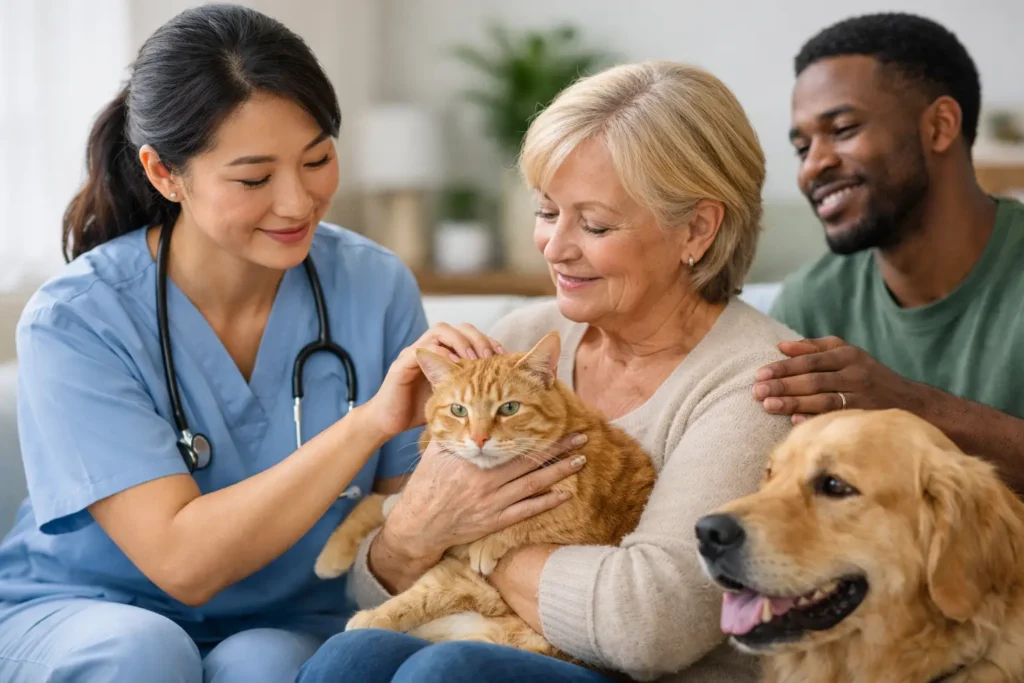
A stiff-legged dog who struggles to climb into the car, a frightened cat who disappears at the sight of the carrier, or an elderly rabbit unsettled by unfamiliar sounds can make a routine appointment feel anything but routine. Vet housecalls bring qualified veterinary care into the place your pet knows best, allowing treatment, advice and difficult decisions to be handled with greater calm.
For many families, home visits are not simply about convenience. They are a way to reduce fear, protect a vulnerable pet’s energy and have the time to ask questions without the pressure of a busy waiting room. From vaccinations and health checks to ongoing medication and a peaceful final farewell, at-home veterinary care can offer a more personal experience while maintaining professional clinical standards.
A visit at home can be particularly helpful when travelling is uncomfortable, impractical or likely to cause significant distress. Senior pets with arthritis, animals recovering from illness, anxious pets and households with several animals may all benefit from care delivered in familiar surroundings.
Cats are a common example. Even a normally relaxed cat may associate the basket, car journey and veterinary surgery with fear. At home, they can remain close to their usual resting place, with their familiar scents and people around them. That does not mean every cat will be entirely relaxed during an examination, but removing the journey and waiting room can make a meaningful difference.
Home visits are also valuable for owners. If your pet has reduced mobility, is very unwell or is nearing the end of life, arranging transport can be physically and emotionally demanding. A mobile veterinary professional can assess your pet where they are most comfortable, explain the options clearly and help you make decisions at a manageable pace.
There are occasions when a veterinary practice or emergency hospital remains the safest setting. Pets with severe breathing difficulty, major trauma, collapse, uncontrolled bleeding or other urgent symptoms may need hospital equipment, diagnostics or immediate intensive treatment. If you are worried that your pet is in an emergency, seek urgent veterinary advice straight away rather than waiting for a home appointment.
At-home veterinary care can support much more than end-of-life needs. The precise services available depend on your area, your pet’s condition and the clinical judgement of the veterinary professional, but many everyday and ongoing needs can be managed at home.
Preventative care is often well suited to a mobile visit. This may include annual vaccinations, general health checks, parasite treatment advice, prescriptions and pet travel documentation. For breeders, litter vaccinations and microchipping at home can reduce the need to transport young puppies or kittens, helping to keep the process organised and less disruptive.
For pets receiving long-term treatment, home visits can make routine care easier to maintain. Therapeutic injections such as Librela for dogs, Solensia for cats, Cytopoint and Suprelorin may be given following appropriate clinical assessment and prescribing guidance. Regular appointments also give owners an opportunity to discuss changes in appetite, mobility, behaviour or comfort before a concern becomes harder to manage.
A home consultation still involves proper observation and examination. Your veterinary professional may assess your pet’s weight, temperature, heart and breathing, eyes, ears, skin, teeth, movement and overall demeanour, depending on the reason for the visit. Seeing an animal in their own environment can occasionally offer useful context too, particularly where mobility, eating habits or quality of life are concerned.
When a pet’s health is declining, families often need more than a clinical answer. They need time, clarity and compassionate guidance. A quality-of-life assessment can help you consider your pet’s pain levels, appetite, hydration, mobility, hygiene, happiness and ability to enjoy the things that once mattered to them.
There is rarely one single sign that makes the decision for you. Some pets have good and difficult days; others gradually withdraw from food, walks, interaction or their usual routines. A qualified veterinary professional can talk through what they are seeing, answer your questions honestly and help you understand whether comfort-focused care or euthanasia may be the kindest option.
Choosing at-home euthanasia allows a pet to remain surrounded by familiar voices, smells and love. Families may choose a favourite bed, a peaceful room or a sunny spot in the garden, where appropriate. You can take the time you need, and other pets can be nearby if that feels right for your household.
The appointment is handled with calm professionalism. Your veterinary professional will explain what will happen, make sure your pet is as settled as possible and guide you through each stage. Following a gentle, peaceful farewell, arrangements for individual or communal cremation can also be discussed, so you do not have to navigate practical decisions alone at a painful time.
You do not need to make your home look like a surgery. A quiet, comfortable space is usually enough. For an examination, choose a room where your pet feels secure and where there is reasonable light and space to work. Keeping treats, a favourite blanket or a familiar toy nearby can help some pets settle.
Before the appointment, make a note of any symptoms you have noticed, when they began and whether they have changed. It can be useful to have details of current medication, previous health conditions and your usual veterinary practice available. If your pet has become fearful or reactive around handling, say so when booking. This helps the team plan the visit safely and sensitively.
For cats, it is usually best to keep them indoors before the appointment time. For dogs, a short toilet break beforehand may help them feel more settled. Rabbits and other small companion animals should stay in their usual secure enclosure until the veterinary professional is ready to examine them, with their normal hay, water and familiar bedding close by.
If the visit concerns euthanasia, there is no need to rush or create a perfect moment. Some families want everyone present, while others prefer a quieter goodbye. You may wish to have a favourite treat available, play gentle music or simply sit together. There is no right way to say farewell, only the way that feels most loving and manageable for your family.
Good home veterinary care begins with clear expectations. Ask whether the service can provide the specific treatment your pet needs, what information should be shared in advance and what happens if the veterinary professional identifies a concern requiring referral. It is also sensible to ask about appointment availability, fees and what is included, particularly for end-of-life care and cremation arrangements.
Telephone enquiries answered by veterinary nurses can be especially reassuring when you are unsure what your pet needs. They can provide immediate triage support, gather the relevant details and help direct you towards an appropriate appointment. While they cannot replace an examination, early guidance can take some of the uncertainty out of a worrying situation.
Vets 2 Your Pets combines this kind of central support with local mobile veterinary visits, helping families access clinical care without the stress of a traditional journey to the surgery. The aim is not to replace every aspect of hospital-based veterinary medicine. It is to make the care that can safely be provided at home feel calmer, kinder and easier to access.
The best choice is the one that protects your pet’s welfare while giving you confidence in the care they receive. Whether you need a routine health check, support with an ongoing condition or a quiet final goodbye, help at home can give your pet the comfort of familiar surroundings and give you space to be present with them.
Covering multiple regions with rapid response times and expert clinicians who know your area.
Our friendly team is always ready to support you. Our mobile veterinary service brings professional care straight to your home, making veterinary visits more convenient and pleasant for you and your pet. Whether you need advice, routine care, or treatment, we’re here to answer your questions and provide a calm, personalised service in the comfort of your own surroundings.
If you’re considering pet euthanasia at home and want to understand the process, costs, or aftercare options, or if you’d like to know more about our other services, please reach out to our experienced team today.
If you’re considering pet euthanasia at home and want to understand the process, costs, or aftercare options, or if you’d like to know more about our other services, please reach out to our experienced team today.

Vets 2 Your Pets
Vets 2 Your Pets
Send us a message and we'll get right back to you.
