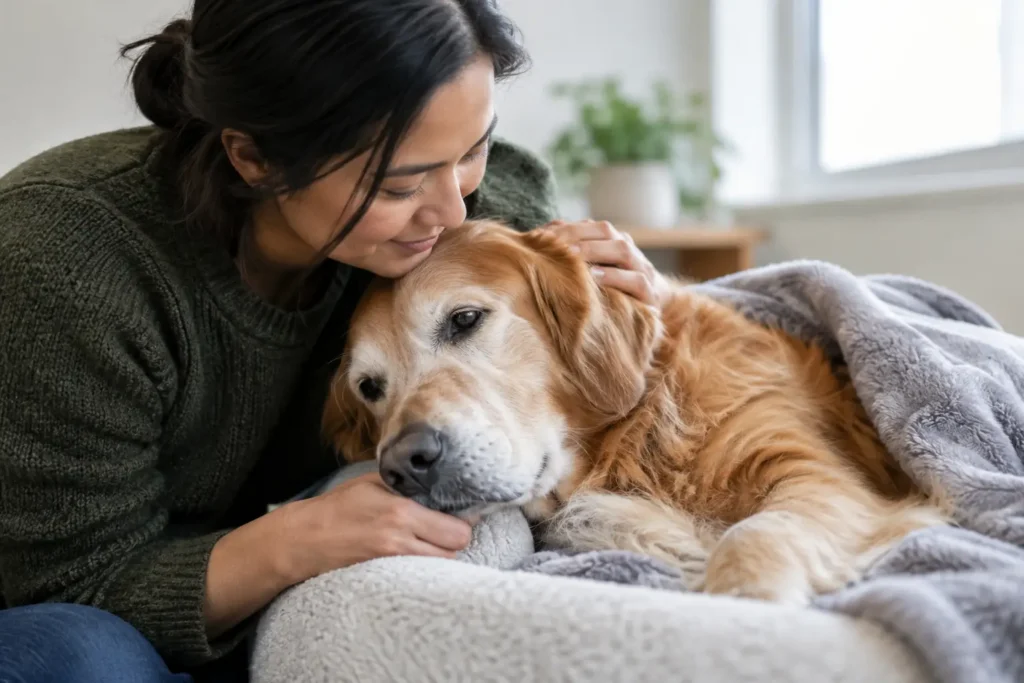
When a beloved pet is slowing down, eating less, or no longer enjoying the things that once made them happy, it can be hard to know what to do next. This pet end of life guide is designed to make that time feel a little less uncertain, with calm, practical information to help you focus on what matters most: your pet’s comfort, dignity and quality of life.
There is rarely one single moment when the decision becomes obvious. Many families live with uncertainty for days, weeks or months, balancing good moments against harder ones. You do not have to make those decisions alone. A qualified veterinary professional can assess your pet, explain the options clearly and help you make a kind, informed choice.
Older age does not automatically mean that a pet is at the end of their life. Many senior dogs, cats and rabbits continue to enjoy a good quality of life with pain relief, mobility support, dietary adjustments or treatment for an underlying condition. The key question is not simply how long your pet has lived, but how they are feeling day to day.
Changes worth discussing with a veterinary professional include ongoing pain, difficulty getting up or moving around, breathlessness, repeated vomiting, reduced appetite, weight loss, confusion, or losing interest in family life. For rabbits and other small animals, reduced eating or fewer droppings can become urgent very quickly and should always be assessed promptly.
It can help to look beyond one difficult afternoon. Is your pet comfortable when resting? Are they able to eat, drink, toilet and move around with reasonable ease? Do they still seek affection, respond to you, or enjoy favourite routines? A pet with arthritis may have slower days but still enjoy a walk, a meal and a cuddle. Another may appear settled for short periods while experiencing persistent pain or distress. Context matters.
Quality of life is personal to each animal and family. A lively dog may find losing the ability to explore deeply frustrating, while a quiet cat may be content with warmth, food and a familiar lap. Your veterinary team will consider your pet’s condition, symptoms and likely outlook, but they will also listen to what makes your pet themselves.
Keeping a brief daily note can bring clarity when emotions are understandably high. Record eating and drinking, comfort, mobility, toileting, sleep, interaction and any signs of pain or anxiety. It is also useful to note the number of good days and difficult days over a fortnight, rather than relying only on the most recent day.
A quality-of-life assessment is not a test that gives one absolute answer. It is a conversation that helps identify whether treatment is still providing comfort, whether care at home can be adapted, or whether a peaceful farewell may be the kindest option. Sometimes the decision is clear because a pet is suffering despite treatment. At other times, choosing euthanasia before a crisis develops can prevent fear, pain and an emergency journey to a veterinary surgery.
End-of-life care does not always mean euthanasia is immediate. Depending on your pet’s diagnosis, your veterinary professional may recommend palliative care, which focuses on comfort rather than cure. This might include medication to manage pain, nausea or anxiety, practical support for mobility, and advice on food, bedding and toileting.
Small changes can make a meaningful difference. Provide warm, well-padded bedding in a quiet area, keep water and food within easy reach, and use non-slip rugs for pets who are unsteady. Dogs may benefit from shorter, gentler toilet trips and support with steps. Cats often appreciate a low-sided litter tray close to their resting place. Rabbits need easy access to hay, water and familiar companionship, alongside prompt veterinary advice if their appetite changes.
Comfort care has limits, and it is okay to acknowledge them. If your pet’s difficult days are becoming more frequent, they cannot be kept comfortable, or essential functions such as eating and breathing are becoming a struggle, speak to a veterinary professional without delay. Asking for guidance is not giving up. It is an act of care.
For many pets, home is the place where they feel safest. At-home euthanasia allows them to remain in familiar surroundings, without the stress of travelling, a waiting room or unfamiliar smells. It can also give families privacy, time and space to say goodbye in their own way.
A veterinary professional will talk you through the process before it begins and answer any questions. In most cases, a sedative is given first so your pet can become deeply relaxed and sleepy. Once they are peaceful and unaware, the final medication is administered. The aim is for the experience to be calm, gentle and free from distress.
You may choose a favourite room, a sunny spot, or wherever your pet is most comfortable. Some families gather close, while others find it easier for one person to stay with their pet. There is no correct way to say goodbye. If children are involved, simple and truthful language is often best. Explain that the pet is very ill or very old, that the veterinary professional will help them die peacefully, and that they will not feel pain.
Other pets in the household may notice the loss too. They can show changes in appetite, sleep, clinginess or behaviour. Giving them calm routine, reassurance and time can help. Some families choose to let another pet briefly see or smell their companion afterwards; this is a personal choice, but it may help some animals understand that their friend is not returning.
Aftercare can feel impossible to think about while you are still hoping for more time, but making a plan in advance can remove pressure on an already emotional day. You may prefer an individual cremation, where ashes are returned to you, or a communal cremation. Your veterinary provider can explain what is available and arrange collection with sensitivity.
You might also want to keep a paw print, a lock of fur, a collar, or a photograph from a favourite day. These choices are entirely optional. Some people find keepsakes comforting; others prefer not to make decisions about them at the time. It is fine to ask a family member or friend to help communicate your wishes.
If your pet is struggling to breathe, has collapsed, is experiencing uncontrolled pain, repeated seizures, severe bleeding, or cannot pass urine, seek urgent veterinary advice immediately. A planned farewell is often the gentlest outcome, but sudden deterioration can happen. Immediate triage support can help you understand the safest next step for your pet.
For less urgent concerns, booking a quality-of-life consultation can provide the time to talk through changes without making a decision that day. Vets 2 Your Pets offers qualified veterinary care in the familiar setting of home, helping families access compassionate guidance when travelling to a practice would cause additional stress.
Grief may begin before your pet has gone, and that anticipatory sadness is a normal part of loving them. After their death, some people feel deep sadness, others relief that suffering has ended, and many feel both. Give yourself permission for all of it. The kindest final decision is not measured by how long you waited, but by the comfort, safety and love you gave throughout your pet’s life – and especially when they needed you most.
Covering multiple regions with rapid response times and expert clinicians who know your area.
Our friendly team is always ready to support you. Our mobile veterinary service brings professional care straight to your home, making veterinary visits more convenient and pleasant for you and your pet. Whether you need advice, routine care, or treatment, we’re here to answer your questions and provide a calm, personalised service in the comfort of your own surroundings.
If you’re considering pet euthanasia at home and want to understand the process, costs, or aftercare options, or if you’d like to know more about our other services, please reach out to our experienced team today.
If you’re considering pet euthanasia at home and want to understand the process, costs, or aftercare options, or if you’d like to know more about our other services, please reach out to our experienced team today.

Vets 2 Your Pets
Vets 2 Your Pets
Send us a message and we'll get right back to you.
