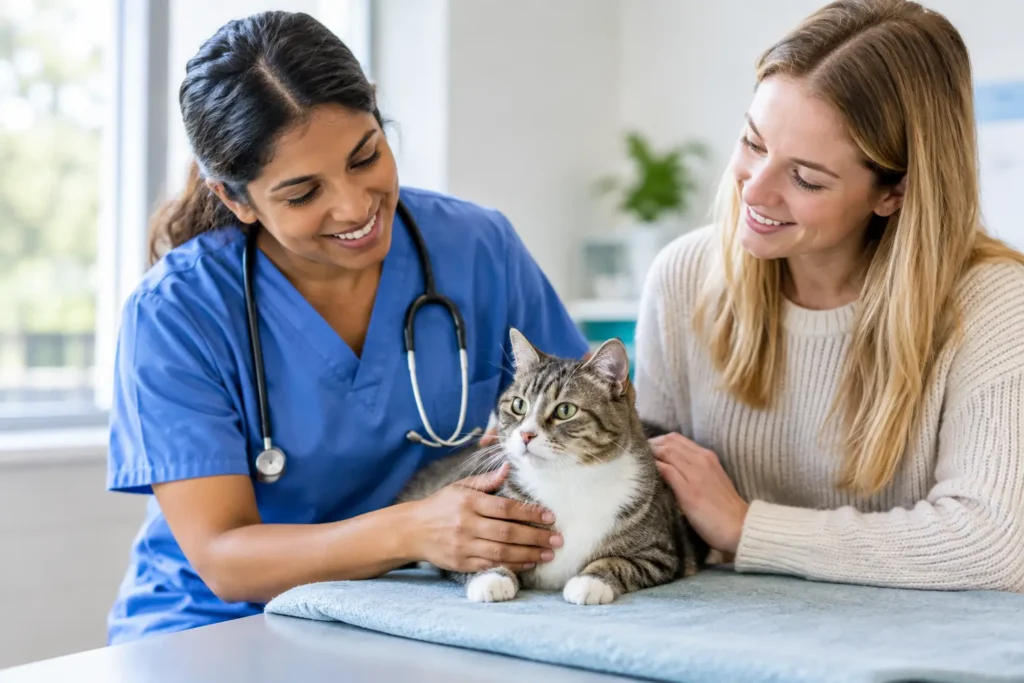
A reminder card arrives, your cat is due a vaccination, and the obvious question is: do cats need annual boosters? The reassuring answer is that your cat should have a veterinary health review every year, but not every vaccine is necessarily needed every 12 months. The right schedule depends on the vaccine used, your cat’s age, medical history and day-to-day risk of exposure.
For many cats, especially those who find travelling and waiting rooms upsetting, discussing vaccinations at home can make routine care feel far more manageable. A qualified veterinary professional can assess your cat calmly in familiar surroundings and recommend protection that is appropriate for them, rather than simply following a one-size-fits-all timetable.
Cats need ongoing vaccination protection, but the word “annual” can be misleading. Some feline vaccines are licensed to be given every year, while others may provide protection for longer following the initial course and first booster. Your vet will follow the vaccine manufacturer’s guidance while considering your cat’s individual circumstances.
A typical kitten vaccination course is followed by a booster around 12 months later. After that, the interval may vary. Core protection against serious diseases such as feline panleukopenia, often called feline infectious enteritis, may be given less frequently with some vaccines. Protection against cat flu viruses, including feline herpesvirus and calicivirus, is commonly recommended more regularly because immunity can reduce over time and cats may still encounter these infections in the community.
This does not mean an indoor cat can be forgotten about, nor does it mean every cat needs the same injections at every appointment. Vaccination is a clinical decision, made with your cat’s welfare and likely exposure in mind.
Even if your cat is not due every component of their vaccination programme that year, an annual health check remains valuable. Cats are remarkably skilled at hiding discomfort and illness. Subtle changes in weight, teeth, heart rhythm, coat condition, mobility or behaviour can be easy to miss at home, particularly when they develop gradually.
During a routine consultation, the vet can listen to your cat’s heart and lungs, check their eyes, ears, mouth, skin and body condition, feel for signs of pain or unusual lumps, and discuss their appetite, drinking, toileting and activity. For older cats, this conversation can be especially important. Increased thirst, weight loss, stiffness, confusion or a change in litter tray habits can sometimes be early signs of a condition that benefits from prompt support.
For cats who are anxious in a veterinary surgery, a home visit can allow this assessment to happen with less stress. Your cat can remain in their own space, with familiar smells and the people they trust nearby. A calmer cat also makes it easier to gain a more accurate picture of their everyday wellbeing.
Most UK vaccination plans include protection against feline panleukopenia, feline herpesvirus and feline calicivirus. These diseases can be serious, and some can spread readily where cats mix or where infection is carried into the environment.
Feline leukaemia virus, known as FeLV, is another important consideration. It is often recommended for kittens and for cats that go outdoors, live with other cats, visit catteries, or may come into contact with unfamiliar cats. It may be less relevant for a strictly indoor adult cat in a low-risk household, although the decision should always be discussed with a vet.
Your cat’s lifestyle matters as much as their age. A young cat who explores the garden, meets neighbourhood cats and occasionally stays in a cattery has a different risk profile from an elderly cat who lives entirely indoors. Multi-cat homes, rescue cats with an uncertain vaccination history and cats whose circumstances have changed may also need a more tailored conversation.
It is understandable to question boosters for a cat who never appears to leave the house. Yet “indoor only” is not always the same as “no exposure”. Cats can slip through an open door, move house, need emergency boarding, or meet another cat during a stay with family. Some infectious material can also be brought into a home indirectly on shoes, clothing or objects.
The level of risk is usually lower for a genuinely indoor cat, and this may affect which vaccines are advised and how often. But it is not a reason to make assumptions without veterinary guidance. A short discussion about your household, other pets, future plans and your cat’s previous records can lead to a more proportionate plan.
Missing a booster does not mean you have failed your cat, and it does not automatically mean that the entire kitten course must be repeated. The next step depends on how long it has been, the vaccines previously given, your cat’s age and the product’s licensing guidance.
In some cases, the vet may be able to restart protection with a single vaccination. In others, particularly where there has been a long gap or records are unavailable, a two-dose course may be recommended. Your vet may also advise avoiding catteries or close contact with unfamiliar cats until your cat’s protection is properly re-established.
If your cat becomes distressed by veterinary visits, it can be tempting to delay routine care. That is a very common concern, not a reason for judgement. Tell the veterinary team what happens when your cat sees the carrier or travels. Small adjustments, including an at-home appointment, gentle handling, careful timing and a calm environment, can make a meaningful difference.
Boosters protect individual cats, but they also help reduce the spread of preventable disease among the wider cat population. Kittens, elderly cats and cats with compromised immune systems can be particularly vulnerable. Maintaining appropriate protection for cats who may mix with others, whether outdoors, in a cattery or in a breeding household, supports their welfare as well as that of the animals around them.
Catteries commonly ask for up-to-date vaccination records before accepting a cat. Requirements vary, and some may have rules about how long before boarding a booster must have been given. If you have a holiday or hospital stay planned, it is wise to check the cattery’s policy well in advance rather than arranging vaccination at the last minute.
There is no benefit in giving unnecessary vaccines, and there is no benefit in leaving a cat unprotected when their lifestyle creates genuine exposure. This is why modern vaccination care is based on a risk assessment, not a blanket rule.
Your vet will consider your cat’s previous reactions, current health, age, whether they take medication, and the diseases they are likely to encounter. A cat who is unwell on the day of an appointment may need vaccination postponed until they are better. Cats receiving treatment for chronic conditions can often still be vaccinated, but the timing and type of vaccine should be carefully considered by the veterinary professional responsible for their care.
For senior cats, an annual appointment can also be an opportunity to talk about comfort, mobility, appetite and quality of life. A quieter cat is not always simply “slowing down”. Gentle, early support can help preserve the routines and small pleasures that matter to both cats and the people who love them.
At Vets 2 Your Pets, routine vaccination and health checks can be provided in the comfort of home, helping to reduce the strain that travel and unfamiliar surroundings can place on anxious, elderly or mobility-limited cats.
If you are unsure whether your cat is due a booster, keep their vaccination record to hand and ask for individual advice. The aim is not to put your cat through more than they need, but to give them thoughtful, appropriate protection and the calm, regular care they deserve.
Covering multiple regions with rapid response times and expert clinicians who know your area.

Our friendly team is always ready to support you. Our mobile veterinary service brings professional care straight to your home, making veterinary visits more convenient and pleasant for you and your pet. Whether you need advice, routine care, or treatment, we’re here to answer your questions and provide a calm, personalised service in the comfort of your own surroundings.
If you’re considering pet euthanasia at home and want to understand the process, costs, or aftercare options, or if you’d like to know more about our other services, please reach out to our experienced team today.
If you’re considering pet euthanasia at home and want to understand the process, costs, or aftercare options, or if you’d like to know more about our other services, please reach out to our experienced team today.

Vets 2 Your Pets
Vets 2 Your Pets
Send us a message and we'll get right back to you.
