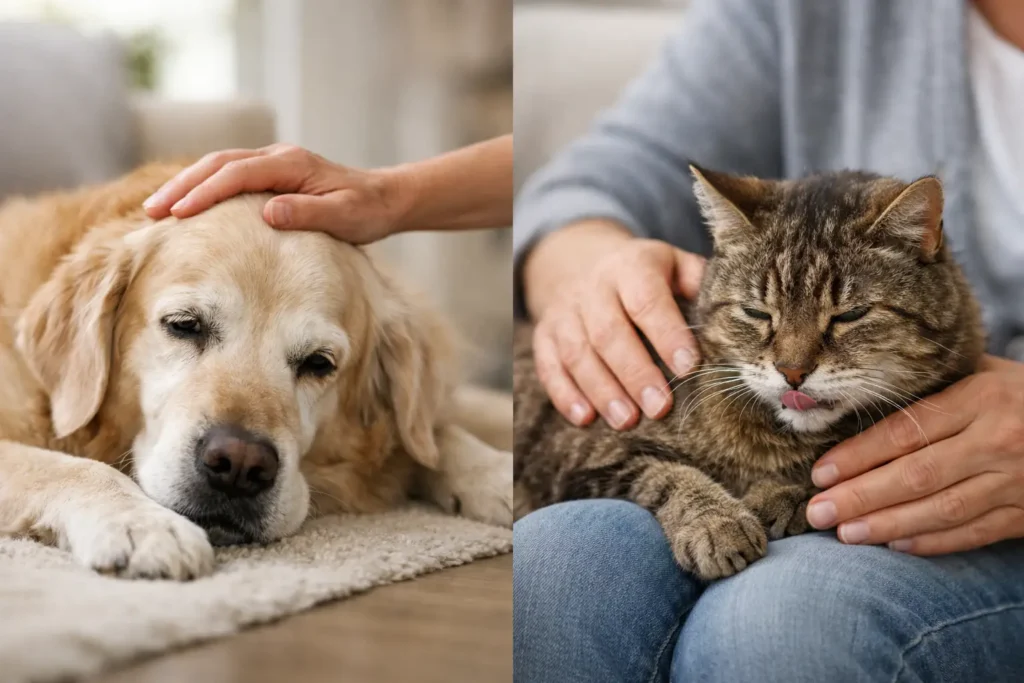
A senior pet rarely tells you they are uncomfortable in one obvious way. More often, the change is quiet: your dog pauses before climbing the stairs, your cat stops settling on the windowsill, or your rabbit sits hunched rather than greeting you for breakfast. Knowing the best signs of senior pet discomfort can help you seek advice sooner, make practical changes at home and protect the quality of life you share.
Ageing is not a diagnosis, and slowing down is not always something a pet simply has to accept. Arthritis, dental disease, organ conditions, pain, reduced sight or hearing, and anxiety can all alter how an older animal moves, rests, eats and interacts. A qualified veterinary professional can assess the whole picture and help you understand what may be manageable, treatable or changing.
Discomfort does not always look like crying, limping or refusing food. Many animals are remarkably good at masking pain or unease, particularly in unfamiliar situations. The most useful clue is often a persistent change from what is normal for your pet.
Watch how your pet gets up after resting, turns around, uses steps and settles into bed. A dog with joint discomfort may take longer to rise, lag behind on walks, avoid the car or struggle after exercise rather than during it. Cats may stop jumping onto furniture, use lower surfaces instead, or appear stiff after sleep.
Rabbits can show subtler mobility changes, such as moving less, sitting in one place for longer or finding it difficult to keep their hindquarters clean. Reduced movement can also lead to sore skin or urine scald, so it is worth raising promptly.
Not every slower walk means pain. Some older pets genuinely need a gentler pace. The concern is when reluctance, stiffness, slipping, trembling or difficulty standing becomes a regular feature of their day.
An uncomfortable pet may change position repeatedly, pace at night, pant when the room is not warm, or struggle to find a place where they can settle. They might choose an unusual area of the house, sleep alone when they normally seek company, or become restless after lying down.
Night-time disturbance can have several causes, including pain, cognitive changes, needing the toilet more often or reduced vision. Keeping a brief note of when it happens, alongside changes in appetite, thirst and toileting, gives your veterinary team more helpful detail than a single difficult night.
A pet that eats more slowly, drops food, chews on one side or avoids hard food may have dental pain, even if they still seem keen for meals. Nausea, illness and pain can also reduce appetite. In rabbits especially, eating less or producing fewer droppings can become serious quickly and requires urgent veterinary advice.
Cats may groom less because bending and reaching is uncomfortable, leaving their coat dull, matted or greasy. Equally, some pets groom or lick one area repeatedly, which can indicate discomfort or irritation. Increased drinking, changes in urine output, accidents indoors or altered stools also deserve attention, especially in an older animal.
A gentle pet can become short-tempered when touched in a painful area. They may move away from hands, dislike being lifted, growl when approached on their bed or seem unusually withdrawn. This is not bad behaviour. It is communication.
Some pets become more clingy and seek reassurance; others prefer quiet and distance. In a multi-pet household, a senior animal may stop joining in, avoid a lively companion or become anxious around resources such as food bowls and beds. Giving them a peaceful, easy-to-reach space can reduce pressure while you arrange an assessment.
A rainy day, a disrupted routine or a slightly harder walk can leave an older pet tired. What matters is whether changes repeat, progress or affect the things they usually enjoy. Consider their whole day: can they eat comfortably, drink, toilet, move around their home, rest peacefully and engage with the people they love?
A simple quality-of-life diary can make difficult changes easier to see. Each day, write a few words about appetite, mobility, toileting, comfort, sleep and enjoyment. You may also rate the day as good, mixed or difficult. This is not about reducing a loved pet to a score. It is a kind, practical record that can help families and veterinary professionals make decisions based on a pattern rather than a particularly emotional moment.
Photographs and short videos can be useful too, especially if your pet moves differently at home than they would in a veterinary setting. Record naturally and safely – never encourage them to jump, climb or walk further than they comfortably can just to capture evidence.
It is sensible to arrange advice if you notice a lasting change in mobility, eating, toileting, grooming, sleep or temperament. Early support may include pain relief, investigations, weight management advice, environmental changes or ongoing treatments tailored to your pet’s condition. For some dogs and cats, regular therapeutic injections such as Librela or Solensia may be considered following a veterinary assessment.
Contact a vet urgently if your pet has difficulty breathing, collapses, cannot stand, seems severely distressed, has a swollen abdomen, is repeatedly vomiting, has not passed urine, or suddenly stops eating. A rabbit that is not eating normally, has very few droppings or appears quiet and hunched should be treated as urgent.
For an elderly, anxious or mobility-limited pet, a home visit can be especially reassuring. Assessment in familiar surroundings allows the veterinary professional to see how your pet rests, walks and manages their own space, without the added stress of transport or a waiting room. Vets 2 Your Pets provides calm, qualified veterinary care at home, with guidance shaped around both clinical needs and your pet’s comfort.
While waiting for advice, focus on making everyday life easier rather than asking your pet to adapt. Use non-slip rugs on smooth floors, provide supportive bedding in a warm draught-free spot, and keep water, food and resting places easy to reach. A ramp may help some dogs access a favourite sofa or step, but only if they can use it safely and are not frightened by it.
For cats, consider a low-entry litter tray and steps to a preferred resting place. Rabbits benefit from soft, dry flooring, accessible hay and water, and an enclosure arranged so they do not need to climb or stretch unnecessarily. Keep nails trimmed by an appropriate professional where needed, as overgrown nails can worsen balance and movement.
Changes should suit the individual pet. Some animals appreciate more support; others find new furniture, ramps or altered routines unsettling. Introduce changes quietly, give them time, and observe whether they actually make life easier.
There may come a point when treatment no longer provides enough comfort, or when the difficult days begin to outweigh the good ones. This is one of the hardest questions a family can face, and there is rarely one perfect moment. Your veterinary team can talk honestly and gently about your pet’s condition, likely progression, palliative support and quality of life.
Choosing a peaceful farewell is not giving up on a pet. When suffering can no longer be relieved, compassionate at-home euthanasia can allow them to remain in the familiarity of home, surrounded by the people, sounds and scents they know. Families should never feel they have to make that decision alone or without clear clinical guidance.
Your close observation matters. If something feels different, trust that instinct, make a note of what you are seeing and ask for support. A calmer, more comfortable day for a senior pet can begin with one caring conversation.
Covering multiple regions with rapid response times and expert clinicians who know your area.

Our friendly team is always ready to support you. Our mobile veterinary service brings professional care straight to your home, making veterinary visits more convenient and pleasant for you and your pet. Whether you need advice, routine care, or treatment, we’re here to answer your questions and provide a calm, personalised service in the comfort of your own surroundings.
If you’re considering pet euthanasia at home and want to understand the process, costs, or aftercare options, or if you’d like to know more about our other services, please reach out to our experienced team today.
If you’re considering pet euthanasia at home and want to understand the process, costs, or aftercare options, or if you’d like to know more about our other services, please reach out to our experienced team today.

Vets 2 Your Pets
Vets 2 Your Pets
Send us a message and we'll get right back to you.
