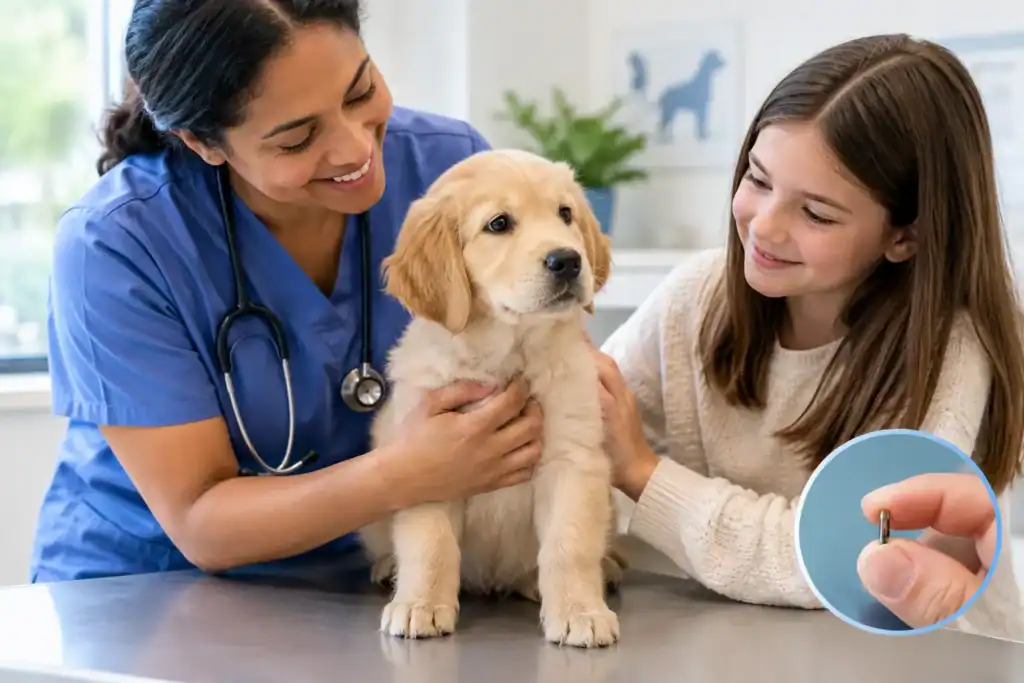
The first few weeks with a litter move quickly. Puppies grow, begin exploring and soon need to be prepared for their new homes. A first health check, first puppy vaccines, microchipping a litter and breeder litter veterinary checks give each puppy a safer start, while helping you pass on clear, reliable information to new owners.
For breeders, arranging this care at home can also make a meaningful difference. Mum remains in familiar surroundings, puppies avoid the disruption of travelling to a surgery, and the whole litter can be assessed calmly together by qualified veterinary professionals.
A litter check is more than a quick look over each puppy. Your veterinary professional will assess the puppies individually, considering their general condition, weight and growth, eyes, ears, mouth, skin, coat, heart and lungs. They will also look for concerns that may not be obvious at home, such as an umbilical hernia, a retained testicle in a male puppy, a heart murmur or signs of infection.
The mother matters too. Nursing and caring for a litter places considerable demands on her body. A check can identify concerns such as poor body condition, sore mammary glands, abnormal discharge or behaviour that suggests she may be uncomfortable. If anything needs further attention, you can receive clear clinical guidance on the appropriate next step.
A normal examination is reassuring, but it is not a lifetime guarantee of health. Some conditions only become apparent as a puppy develops, and others may not be detectable in a young animal. Honest veterinary records and open conversations with prospective owners are part of responsible breeding.
Puppies usually begin their primary vaccination course at around six to eight weeks old, depending on the vaccine used and the individual puppy. A veterinary professional will confirm that each puppy is well enough to be vaccinated before administering it. Puppies that are unwell, underweight or showing symptoms such as diarrhoea may need their vaccination delayed until they have been assessed and are fit to proceed.
The first injection does not provide immediate, complete protection. New owners must understand that the course needs to be completed with the next vaccination at the recommended interval. Until their veterinary professional confirms it is safe, puppies should not walk in public areas where they could encounter diseases such as parvovirus.
It is helpful to give new owners the vaccination card and explain exactly what has been given, when the next dose is due and which veterinary practice or mobile service has provided the care. This avoids uncertainty during an already busy settling-in period.
In the UK, puppies must be microchipped and registered on a compliant database before they are eight weeks old and before they are sold or transferred to a new keeper. The breeder must be recorded as the first keeper. This requirement supports traceability and gives a lost puppy a far better chance of being returned home.
Microchipping is a brief procedure. Each puppy receives a small chip beneath the skin, usually between the shoulder blades, and the unique number is recorded. The chip itself is only useful if the database details are accurate, so correct registration is as important as the procedure.
For a litter, it is sensible to keep careful records of which chip number belongs to which puppy. Collar colours, photographs and individual notes can be useful where puppies look very similar. Once a puppy joins its new family, the new keeper should update the registered details promptly.
Taking an entire litter to a veterinary surgery can be logistically difficult. It may involve carriers, car travel, waiting rooms and separation from the mother at a sensitive age. For some puppies, those experiences are simply part of life. For others, particularly a large litter or an anxious mother, they can add unnecessary stress.
At-home appointments allow puppies to remain in the warmth and familiarity of their usual environment. It also gives breeders time to ask questions without trying to manage several lively puppies in a busy reception area. Vets 2 Your Pets can provide breeder litter health checks, vaccinations and microchipping in the home, with calm, professional care focused on the needs of the whole family.
Choose a warm, clean, well-lit room where the litter can be handled safely. Keep each puppy identifiable, have their dates of birth and any health notes ready, and mention any concerns when booking. This could include slow weight gain, coughing, loose stools, a puppy that seems quieter than the others, or changes in mum’s appetite and comfort.
Do not be tempted to hide a concern because you are worried it may affect a future sale. Early advice is kinder to the puppy and fairer to the people who may welcome them into their family. Responsible breeding begins with careful observation, accurate records and the confidence to seek help when something does not feel right.
A calm first veterinary visit sets the tone for the care that follows. Give every puppy the best possible beginning with checks, protection and records that new owners can trust.
Table of Contents Introduction As devoted pet owners, it is our inherent duty to safeguard the health and well-being of our pets. Regrettably, cancer, a formidable adversary, can sneak into their lives, threatening to disrupt the joy and happiness they bring us. Thus, understanding the signs of cancer in dogs...
Covering multiple regions with rapid response times and expert clinicians who know your area.
Our friendly team is always ready to support you. Our mobile veterinary service brings professional care straight to your home, making veterinary visits more convenient and pleasant for you and your pet. Whether you need advice, routine care, or treatment, we’re here to answer your questions and provide a calm, personalised service in the comfort of your own surroundings.
If you’re considering pet euthanasia at home and want to understand the process, costs, or aftercare options, or if you’d like to know more about our other services, please reach out to our experienced team today.
If you’re considering pet euthanasia at home and want to understand the process, costs, or aftercare options, or if you’d like to know more about our other services, please reach out to our experienced team today.

Vets 2 Your Pets
Vets 2 Your Pets
Send us a message and we'll get right back to you.
