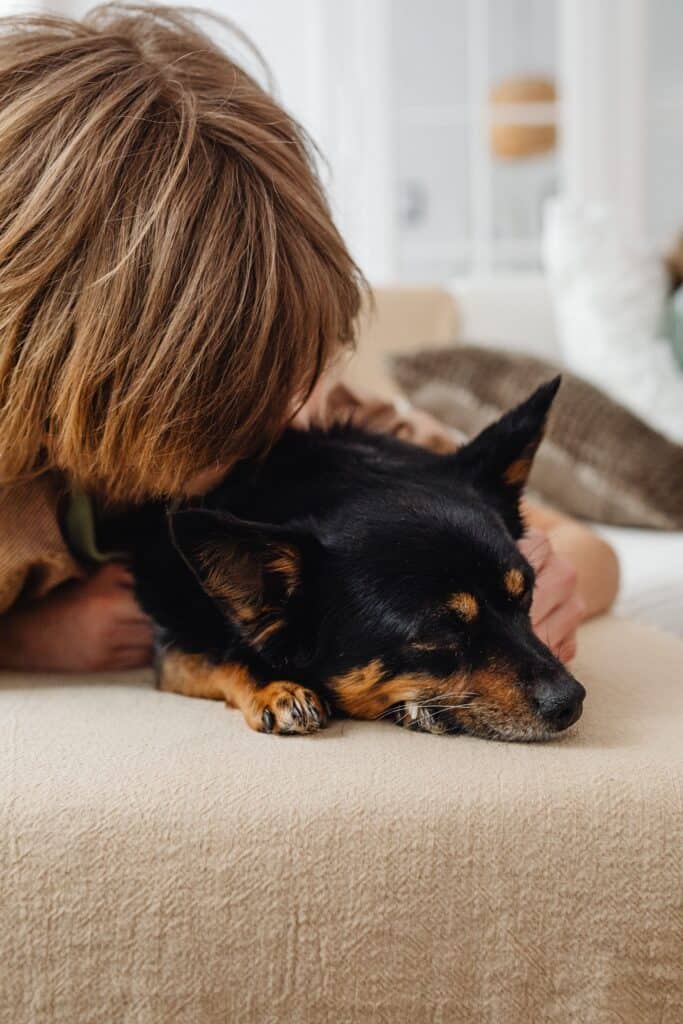
A final trip to the veterinary surgery can feel overwhelming when a pet is already tired, anxious or in pain. Home euthanasia family stories often return to one powerful detail: their pet was in their own bed, on a favourite blanket, with the people who loved them close by. That does not remove the sadness, but it can give a family more calm, privacy and control during an exceptionally difficult goodbye.
Choosing euthanasia is never simply about arranging an appointment. It is a decision made from love, usually after watching small changes add up: less interest in food, painful movement, disturbed sleep, confusion, or a loss of the routines that once brought joy. A qualified veterinary professional can provide clinical guidance, while a home visit gives families the space to focus on their pet rather than the journey, reception area or clock.
Families tend to remember the ordinary things. A dog resting in the sunny patch by the patio door. A cat settling into a familiar lap. A rabbit remaining in the quiet room where they feel safest. These details matter because home is already understood by the animal. There are familiar scents, sounds and people, without the stress that travel and an unfamiliar clinical environment may bring.
For some owners, the greatest comfort is having time. They can sit beside their pet without feeling rushed, invite close family members to be present if that feels right, and say what they need to say. Others prefer a quiet farewell with only one or two people in the room. There is no single correct way to do this. The most meaningful arrangement is the one that protects the pet’s comfort and feels manageable for the people who know them best.
The stories that families share are not stories of an easy day. They are often stories of relief sitting alongside grief. Relief that pain, breathlessness, fear or exhaustion did not continue. Grief because a beloved companion is no longer physically there. Both feelings can be true at once.
The following are representative situations based on the experiences commonly shared by pet-owning families. Every animal, diagnosis and family dynamic is different, but these moments illustrate why a home farewell can feel right.
An older dog may have lived with arthritis, mobility problems or a progressive illness for some time. Their family might have adapted the home with rugs, ramps and shorter walks, while treatment and regular assessments supported their comfort. Eventually, there can come a point when getting up becomes a struggle, appetite fades and the dog’s world grows much smaller.
At home, that dog can rest where they have always rested. The family may offer a small favourite treat if it is safe and welcomed, keep voices soft, and stroke familiar ears while the veterinary professional explains each stage. Owners often say that seeing their dog relaxed in their usual place reassured them that they had chosen kindness at the right time.
Cats can find travelling and veterinary waiting rooms particularly distressing. Even a much-loved carrier may signal something unfamiliar, and an unwell cat may have little reserve for the journey. For a family whose cat has stopped eating, is hiding more, or has a condition that can no longer be managed comfortably, avoiding that final car journey may be a significant part of the decision.
A home visit allows the cat to remain in a familiar room, perhaps on a duvet or close to their preferred person. Some cats choose a quiet corner; others stay close throughout. Families are not asked to make their pet behave in a particular way. The veterinary professional works patiently around the animal, placing comfort and gentle handling first.
When a family pet has grown up alongside children, parents may worry about how to involve them. There is no universal rule. Some children want to be present for every moment, while others prefer to say goodbye beforehand, draw a picture, write a note or choose a flower for the garden.
A private home setting makes those choices easier. Parents can speak honestly in age-appropriate language, pause when emotions rise, and allow each child to participate in their own way. It can help to explain that the veterinary professional’s role is to prevent suffering, and that the pet will not be left alone. The aim is not to shield children from every feeling, but to make sure they feel safe, supported and never pressured.
Knowing what to expect can reduce some of the fear. Before an appointment, a veterinary nurse can offer immediate triage support and answer practical questions, including whether a pet’s condition may require urgent attention. They may also discuss aftercare preferences, so decisions about cremation arrangements do not have to be made in the moment unless a family wishes to wait.
On arrival, the veterinary professional will take time to meet the pet, listen to the family and confirm that euthanasia remains the kindest clinical option. Families can ask questions. It is appropriate to ask what will happen, whether their pet will feel discomfort, and how long each stage may take.
In most cases, the pet is first given medication to help them become deeply relaxed and sleepy. Once they are peaceful and unconscious, the final medication is administered. The veterinary professional will check carefully and tell the family when their pet has died. Natural reflexes can occasionally happen afterwards, such as a final breath or small movement. Being prepared for this can prevent an upsetting surprise; it does not mean the pet is aware or suffering.
There is usually time to sit with a pet afterwards. Some families keep a lock of fur, take a paw print or wrap their companion in a favourite blanket. Others simply sit in silence. Nothing needs to be performed perfectly.
Many owners hope for a clear sign, but decline is often gradual. A quality-of-life conversation can help bring focus to what a pet can still enjoy and what has become difficult. Consider their comfort at rest, ability to move, appetite and hydration, toileting, breathing, interest in family life, and whether good days still outnumber hard ones.
One difficult day does not always mean it is time. A sudden change may need assessment or treatment, particularly if pain, vomiting, collapse, breathing difficulties or distress are present. Equally, waiting for a complete crisis can mean a pet experiences more suffering than a family intended. Speaking to a qualified veterinary professional early gives you room to consider the options with care rather than under pressure.
Practical decisions can feel daunting when emotions are high, so it may help to agree a few details in advance. Decide who should be there, where your pet is likely to be most comfortable and whether you would like keepsakes. If another pet lives in the home, they may benefit from being able to see or gently sniff their companion afterwards. Some animals show little reaction, while others search or become unsettled. Both responses can be normal.
It is also worth planning for the hours after the visit. A family member may want to collect children from school, prepare food, or simply be available by phone. Grief can arrive as tears, numbness, guilt or unexpected quiet. There is no timetable for it, and there is no need to justify the depth of loss for an animal who was part of daily life.
At Vets 2 Your Pets, at-home euthanasia is provided by experienced veterinary professionals who combine clinical excellence with gentle, unhurried care. The purpose is not to make a heartbreaking decision feel routine. It is to make sure families do not have to navigate it alone, and that their pet’s comfort remains at the centre of every choice.
If you are reading home euthanasia family stories because you are worried about your own pet, you do not need to have every answer yet. A compassionate conversation can help you understand your pet’s quality of life, consider the timing and make a plan that honours the life you have shared. Sometimes the kindest final gift is a peaceful goodbye, surrounded by love in the place that has always been home.
Covering multiple regions with rapid response times and expert clinicians who know your area.
Our friendly team is always ready to support you. Our mobile veterinary service brings professional care straight to your home, making veterinary visits more convenient and pleasant for you and your pet. Whether you need advice, routine care, or treatment, we’re here to answer your questions and provide a calm, personalised service in the comfort of your own surroundings.
If you’re considering pet euthanasia at home and want to understand the process, costs, or aftercare options, or if you’d like to know more about our other services, please reach out to our experienced team today.
If you’re considering pet euthanasia at home and want to understand the process, costs, or aftercare options, or if you’d like to know more about our other services, please reach out to our experienced team today.

Vets 2 Your Pets
Vets 2 Your Pets
Send us a message and we'll get right back to you.
