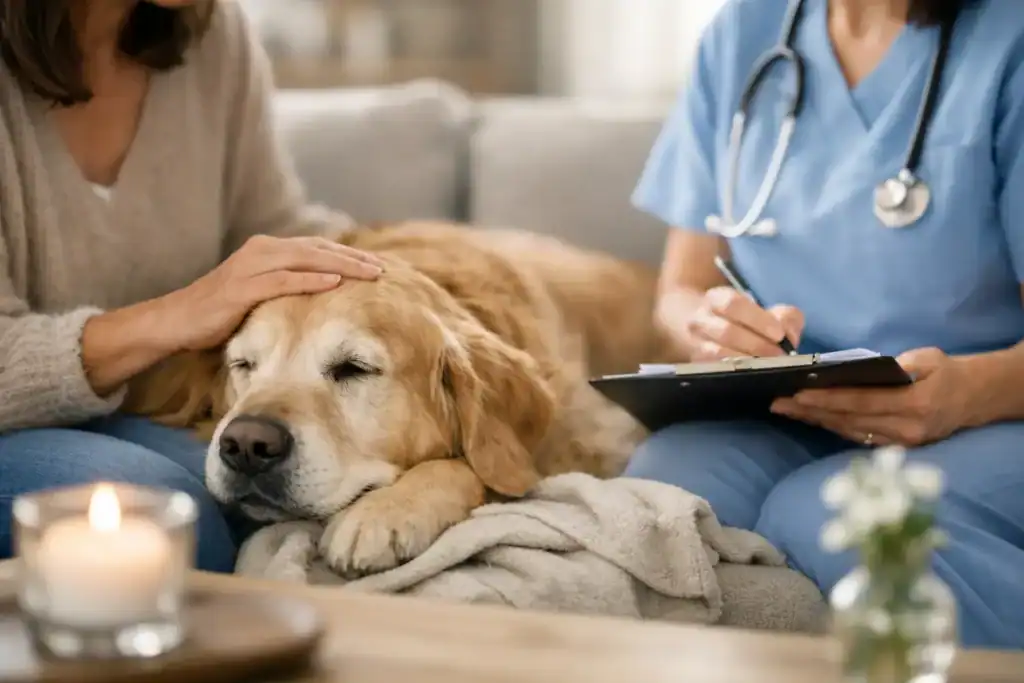
When families read home euthanasia reviews, they are rarely looking for a simple star rating. They are trying to understand whether their pet will be treated gently, whether they will be given time to say goodbye, and whether a veterinary professional will guide them calmly through an unbearable decision. A thoughtful review can offer reassurance, but it should be read alongside clear information about clinical qualifications, availability and aftercare.
Choosing euthanasia at home is a deeply personal decision. For an elderly dog who struggles to stand, a frightened cat who finds a carrier distressing, or a rabbit unsettled by unfamiliar places, remaining at home can mean a quieter and more peaceful farewell. The right provider should make that experience feel supported, never rushed.
The most helpful reviews describe the experience rather than simply saying that a service was ‘good’. Look for comments about how the veterinary professional communicated, how they responded to the pet’s needs and whether the family understood what would happen next.
A gentle manner matters, but it is not the only measure of good care. A reliable review often mentions practical details: a clear booking process, a timely arrival, compassionate handling, privacy for the family and respectful arrangements for cremation or ashes. These details show how a provider supports people before, during and after the appointment.
It is also worth noticing whether reviews describe calm clinical confidence. End-of-life care should be delivered by qualified healthcare professionals who can assess your pet, explain the process in plain language and adapt to what is happening in the moment. Kindness and clinical excellence should sit together.
Specificity is usually more useful than superlatives. A review that explains that a nervous pet was allowed to stay in their favourite bed, or that the vet took time to answer questions before proceeding, helps you picture the standard of care. It also suggests the appointment was tailored to the animal and family, rather than handled as a fixed routine.
Personal accounts can be especially reassuring when your circumstances feel complicated. You may have a large dog who cannot travel comfortably, several pets at home, young children who need preparation, or a cat who becomes distressed at the sight of a carrier. While no two situations are identical, reviews can show whether a service understands these realities.
A five-star average may provide an initial sense of confidence, but it cannot tell the whole story. Read a range of recent reviews and consider the themes that appear repeatedly. Consistent comments about patience, professionalism, gentleness and clear communication are more meaningful than one glowing line on its own.
Pay attention to how a business responds where responses are visible. A respectful, measured reply can indicate that the team understands the sensitivity of bereavement. Equally, a review need not be perfectly written to be valuable. Families often leave feedback soon after a loss, when emotions are raw. What matters is the substance of their experience.
Reviews cannot guarantee a particular outcome or remove the sadness of saying goodbye. They can, however, help you identify a provider whose approach feels aligned with your priorities. If your first concern is avoiding the stress of a journey to the surgery, look for accounts from owners of anxious or mobility-limited pets. If aftercare is your concern, seek comments that explain how collection, individual cremation or the return of ashes were handled.
Even detailed feedback has limits. It cannot assess your pet’s current quality of life, confirm whether euthanasia is the right decision today or replace a conversation with a veterinary professional. A review is one source of reassurance, not a clinical assessment.
Before booking, ask how telephone enquiries are handled and whether you can speak to a veterinary nurse for immediate triage support. You should also feel able to ask who will attend, what their qualifications are, how much time is allowed for the visit and what happens if your pet’s condition changes before the appointment.
It is reasonable to ask what the euthanasia procedure involves. A compassionate provider should explain that a sedative may be used first where appropriate, helping a pet become relaxed or sleepy before the final medication is given. They should also prepare you for normal physical changes that can occur afterwards, so nothing takes you by surprise at an already emotional time.
Clear fees matter too. Ask whether the quoted price includes the home visit, medication, sedation if required, evening or weekend availability, and any cremation arrangements. The cheapest option is not always the most suitable, but you should never feel pressured to make decisions without understanding the costs and choices involved.
The best home euthanasia experience is usually built well before the vet arrives. You should receive straightforward guidance from the first call, including what information the team needs about your pet’s health, weight, temperament and current comfort. This helps the visiting professional plan appropriately and gives you a chance to raise urgent worries.
At the appointment, there should be space for your pet to settle. Some animals choose their bed, a sunny spot in the garden or a familiar corner of the sofa. Others prefer to be held by their person. There is no correct setting, only what feels calm and safe for your pet.
The veterinary professional should explain each stage at a pace you can follow, check that you are ready and allow time for questions. Euthanasia itself is intended to be peaceful, but families may need a few moments, or much longer, before and afterwards. A caring service recognises that silence is sometimes as valuable as information.
For many households, aftercare is one of the hardest parts to think about in advance. Yet discussing it beforehand can protect you from having to make practical decisions while you are overwhelmed. You may prefer a communal cremation, an individual cremation with ashes returned, or to make private arrangements where permitted. A provider should explain the options without judgement.
Once you have chosen a service, reviews can also offer gentle ideas for making the day feel more manageable. Families often find comfort in choosing a familiar blanket, keeping the room quiet, giving a favourite treat if medically appropriate, or inviting only the people who need to be there. Other pets may wish to remain nearby, while some families prefer to keep them in another room. It depends on the animals and on what feels right for your household.
Try not to put pressure on yourself to create a ‘perfect’ goodbye. Your pet will know the comfort of your voice, your touch and the place they call home. The purpose of an at-home visit is not to make grief easy. It is to reduce unnecessary stress and allow a loved companion to be surrounded by what is familiar.
Vets 2 Your Pets provides at-home veterinary care with qualified clinical oversight, compassionate guidance and support with pet cremation arrangements when needed. If you are uncertain about your pet’s comfort or quality of life, speaking with a veterinary nurse can be a helpful first step.
A meaningful review may help you feel less alone, but trust your own sense of what your pet needs as well. Ask the questions that matter to you, take the time you need where time allows, and choose care that gives your companion a gentle, peaceful farewell surrounded by love.
When the Paws Slow: Understanding Arthritis and Mobility Decline in Older Cats As cats grow older, many owners assume that slowing down or jumping less is simply part of ageing. In reality those changes often point to a hidden but important condition: arthritis, also known as osteoarthritis or degenerative joint...
Covering multiple regions with rapid response times and expert clinicians who know your area.

Our friendly team is always ready to support you. Our mobile veterinary service brings professional care straight to your home, making veterinary visits more convenient and pleasant for you and your pet. Whether you need advice, routine care, or treatment, we’re here to answer your questions and provide a calm, personalised service in the comfort of your own surroundings.
If you’re considering pet euthanasia at home and want to understand the process, costs, or aftercare options, or if you’d like to know more about our other services, please reach out to our experienced team today.
If you’re considering pet euthanasia at home and want to understand the process, costs, or aftercare options, or if you’d like to know more about our other services, please reach out to our experienced team today.

Vets 2 Your Pets
Vets 2 Your Pets
Send us a message and we'll get right back to you.
